


Acute effects of single and multiple level thoracic manipulations on chronic mechanical neck pain: a randomized controlled trial
- PMID: 25624764
- PMCID: PMC4296956
- DOI: 10.2147/NDT.S69579
Acute effects of single and multiple level thoracic manipulations on chronic mechanical neck pain: a randomized controlled trial
Abstract
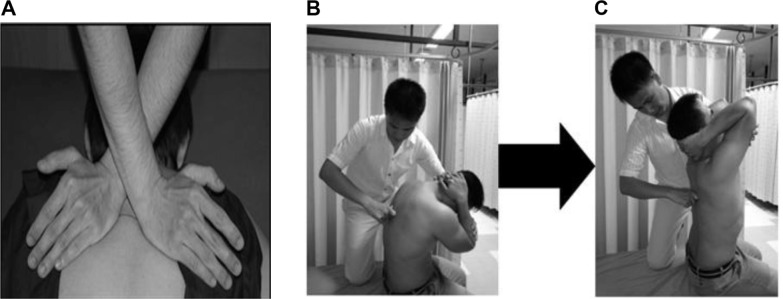
Background: Thoracic spine manipulation has become a popular alternative to local cervical manipulative therapy for mechanical neck pain. This study investigated the acute effects of single-level and multiple-level thoracic manipulations on chronic mechanical neck pain (CMNP).
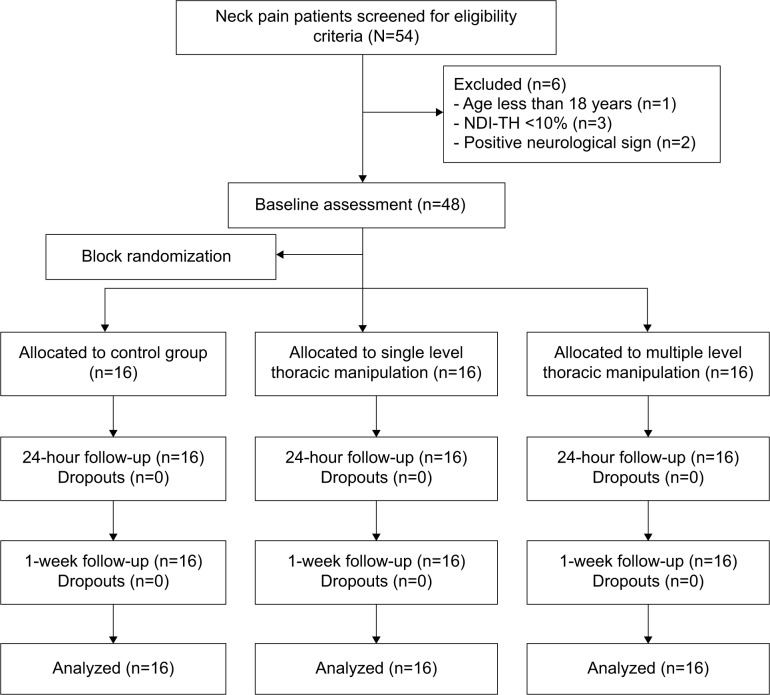
Methods: Forty-eight patients with CMNP were randomly allocated to single-level thoracic manipulation (STM) at T6-T7 or multiple-level thoracic manipulation (MTM), or to a control group (prone lying). Cervical range of motion (CROM), visual analog scale (VAS), and the Thai version of the Neck Disability Index (NDI-TH) scores were measured at baseline, and at 24-hour and at 1-week follow-up.
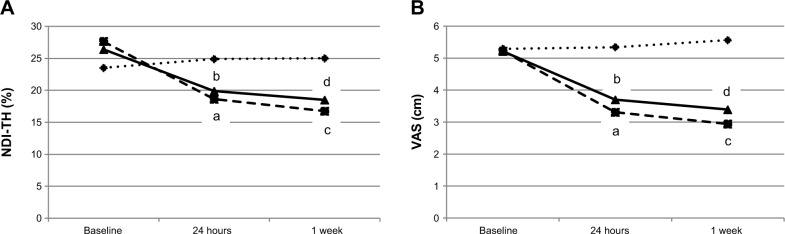
Results: At 24-hour and 1-week follow-up, neck disability and pain levels were significantly (P<0.05) improved in the STM and MTM groups compared with the control group. CROM in flexion and left lateral flexion were increased significantly (P<0.05) in the STM group when compared with the control group at 1-week follow-up. The CROM in right rotation was increased significantly after MTM compared to the control group (P<0.05) at 24-hour follow-up. There were no statistically significant differences in neck disability, pain level at rest, and CROM between the STM and MTM groups.
Conclusion: These results suggest that both single-level and multiple-level thoracic manipulation improve neck disability, pain levels, and CROM at 24-hour and 1-week follow-up in patients with CMNP.
Keywords: neck disability; neck pain; pain level; thoracic manipulation.
Figures
References
-
- Cote P, Cassidy JD, Carroll L. The Saskatchewan Health and Back Pain Survey. The prevalence of neck pain and related disability in Saskatchewan adults. Spine. 1998;23(15):1689–1698. - PubMed
-
- Gross AR, Kay TM, Kennedy C, et al. Clinical practice guidelines on the use of manipulation or mobilization in the treatment of adults with mechanical neck disorders. Man Ther. 2002;7(4):193–205. - PubMed
LinkOut - more resources
Full Text Sources
Medical
