. 2015 May;135(5):1338-1347.
doi: 10.1038/jid.2015.20. Epub 2015 Jan 27.

Keratitis-ichthyosis-deafness syndrome-associated Cx26 mutants produce nonfunctional gap junctions but hyperactive hemichannels when co-expressed with wild type Cx43

Affiliations

Keratitis-ichthyosis-deafness syndrome-associated Cx26 mutants produce nonfunctional gap junctions but hyperactive hemichannels when co-expressed with wild type Cx43

Isaac E García et al. J Invest Dermatol. 2015 May.

Abstract

Mutations in Cx26 gene are found in most cases of human genetic deafness. Some mutations produce syndromic deafness associated with skin disorders, like the Keratitis-Ichthyosis-Deafness syndrome (KID). Because in the human skin connexin 26 (Cx26) is co-expressed with other connexins, like Cx43 and Cx30, and as the KID syndrome is inherited as autosomal dominant condition, it is possible that KID mutations change the way Cx26 interacts with other co-expressed connexins. Indeed, some Cx26 syndromic mutations showed gap junction dominant negative effect when co-expressed with wild-type connexins, including Cx26 and Cx43. The nature of these interactions and the consequences on hemichannels and gap junction channel (GJC) functions remain unknown. In this study, we demonstrate that syndromic mutations, at the N terminus segment of Cx26, change connexin oligomerization compatibility, allowing aberrant interactions with Cx43. Strikingly, heteromeric oligomer formed by Cx43/Cx26 (syndromic mutants) shows exacerbated hemichannel activity but nonfunctional GJCs; this also occurs for those Cx26 KID mutants that do not show functional homomeric hemichannels. Heterologous expression of these hyperactive heteromeric hemichannels increases cell membrane permeability, favoring ATP release and Ca(2+) overload. The functional paradox produced by oligomerization of Cx43 and Cx26 KID mutants could underlie the severe syndromic phenotype in human skin.


Conflict of interest statement

CONFLICT OF INTEREST

Authors declare no conflict of interest

Figures
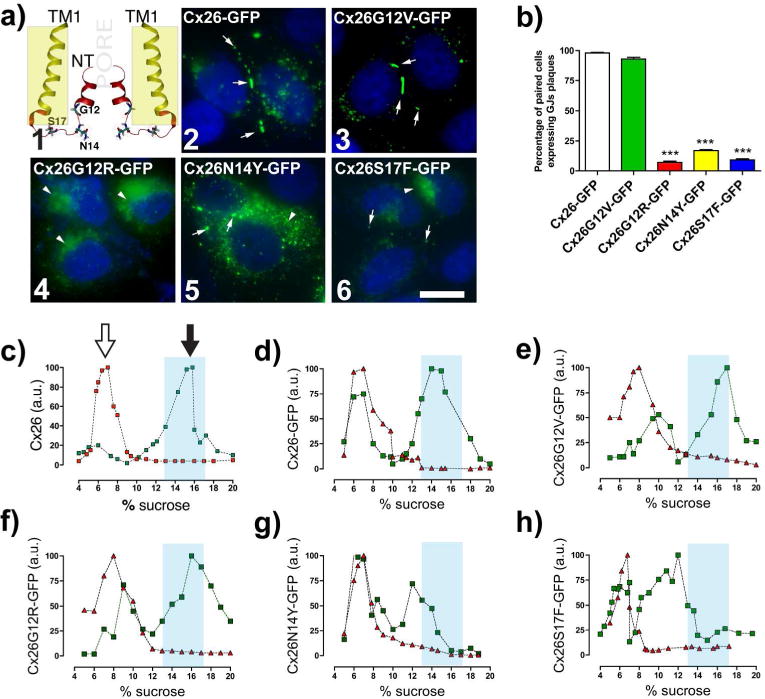
Figure 1
Figure 1. Syndromic mutations reduce or eliminate GJC formation
(a1) TM1 and NT of two Cx26 subunits with highlighted residues at the NT that are linked to deafness mutations. Yellowish rectangle indicates plasma membrane region. (a2–6) Confocal images show the respective subcellular localization of cells expressing Cx26 wild type or mutants. White arrows indicate GJ plaques. (a2 and 6) Arrowheads indicate perinuclear labeling. Bar=15 μm. (b) Percentage of paired cells expressing GJ plaques per condition. (***p<0.001; n=5, 250 paired cells for condition). (c–h) Syndromic mutations, N14Y and S17F, affect oligomerization. Graphs represent the sedimentation profile of monomer and oligomers (in arbitrary units of Cx amount, a.u.) of WT or mutants Cx26. SDS treated fractions (red triangles). Black-filled arrows in (c) show the hexameric peak, and the unfilled arrows show monomeric peaks. Light blue columns indicate where WT Cx26 hexamers sedimented (n=4).
Figure 2
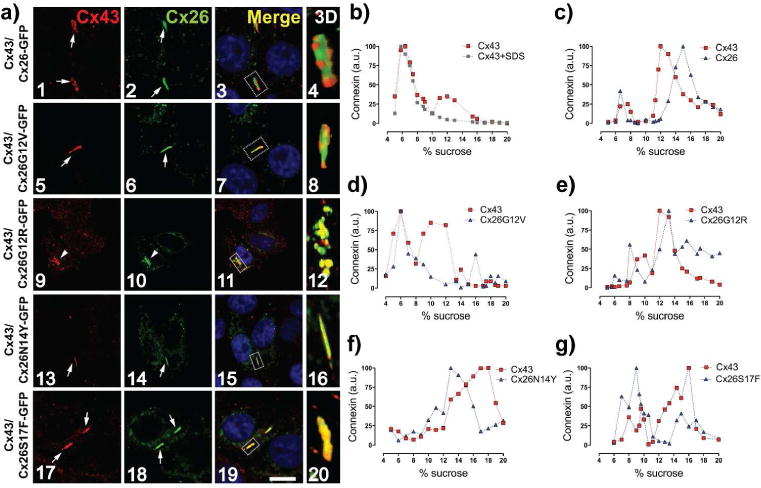
Figure 2. Syndromic mutations change the oligomerization compatibility of Cx26
(a) Confocal images of HeLa cells co-expressing Cx43 (red labeling) with WT or mutants Cx26. Arrows point GJ plaques. Arrowheads show perinuclear staining. Nuclei were staining with DAPI. Dashed rectangles in the merged panels show regions of interest for 3D image projections. Bar=10 μm. (b,c) Cx43 and Cx26-GFP do not co-sediment in the same oligomeric fractions. Graphs represent the levels of Cx43 and Cx26GFP in each sucrose fractions in samples from HeLa cells that were transfected with Cx43 (b) or co-transfected with Cx43 and Cx26-GFP (c). Samples treated with SDS (red square). (d–g) Syndromic mutants co-sediment with Cx43 in new oligomeric fractions. Graphs show levels of Cx43 and mutant Cx26 in sucrose gradient fractions from cells co-transfected with Cx43 and the respective mutant. (n=4).
Figure 3
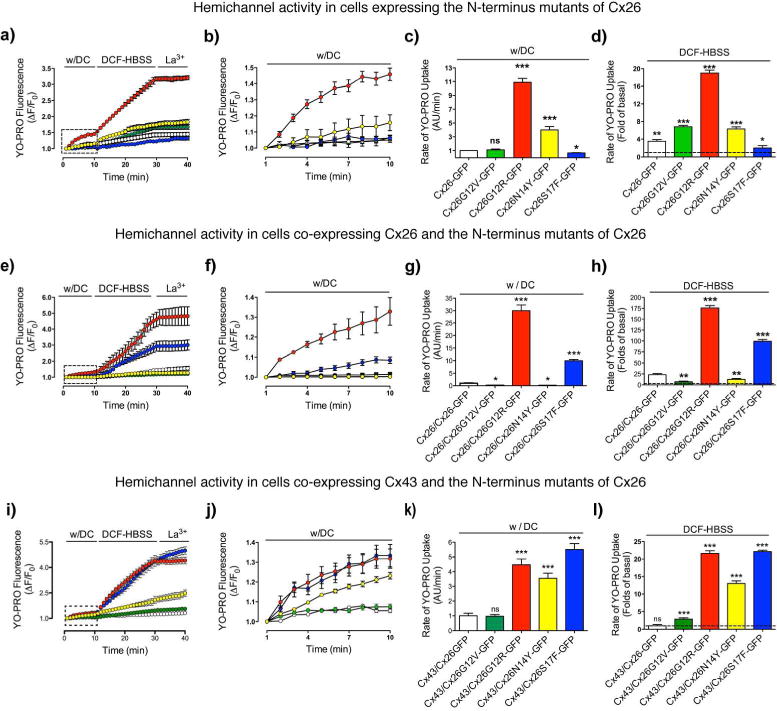
Figure 3. All syndromic mutants form hyperactive heteromeric HCs with Cx43
The functional state of HCs was determined in time-lapse experiments of YO-PRO uptake by HeLa cells expressing Cx26-GFP (open symbols), Cx26G12V-GFP (light blue), Cx26G12R-GFP (red), Cx26N14Y-GFP (yellow) or Cx26S17F-GFP (blue) (a–d) or by cells co-expressing these constructs with WT Cx26 (e–h) or Cx43 (i–l). a, e, i) Uptake under physiological extracellular divalent cation concentrations (w/DC) for 10 min, followed by a 20 min bath in Ca2+/Mg2+ free (DCF-HBSS). Then, 100 μM La3+ was added to block HCs. (b, f, j) Magnification of the area indicated by the rectangle in the graph (a,e,i). (c,d; g,h; k,l) The rate of uptake was determined calculating the uptake slope in cells bathed with physiological (c, g, k) or DCF-HBSS (d, h, l) solution. Data is presented as average ± SEM (n= 7). t-Test for unpaired data. *** p<0.001; **p<0.01; *p<0.05
Figure 4
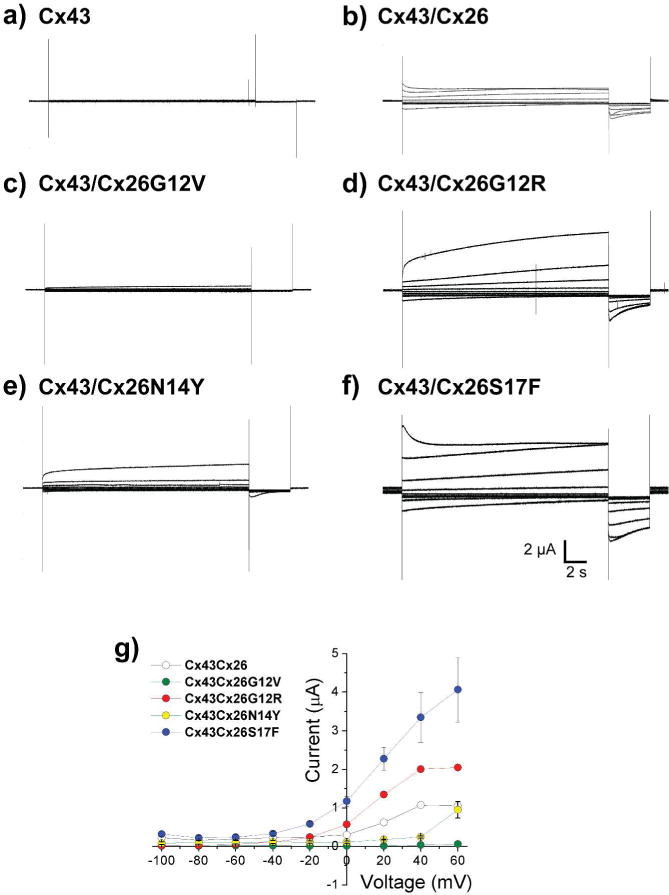
Figure 4. Heteromeric HCs composed by Cx43 and the syndromic mutants produce large macroscopic currents
Membrane currents from oocytes expressing Cx43 alone or Cx43 with Cx26 mutants were recorded using the two-electrode voltage clamp technique. HC currents were activated in response to depolarizing voltage steps from a holding potential of −10 mV, and stepped in 20 mV increments from −100 mV to + 60 mV. Representative currents traces are showed for hCx43 alone (a) or for hCx43 coexpressed with wild type Cx26 (b), hCx26G12V (c), hCx26G12R (d), hCx26N14Y (e) or Cx26S17F (f). (g) Graphic depicted the current voltage relationship of macroscopic heteromeric HCs. The data represent mean ± SEM of at least five independent experiments.
Figure 5
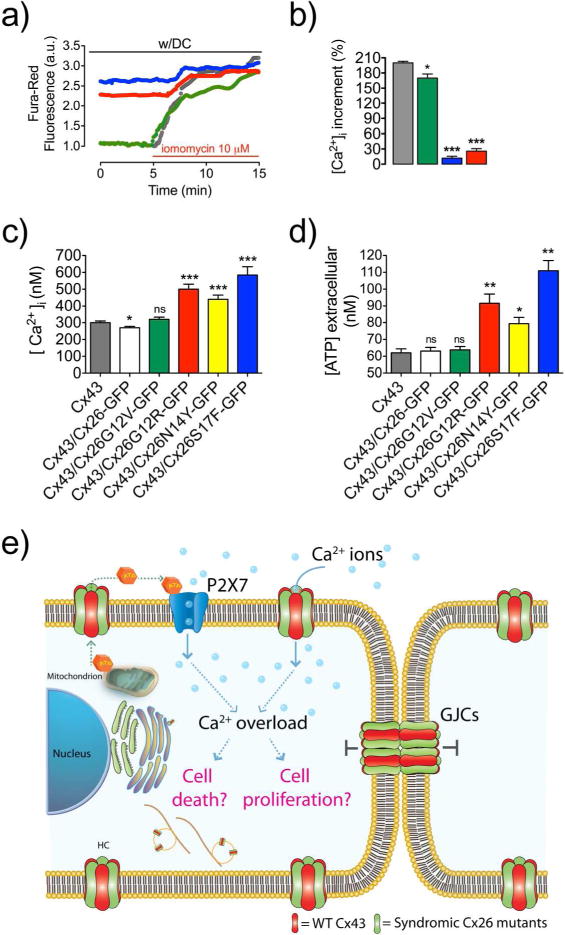
Figure 5. Heteromeric hemichannels formed by syndromic mutants and Cx43 promote cellular Ca2+ overload and ATP release
(a) Time course of Ca2+ signal obtained with probe Fura-Red in cells expressing Cx43 (gray), or co-expressing Cx43 with non-syndromic Cx26G12V-GFP (green), or syndromic Cx26G12R-GFP (red) and Cx26S17F-GFP (blue) before and after application of the Ca2+ ionophore ionomycin (100 μM). (b) Percentage of the Ca2+ signal increments induced by ionomycin. (c) Intracellular Ca2+ concentration in HeLa cells or in cells expressing Cx43, or co-expressing Cx43 with Cx26-GFP or Cx26S17F-GFP. (d) Measurement of ATP release during 10 min of cellular incubation of HeLa cells co-expressing Cx43 with the N-terminus mutants. Data is presented as average ± SEM (n= 20). t-Test for unpaired data. *** p<0.001; **p<0.01; *p<0.05 (e) Model of cell signaling induced by expression of aberrant heteromeric HCs but nonfunctional GJCs in KID syndrome.

References

    1. Anselmi F, Hernandez VH, Crispino G, et al. ATP release through connexin hemichannels and gap junction transfer of second messengers propagate Ca2+ signals across the inner ear. Proceedings of the National Academy of Sciences of the United States of America. 2008;105:18770–5. - PMC - PubMed
    1. Arita K, Akiyama M, Aizawa T, et al. A novel N14Y mutation in Connexin26 in keratitis-ichthyosis-deafness syndrome: analyses of altered gap junctional communication and molecular structure of N terminus of mutated Connexin26. The American journal of pathology. 2006;169:416–23. - PMC - PubMed
    1. Bargiello TA, Tang Q, Oh S, et al. Voltage-dependent conformational changes in connexin channels. Biochimica et biophysica acta. 2012;1818:1807–22. - PMC - PubMed
    1. Barrio LC, Suchyna T, Bargiello T, et al. Gap junctions formed by connexins 26 and 32 alone and in combination are differently affected by applied voltage. Proceedings of the National Academy of Sciences of the United States of America. 1991;88:8410–4. - PMC - PubMed
    1. Berthoud VM, Montegna EA, Atal N, et al. Heteromeric connexons formed by the lens connexins, connexin43 and connexin56. European journal of cell biology. 2001;80:11–9. - PubMed

Publication types

MeSH terms

Supplementary concepts