Review
. 2015 Feb;135(2):413e-428e.
doi: 10.1097/PRS.0000000000001069.

Enhancing aesthetic outcomes of soft-tissue coverage of the hand

Affiliations
Review

Enhancing aesthetic outcomes of soft-tissue coverage of the hand

Shady A Rehim et al. Plast Reconstr Surg. 2015 Feb.

Abstract

Hand aesthetics in general and aesthetic refinements of soft-tissue coverage of the hand in particular have been increasingly considered over the past few years. Advancements of microsurgery together with the traditional methods of tissue transfer have expanded the number of techniques available to the reconstructive surgeon, thus shifting the reconstructive paradigm from simply "filling the defect" to reconstructive refinement to provide the best functional and aesthetic results. However, drawing the boundary between what does and what does not constitute "aesthetic" reconstruction of the hand is not straightforward. The selection among the vast amount of currently available reconstructive methods and the difficulties in objectively measuring or quantifying aesthetics have made this task complex and rather arbitrary. In this article, the authors divide the hand into several units and subunits to simplify the understanding of the basic functional and aesthetic requirements of these regions that may ultimately bring order to complexity.


Figures
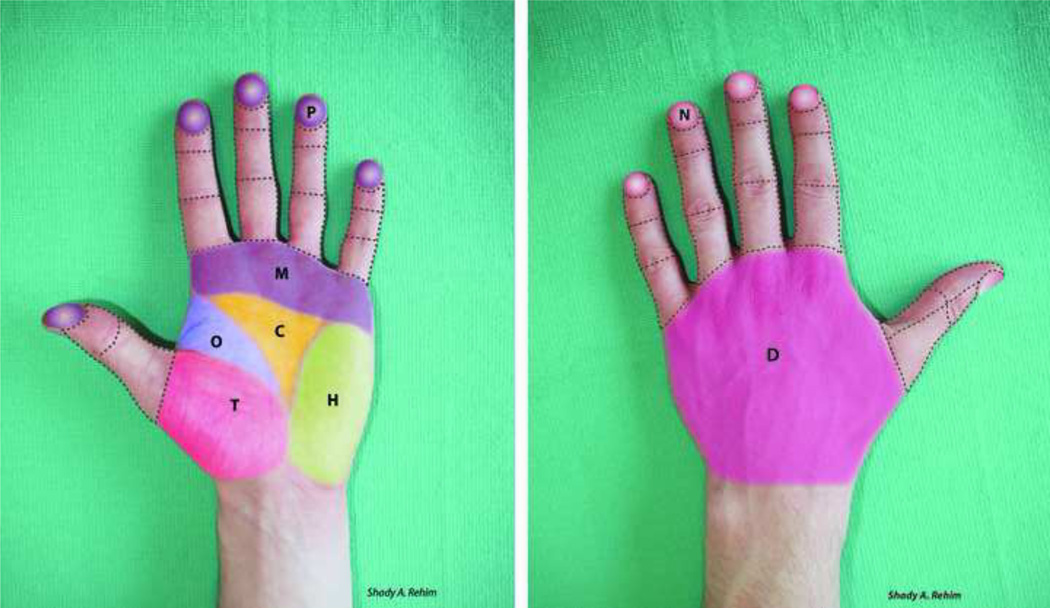
Figure 1
Figure 1
(a). Illustrating the functional aesthetic units and subunits of the volar surface of the hand. The palm can be considered as a single functional aesthetic unit that is further subdivided into 5 subunits; Thenar (T), Opposition (O) Hypothenar, Central triangular (C) and Metacarpal areas (M). The volar surface of each digit is a single functional aesthetic unit that is divided into 3 subunits (except thumb only 2 subunits). Note that the pulps (P) of fingers are highlighted to emphasize the ‘functional’ (sensory) importance of this special part of the digit. (b). Similar to the volar surface, the dorsum of the hand as highlighted in the figure (D), can be considered as a single functional aesthetic unit. The dorsum of each digit is another functional aesthetic unit that is subdivided into 3 subunits (except thumb only 2 subunits). Note that the nails (N) of the fingers are highlighted to emphasize the importance of ‘aesthetics’ (appearance) of this special part of the digit. Each region (units & subunits) of the hand has its unique functional and aesthetic requirements.
Figure 2
Figure 2
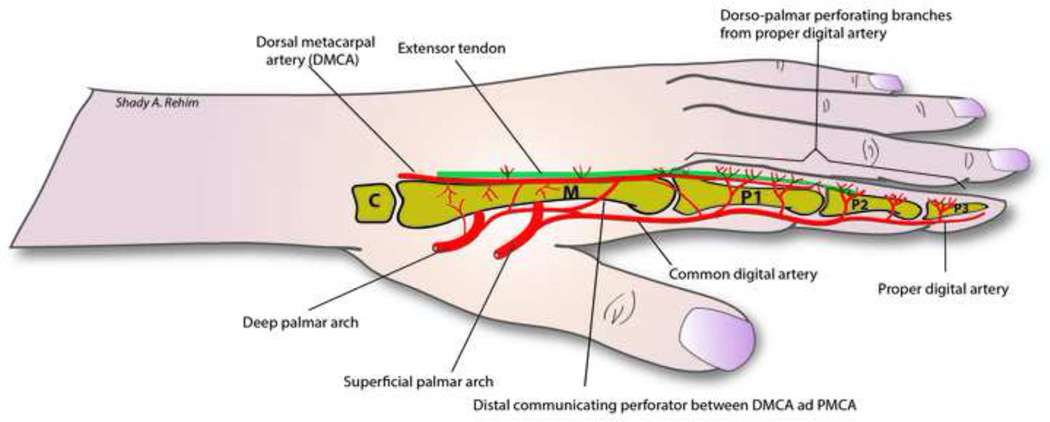
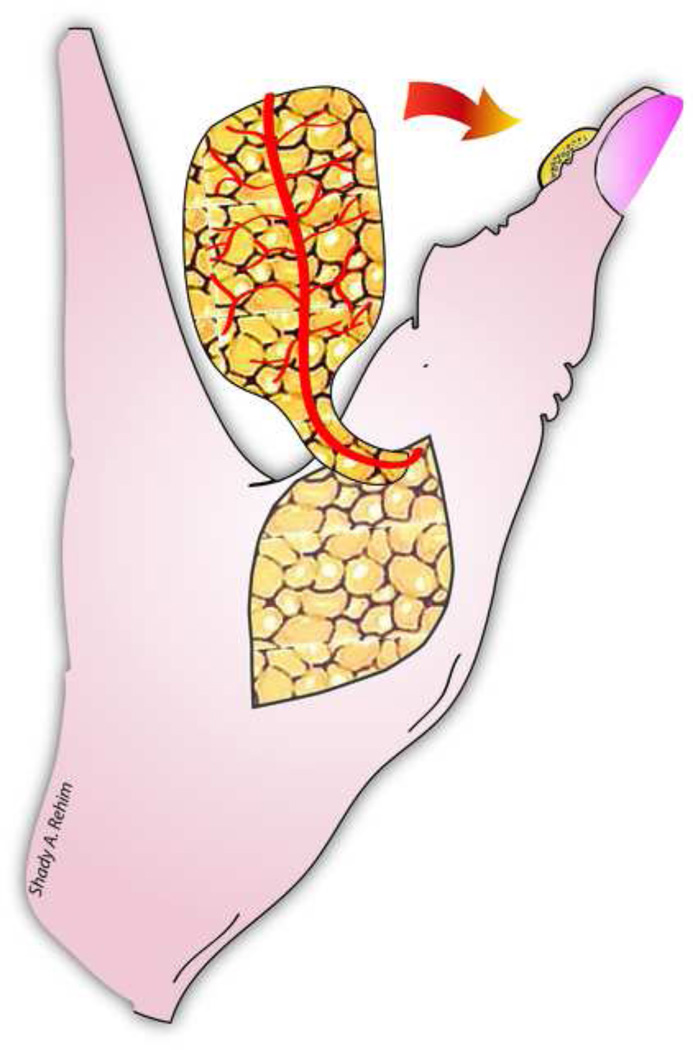
Illustrating vascular communications between palmar and dorsal circulation of the hand and digits.
Figure 3
Figure 3
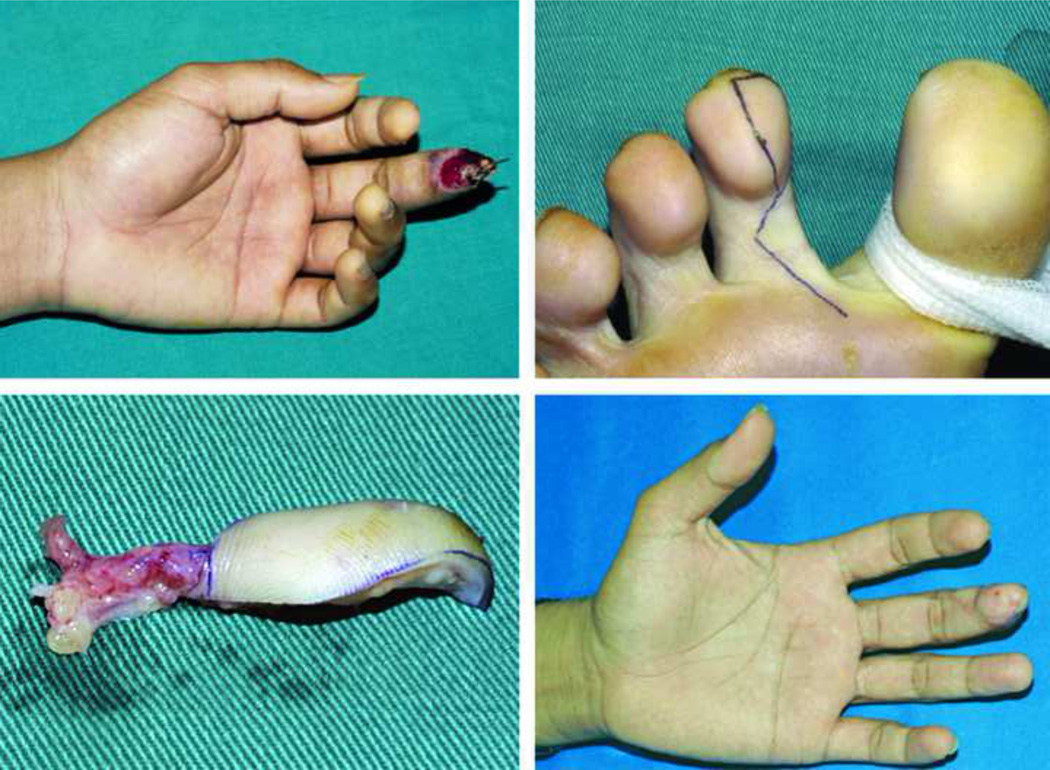
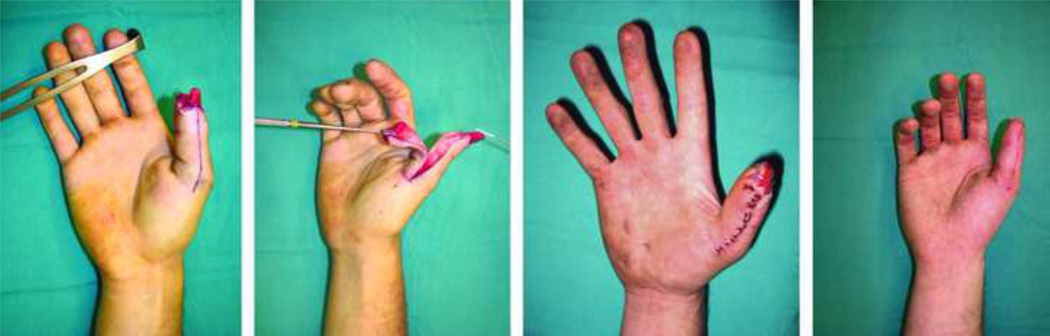
A pulp defect of the long finger (A) reconstructed with an innervated partial medial second toe pulp free flap (B–C), achieving good aesthetic results (D). (With permissions from PRS:- Lee DC, Kim JS, Ki SH, Roh SY, Yang JW, Chung KC. Partial second toe pulp free flap for fingertip reconstruction. Plast Reconstr Surg. 2008 Mar;121(3):899–907)
Figure 4
Figure 4
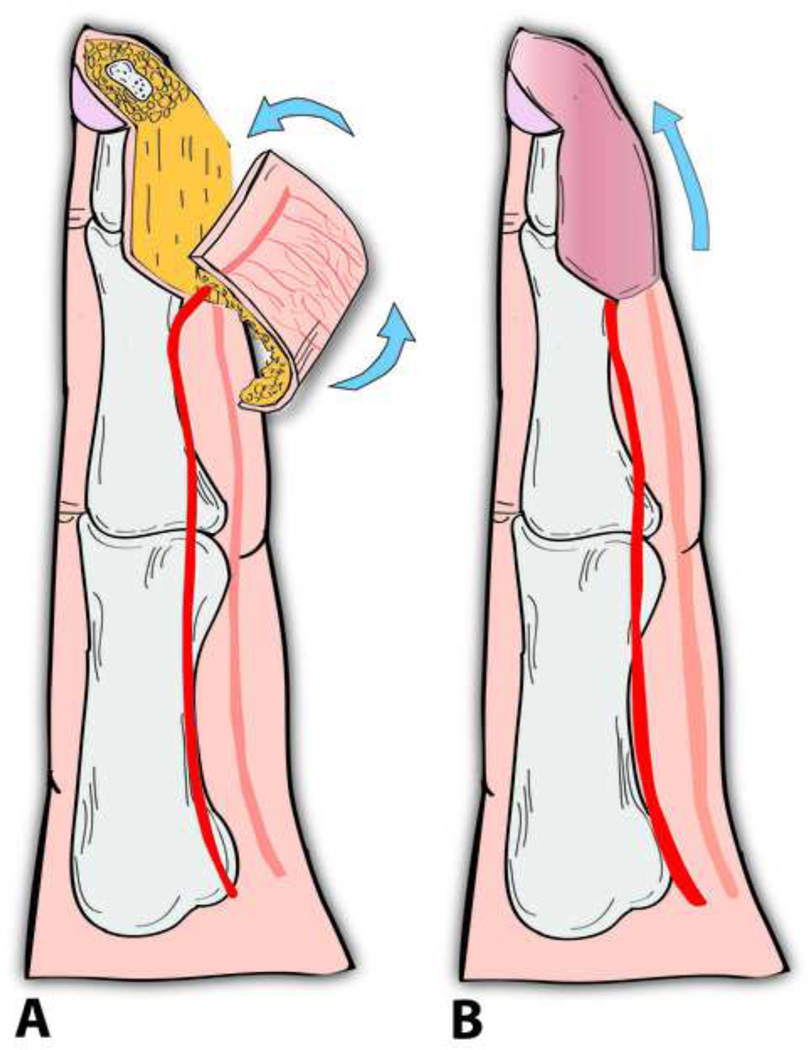
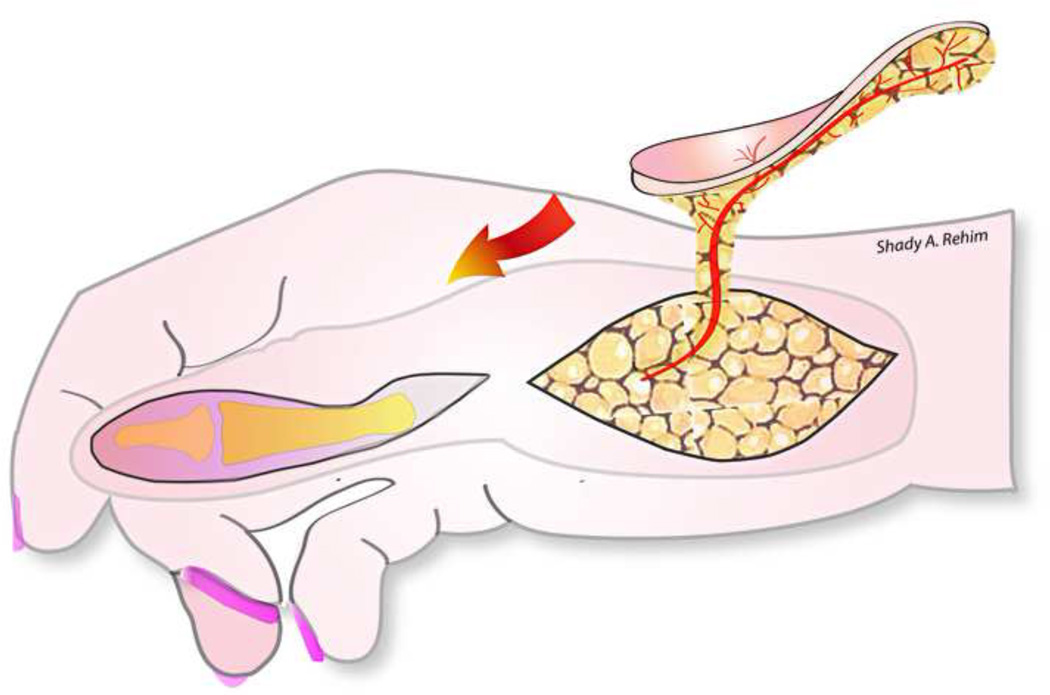
Illustrating a fingertip amputation injury reconstructed by a pivot flap (A). The flap is pivoted on a single neurovascular pedicle and then rotated 90 degrees to cover the defect.
Figure 5
Figure 5
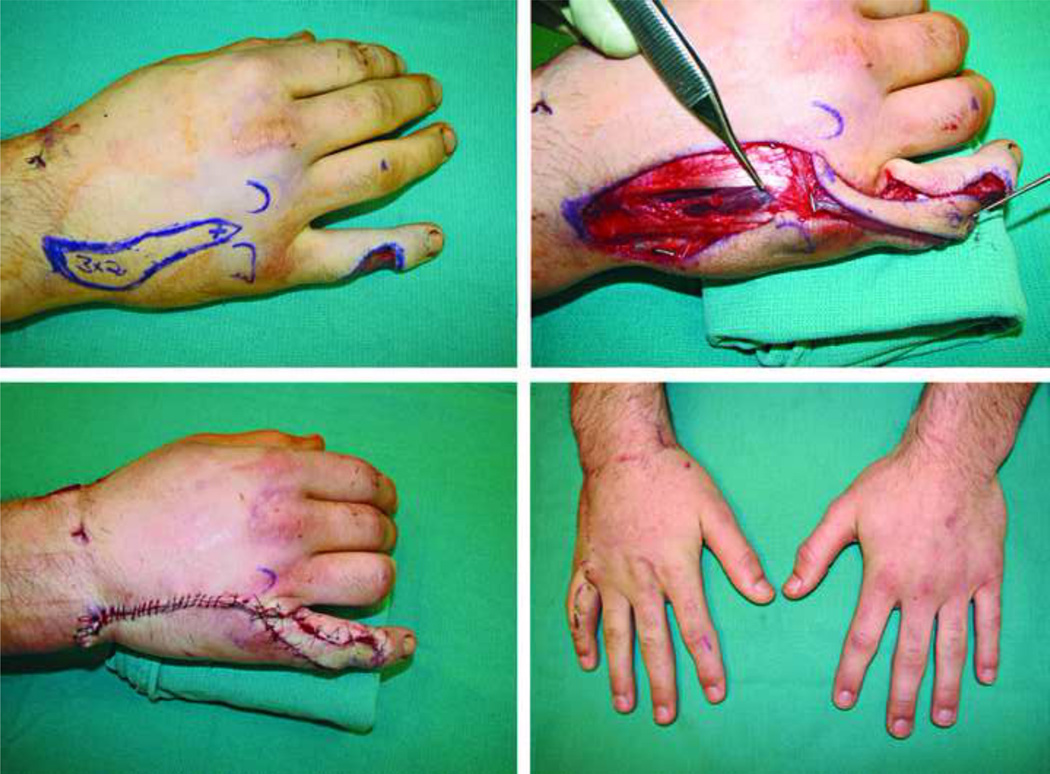
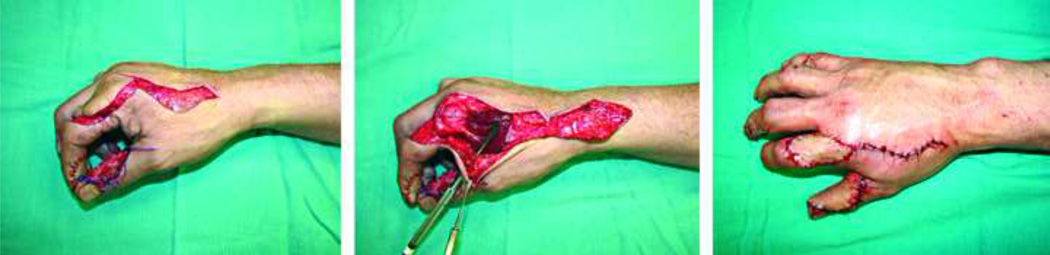
A 20-year-old male who sustained a complex laceration injury over the dorsoulnar aspect of the right little finger. A dorsal metacarpal perforator artery flap measuring 3 cm × 2cm was designed to cover dorsal defect. The location of the constant perforator from the volar artery is marked with a ‘cross’ at the intermetacarpal space (top left). The DMCA can be ligated to increase the reach of the flap (top right). Despite an adequate soft-tissue coverage, an obvious resultant linear scar usually traverses the dorsal unit and subunits of the fingers (bottom).
Figure 6
Figure 6
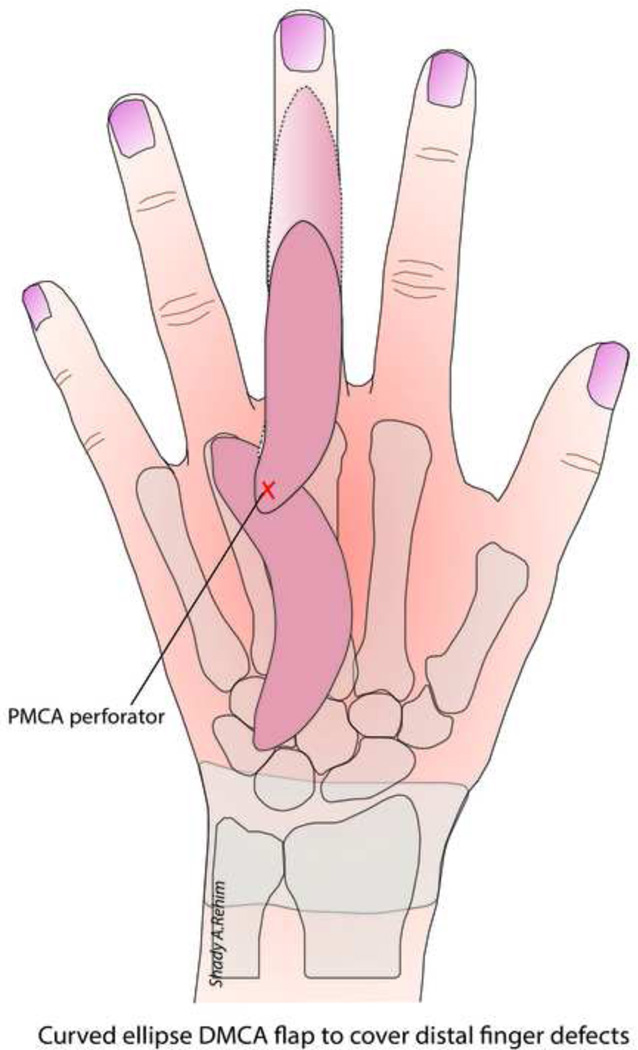
The skin paddle of the DMCA flap can be designed as a curved ellipse to increase the reach of the flap to cover more distal defects.
Figure 7
Figure 7
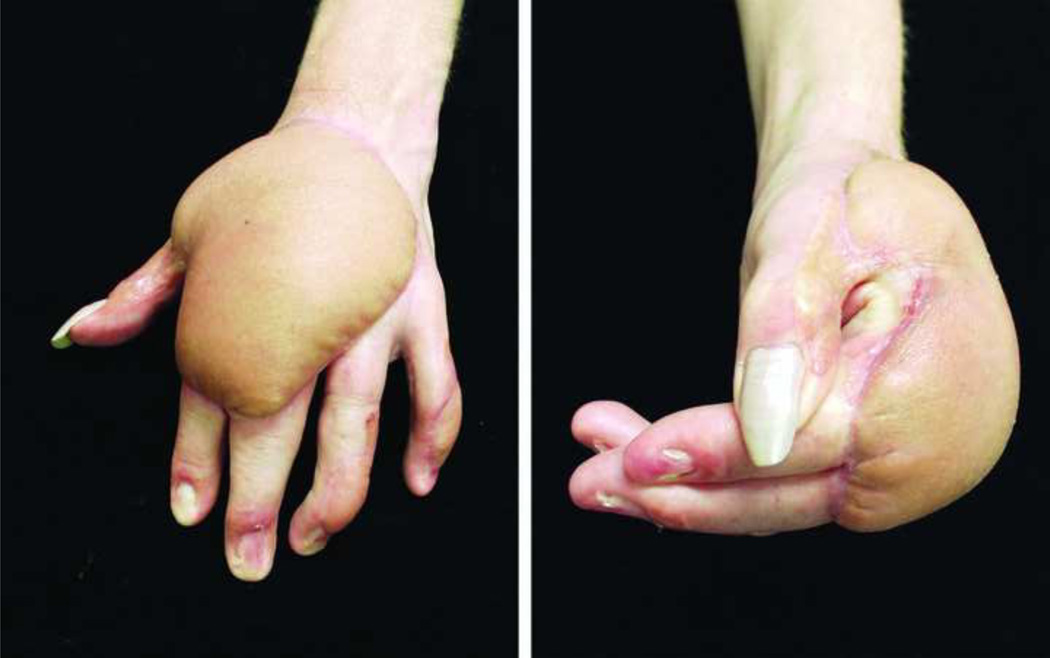
Volume discrepancy between donor and recipient tissue (usually obvious on dorsum of the hand) results in a well demarcated bulky soft-tissue reconstruction that is undesirable and can be functionally limiting.
Figure 8
Figure 8
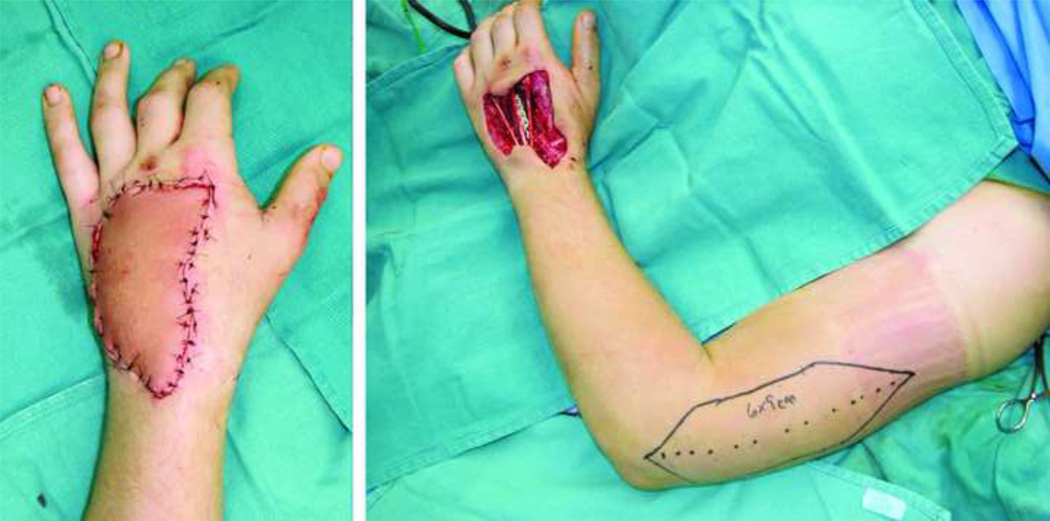
A 22-year-old male who suffered an accidental gunshot wound on dorsum of the hand that was covered with a lateral arm flap.
Figure 9
Figure 9
The same patient in figure 8, note volume discrepancy between the flap and dorsum of the hand (flap bulkiness), can be substantially reduced by flap debulking procedure.
Figure 10
Figure 10
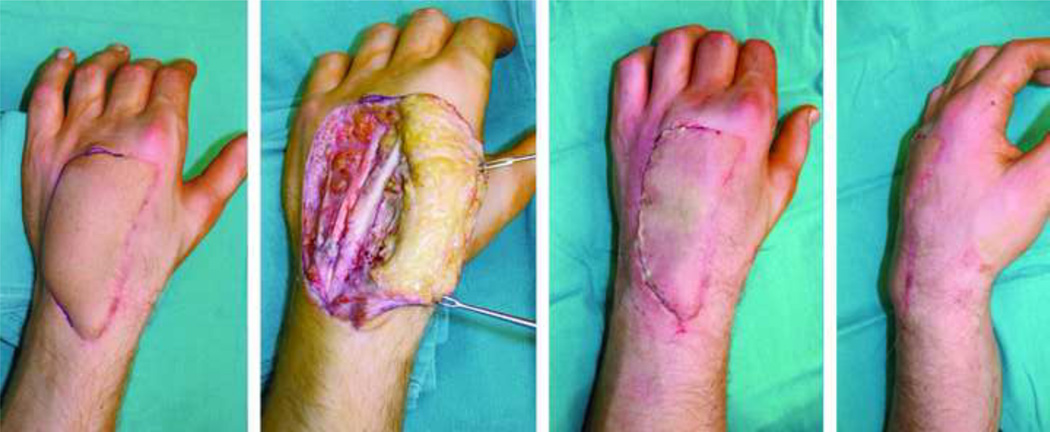
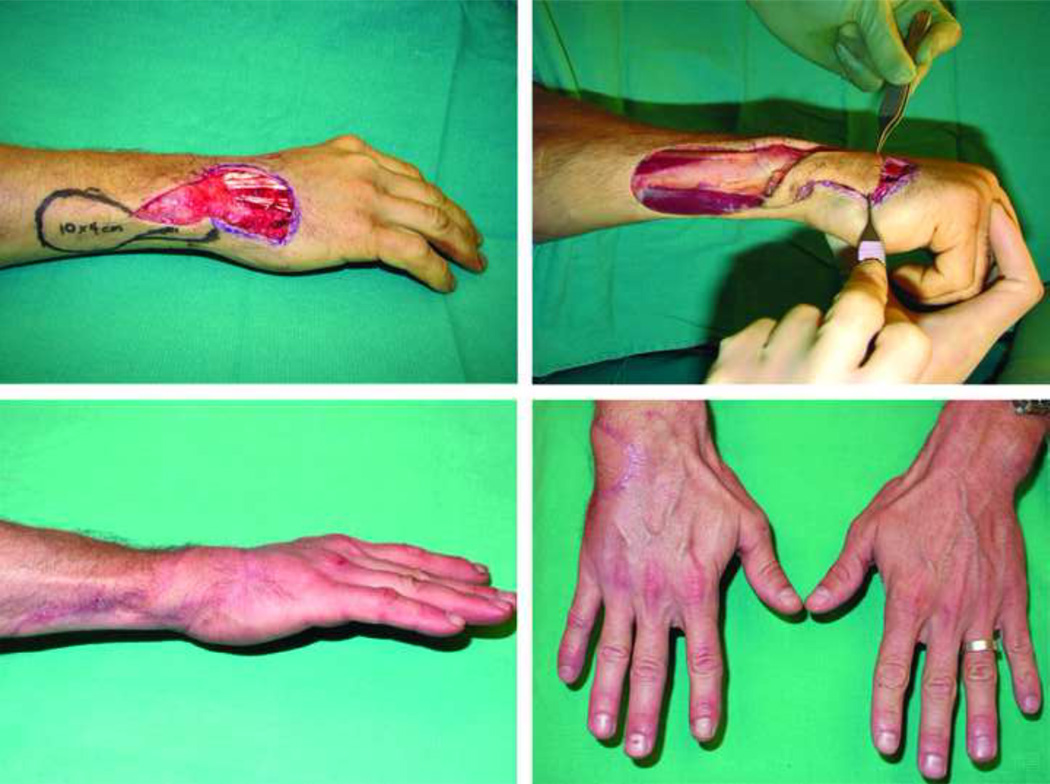
A 39-year-old male sustained a crush injury resulting in an extensive soft-tissue loss and exposed tendons. A dorsal forearm ulnar artery perforator flap was raised to cover the defect. Optimal aesthetic and functional results were achieved due to similarity between the skin on dorsal unit of the hand and the dorsal skin of the forearm.
Figure 11
Figure 11
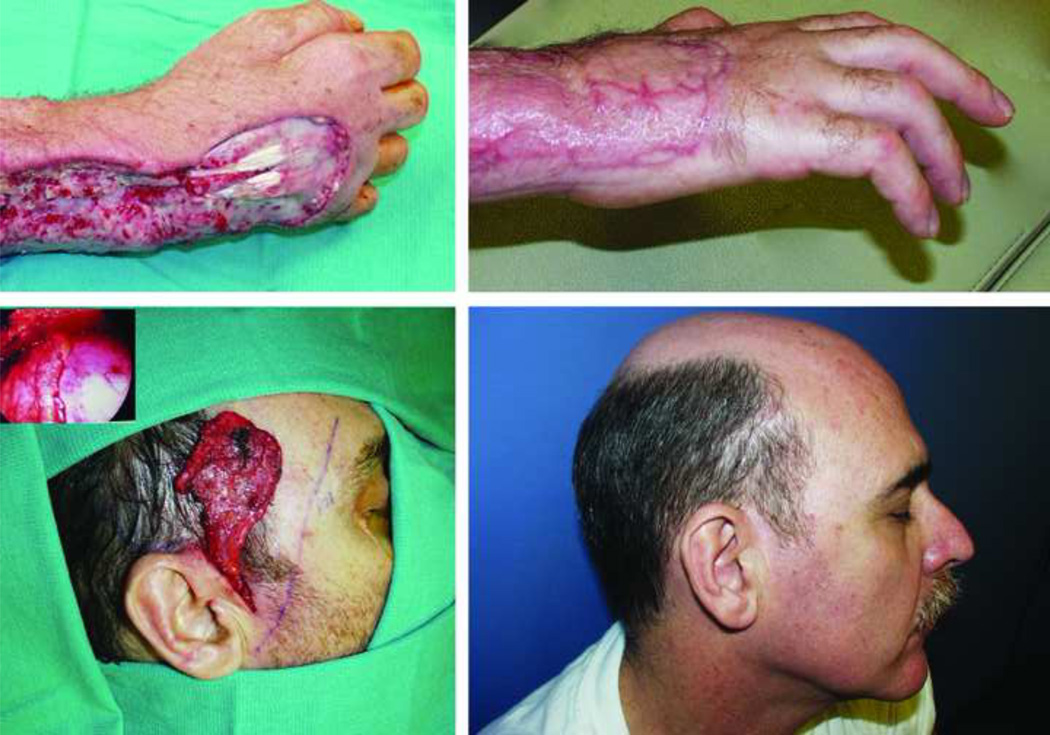
A 52-year-old male who sustained an extensive degloving injury of the dorsum of his right hand leaving exposed tendons (top left). A right endoscopic assisted temporoparietal fascia free flap (bottom left) was harvested to cover the defect. Note the endoscope picture delineating the distal extent of the flap. A smooth contour (top right) between the fascial flap and dorsal skin was achieved as well as an inconspicuous donor-site, hidden within patient’s hairline (bottom right).
Figure 12
Figure 12
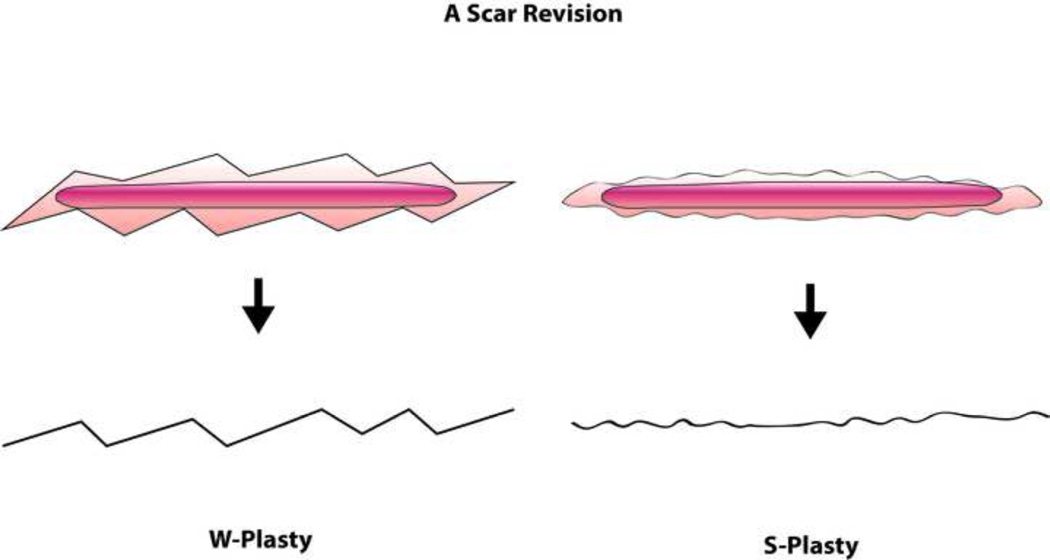
Both W-plasty and S-plasty result in a minimal gain of length and a decreased tension on the scar-line. However the final scar appearance following scar revision by S-plasty results in a less noticeable scar than the right-angled zig-zag lines resulting from W-plasty.
Figure 13
Figure 13. Moberg flap
Soft-tissue coverage of thumb volar/pulp defects (medium-size defects approximately 1.5cm)
Figure 14
Figure 14. Kite flap
Soft-tissue coverage of variable sized defects such as distal amputation, loss of palmar surface (including pulp), or loss of dorsal substance and at a more proximal level to reconstruct loss of dorsal surface
Figure 15
Figure 15. Dorsoulnar thumb flap
Medium-size defects such as distal amputation, loss of palmar surface (including pulp), or loss of dorsal substance and at a more proximal level to reconstruct loss of dorsal surface.
Figure 16
Figure 16. Dorsoradial thumb flap
Medium-size defects (up to 5cm × 4cm) such as distal amputation, loss of palmar surface, or loss of dorsal substance and at a more proximal level to reconstruct loss of dorsal surface.

References

    1. McCash RC. Cosmetic aspects of hand surgery. The Hand. 1969 Mar;1(1):67–71.
    1. Manske PR. Aesthetic hand surgery. J Hand Surg Am. 2002;27:383–384. - PubMed
    1. Jakubietz RG, Jakubietz MG, Kloss D, Gruenert JG. Defining the Basic Aesthetics of the Hand. Aesthetic Plast Surg. 2005 Nov-Dec;29(6):546–551. - PubMed
    1. Rumsey N, Harcourt D. Body image and disfigurement: issues and interventions. Body Image. 2004 Jan;1(1):83–97. - PubMed
    1. Magee L. Traumatic Injuries and Body Image. Encyclopedia of Body Image and Human Appearance. 2012:790–797.

MeSH terms