


Novel codon-optimized mini-intronic plasmid for efficient, inexpensive, and xeno-free induction of pluripotency
- PMID: 25628230
- PMCID: PMC4308704
- DOI: 10.1038/srep08081
Novel codon-optimized mini-intronic plasmid for efficient, inexpensive, and xeno-free induction of pluripotency
Abstract
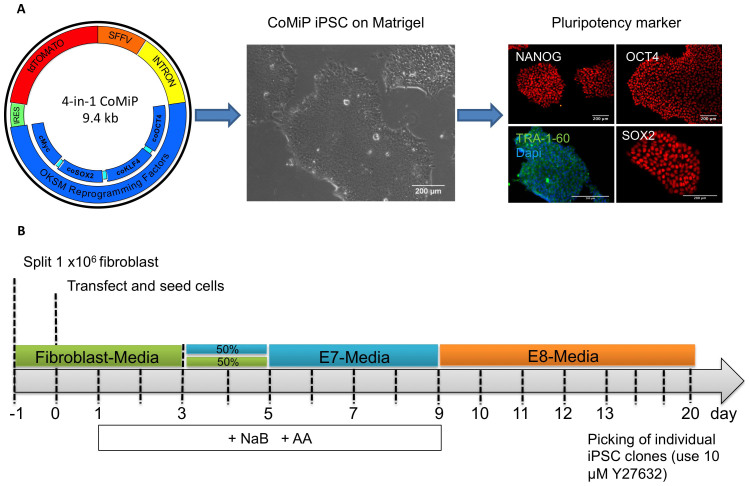
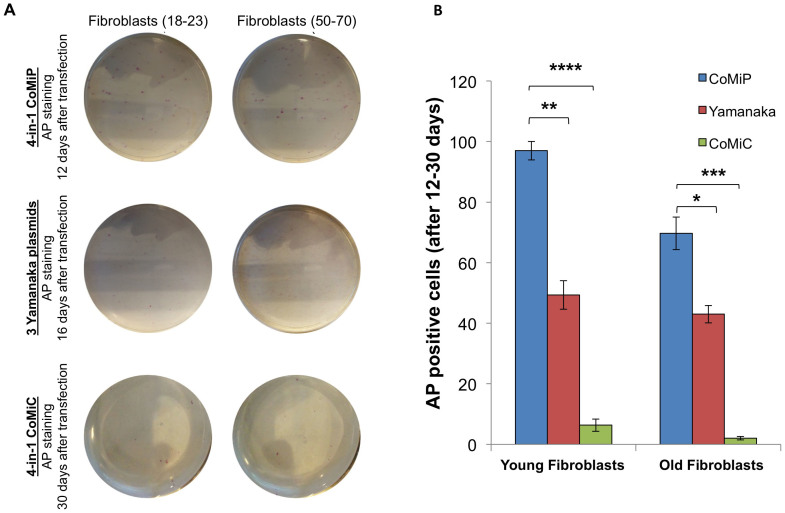
The development of human induced pluripotent stem cell (iPSC) technology has revolutionized the regenerative medicine field. This technology provides a powerful tool for disease modeling and drug screening approaches. To circumvent the risk of random integration into the host genome caused by retroviruses, non-integrating reprogramming methods have been developed. However, these techniques are relatively inefficient or expensive. The mini-intronic plasmid (MIP) is an alternative, robust transgene expression vector for reprogramming. Here we developed a single plasmid reprogramming system which carries codon-optimized (Co) sequences of the canonical reprogramming factors (Oct4, Klf4, Sox2, and c-Myc) and short hairpin RNA against p53 ("4-in-1 CoMiP"). We have derived human and mouse iPSC lines from fibroblasts by performing a single transfection. Either independently or together with an additional vector encoding for LIN28, NANOG, and GFP, we were also able to reprogram blood-derived peripheral blood mononuclear cells (PBMCs) into iPSCs. Taken together, the CoMiP system offers a new highly efficient, integration-free, easy to use, and inexpensive methodology for reprogramming. Furthermore, the CoMIP construct is color-labeled, free of any antibiotic selection cassettes, and independent of the requirement for expression of the Epstein-Barr Virus nuclear antigen (EBNA), making it particularly beneficial for future applications in regenerative medicine.
Conflict of interest statement
Yes, there is potential competing interest. J.C.W. is a co-founder of Stem Cell Theranostics.
Figures



References
-
- Takahashi K., Okita K., Nakagawa M. & Yamanaka S. Induction of pluripotent stem cells from fibroblast cultures. Nat Protoc 2, 3081–3089 (2007). - PubMed
-
- Yu J. et al. Induced pluripotent stem cell lines derived from human somatic cells. Science 318, 1917–1920 (2007). - PubMed
-
- Takahashi K. & Yamanaka S. Induction of pluripotent stem cells from mouse embryonic and adult fibroblast cultures by defined factors. Cell 126, 663–676 (2006). - PubMed
Publication types
MeSH terms
Substances
Grants and funding
LinkOut - more resources
Full Text Sources
Other Literature Sources
Research Materials
Miscellaneous
