


The effect of turmeric (Curcumin) supplementation on cytokine and inflammatory marker responses following 2 hours of endurance cycling
- PMID: 25628521
- PMCID: PMC4307740
- DOI: 10.1186/s12970-014-0066-3
The effect of turmeric (Curcumin) supplementation on cytokine and inflammatory marker responses following 2 hours of endurance cycling
Abstract
Background: Endurance exercise induces IL-6 production from myocytes that is thought to impair intracellular defence mechanisms. Curcumin inhibits NF-κB and activator protein 1, responsible for cytokine transcription, in cell lines. The aim of this study was to investigate the effect of curcumin supplementation on the cytokine and stress responses following 2 h of cycling.
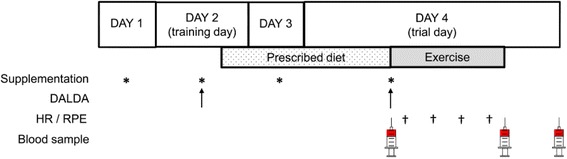
Methods: Eleven male recreational athletes (35.5 ± 5.7 years; Wmax 275 ± 6 W; 87.2 ± 10.3 kg) consuming a low carbohydrate diet of 2.3 ± 0.2 g/kg/day underwent three double blind trials with curcumin supplementation, placebo supplementation, and no supplementation (control) to observe the response of serum interleukins (IL-6, IL1-RA, IL-10), cortisol, c-reactive protein (CRP), and subjective assessment of training stress. Exercise was set at 95% lactate threshold (54 ± 7% Wmax) to ensure that all athletes completed the trial protocol.
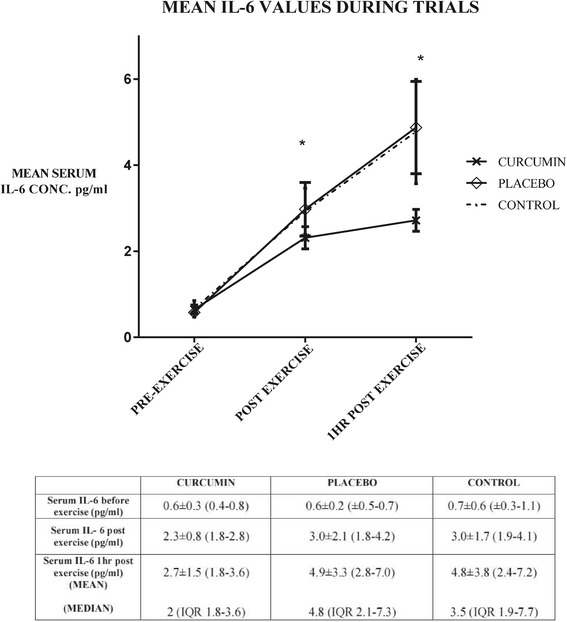
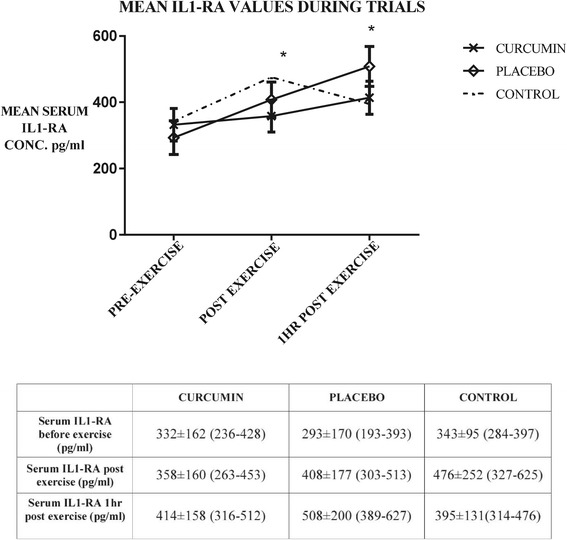
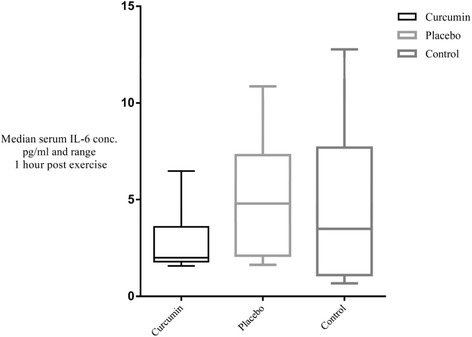
Results: The trial protocol elicted a rise in IL-6 and IL1-RA, but not IL-10. The supplementation regimen failed to produce statistically significant results when compared to placebo and control. IL-6 serum concentrations one hour following exercise were (Median (IQR): 2.0 (1.8-3.6) Curcumin; 4.8 (2.1-7.3) Placebo; 3.5 (1.9-7.7) Control). Differences between supplementation and placebo failed to reach statistical significance (p = 0.18) with the median test. Repeated measures ANOVA time-trial interaction was at p = 0.06 between curcumin supplementation and placebo. A positive correlation (p = 0.02) between absolute exercise intensity and 1 h post-exercise for IL-6 concentration was observed. Participants reported "better than usual" scores in the subjective assessment of psychological stress when supplementing with curcumin, indicating that they felt less stressed during training days (p = 0.04) compared to placebo even though there was no difference in RPE during any of the training days or trials.
Conclusion: The limitations of the current regimen and trial involved a number of factors including sample size, mode of exercise, intensity of exercise, and dose of curcumin. Nevertheless these results provide insight for future studies with larger samples, and multiple curcumin dosages to investigate if different curcumin regimens can lead to statistically different interleukin levels when compared to a control and placebo.
Keywords: Immunity; Interleukins; Natural polyphenols.
Figures
References
-
- Nehlsen-Cannarella SL, Fagoaga OR, Nieman DC, Henson DA, Butterworth DE, Schmitt RL, Bailey EM, Warren BJ, Utter A, Davis JM. Carbohydrate and the cytokine response to 2.5 h of running. J Appl Physiol. 1997;82:1662–7. - PubMed
-
- Gleeson M, Blannin AK, Walsh NP, Bishop NC, Clark AM. Effect of low and high carbohydrate diets on the plasma glutamine and circulating leukocyte responses to exercise. Int J Sport Nutr Exerc Metab. 1998;8:49–59. - PubMed
-
- Mitchell JB, Pizza FX, Paquet A, Davis BJ, Forrest MB, Braun WA. Influence of carbohydrate status on immune responses before and after endurance exercise. J Appl Physiol. 1998;84:1917–25. - PubMed
-
- Walsh NP, Gleeson M, Pyne DB, Niema D, Dhabhar FS, Shephard R, Oliver S, Bermon S, Kajeniene A. Position statement part two: maintaining immune health. Exerc Immunol Rev. 2011;17:64–103. - PubMed
LinkOut - more resources
Full Text Sources
Other Literature Sources
Research Materials
Miscellaneous
