


Do soil microbes and abrasion by soil particles influence persistence and loss of physical dormancy in seeds of tropical pioneers?
- PMID: 25628640
- PMCID: PMC4292399
- DOI: 10.3389/fpls.2014.00799
Do soil microbes and abrasion by soil particles influence persistence and loss of physical dormancy in seeds of tropical pioneers?
Abstract
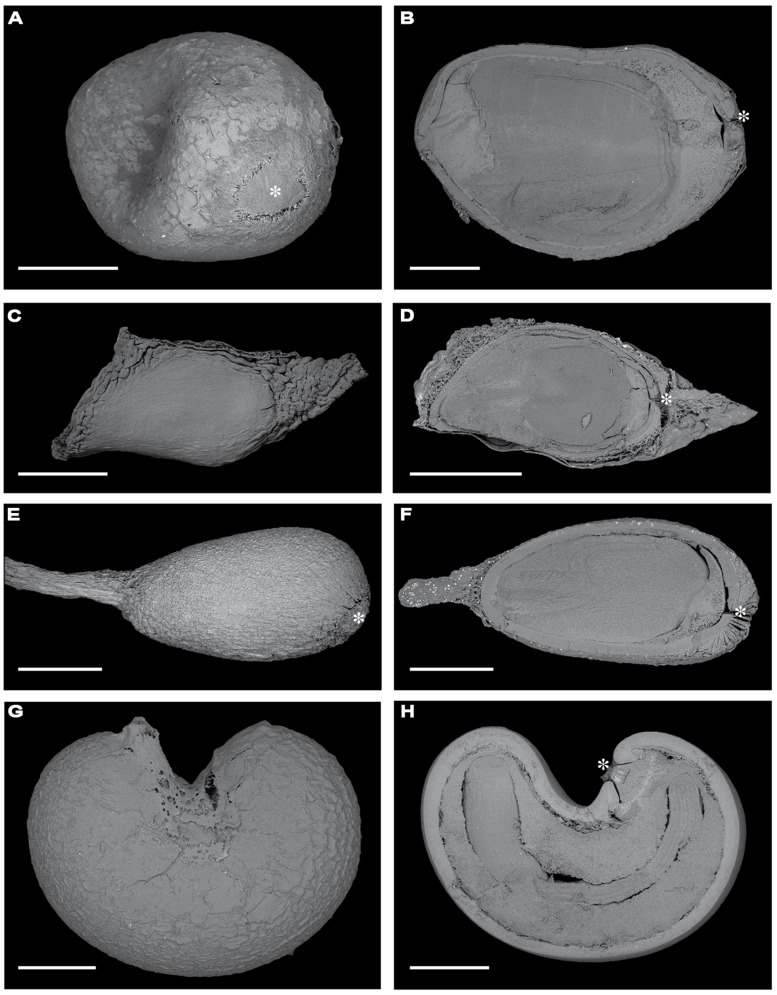
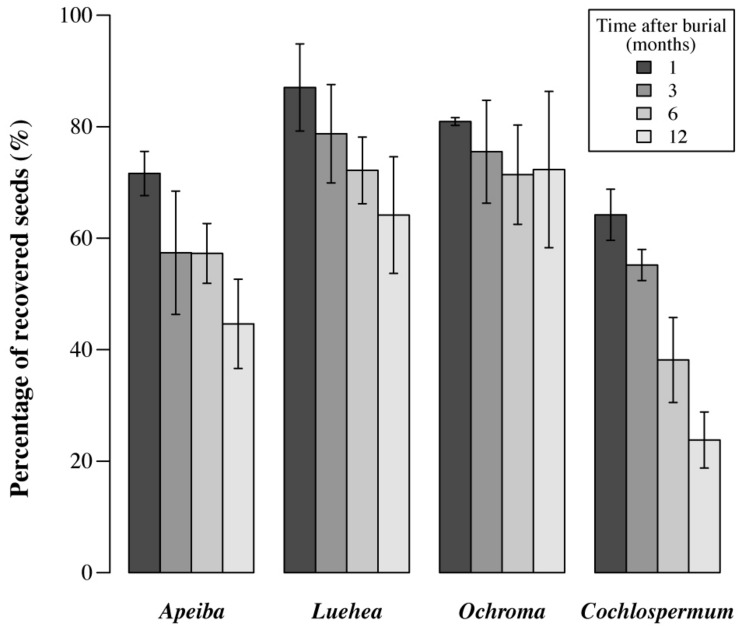
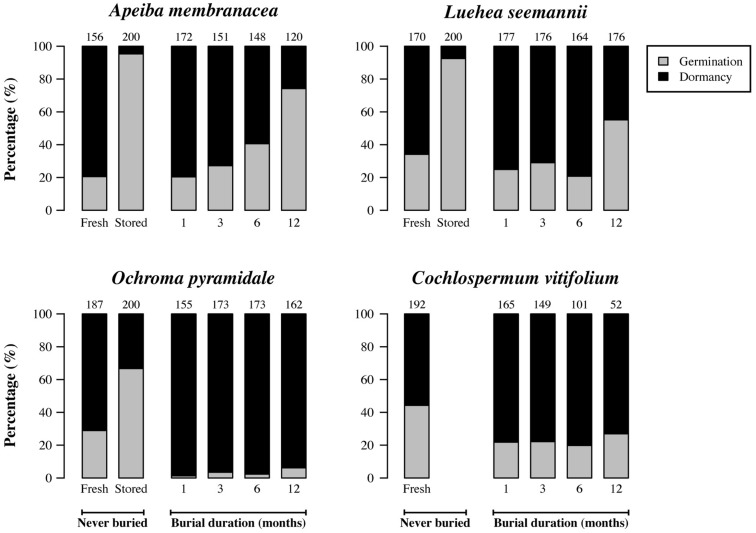
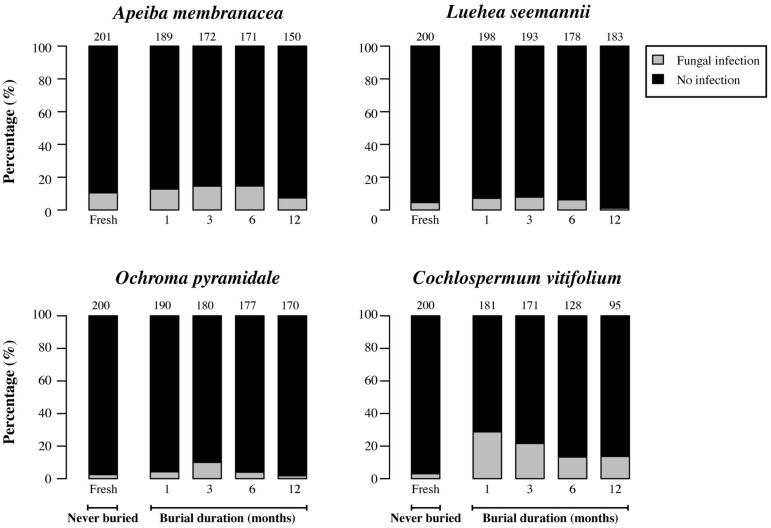
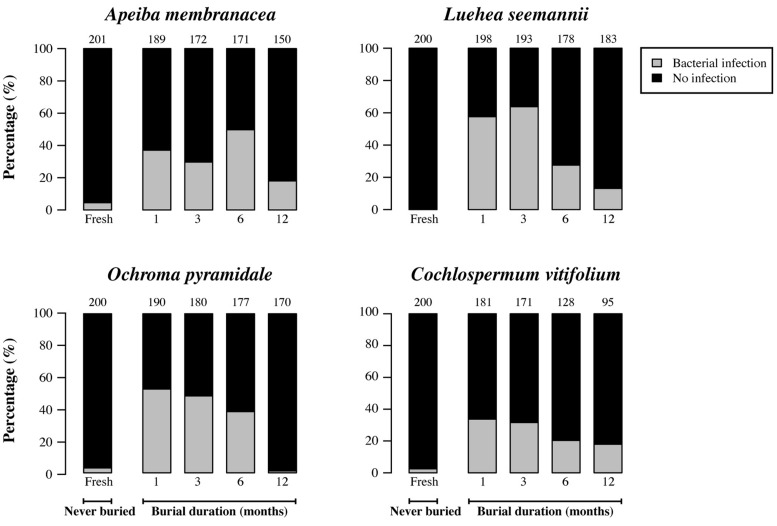
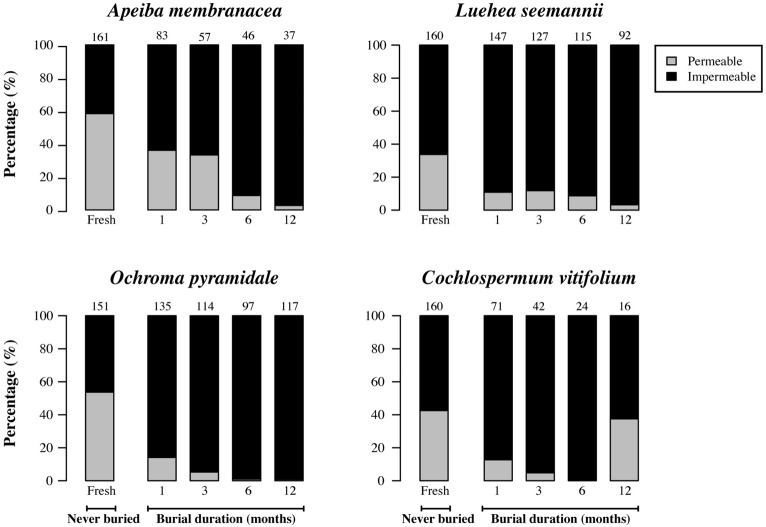
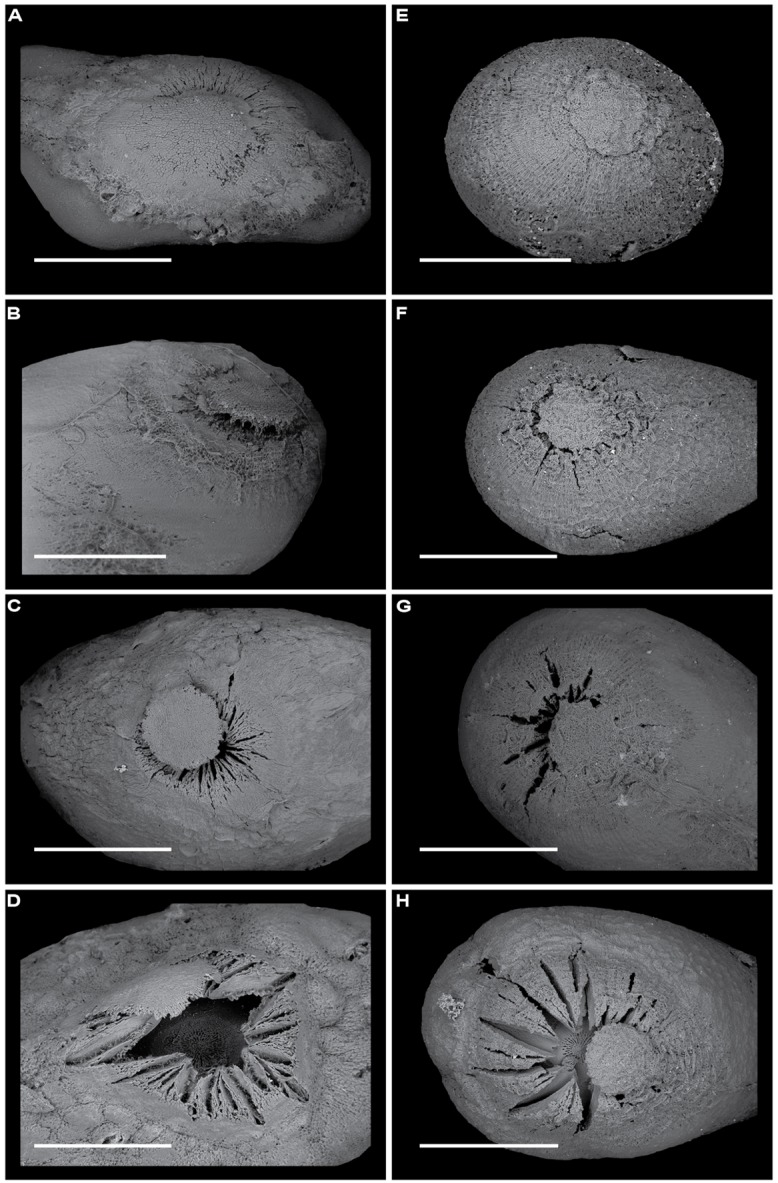
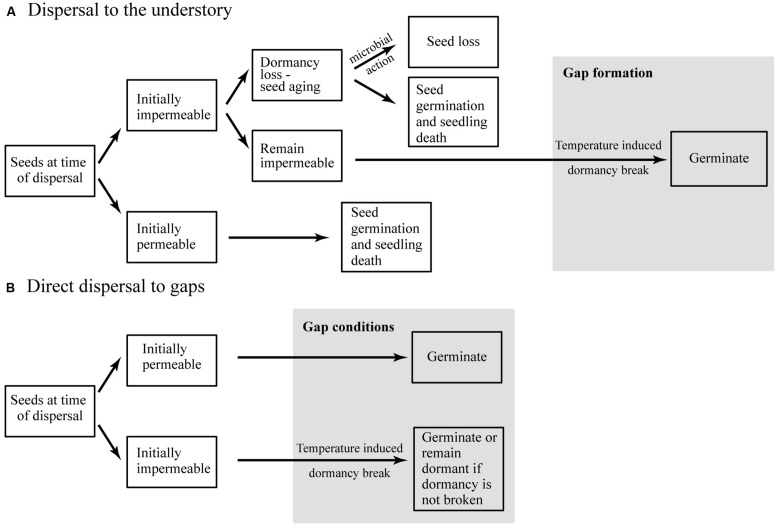
Germination from the soil seed bank (SSB) is an important determinant of species composition in tropical forest gaps, with seed persistence in the SSB allowing trees to recruit even decades after dispersal. The capacity to form a persistent SSB is often associated with physical dormancy, where seed coats are impermeable at the time of dispersal. Germination literature often speculates, without empirical evidence, that dormancy-break in physically dormant seeds is the result of microbial action and/or abrasion by soil particles. We tested the microbial/soil abrasion hypothesis in four widely distributed neotropical pioneer tree species (Apeiba membranacea, Luehea seemannii, Ochroma pyramidale, and Cochlospermum vitifolium). Seeds were buried in five common gardens in a lowland tropical forest in Panama, and recovered at 1, 3, 6, and 12 months after burial. Seed permeability, microbial infection, seed coat thickness, and germination were measured. Parallel experiments compared the germination fraction of fresh and aged seeds without soil contact, and in seeds as a function of seed permeability. Contrary to the microbial/soil abrasion hypothesis the proportion of permeable seeds, and of seeds infected by cultivable microbes, decreased as a function of burial duration. Furthermore, seeds stored in dark and dry conditions for 2 years showed a higher proportion of seed germination than fresh seeds in identical germination conditions. We determined that permeable seeds of A. membranacea and O. pyramidale had cracks in the chalazal area or lacked the chalazal plug, whereas all surfaces of impermeable seeds were intact. Our results are inconsistent with the microbial/soil abrasion hypothesis of dormancy loss and instead suggest the existence of multiple dormancy phenotypes, where a fraction of each seed cohort is dispersed in a permeable state and germinates immediately, while the impermeable seed fraction accounts for the persistent SSB. Thus, we conclude that fluctuations in the soil temperature in the absence of soil abrasion and microbial infection are sufficient to break physical dormancy on seeds of tropical pioneer trees.
Keywords: Barro Colorado Island; germination cue; physical dormancy; pioneer plants; seed dormancy loss; seed persistence; soil seed bank.
Figures
References
-
- Acuña P., Garwood N. C. (1987). Efecto de la luz y de la escarificación en la germinación de las semillas de cinco especies de arboles tropicales secundarios. Rev. Biol. Trop. 35 203–207.
-
- Augspurger C. K. (1984). Seedling survival of tropical tree species: interactions of dispersal distance, light-gaps, and pathogens. Ecology 65 1705–1712 10.2307/1937766 - DOI
-
- Baillie I., Elsenbeer H., Barthold F., Grimm R., Stallard R. (2006). A Semi-Detailed Soil Survey of Barro Colorado Island. Panama: Smithsonian Tropical Research Institute.
-
- Baskin C. C., Baskin J. M. (1989). “Physiology of dormancy and germination in relation to seed bank ecology,” in Ecology of Soil Seed Banks eds Leck M. A., Parker V. T., Simpson R. L. (San Diego, CA: Academic Press; ), 53–66.
LinkOut - more resources
Full Text Sources
Other Literature Sources
