


Characterization of 2-amino-1-methyl-6-phenylimidazo[4,5b]pyridine at androgen receptor: mechanistic support for its role in prostate cancer
- PMID: 25628930
- PMCID: PMC4300711
Characterization of 2-amino-1-methyl-6-phenylimidazo[4,5b]pyridine at androgen receptor: mechanistic support for its role in prostate cancer
Abstract
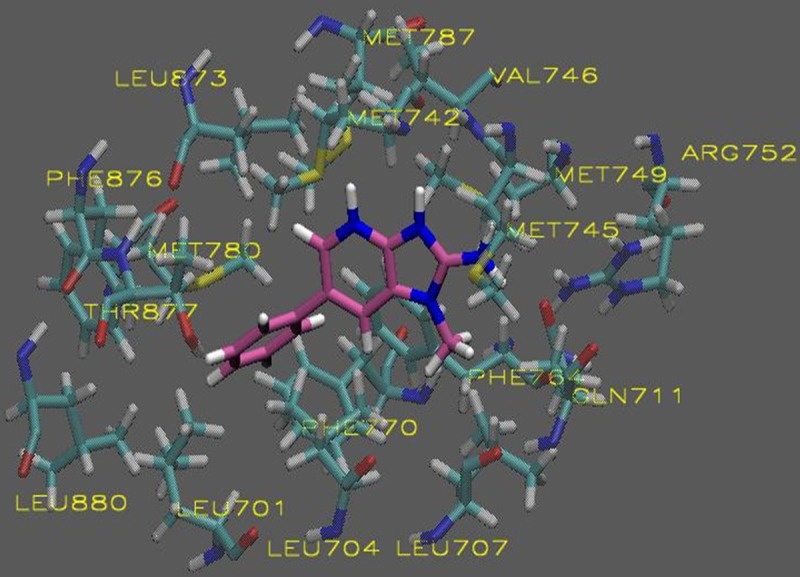
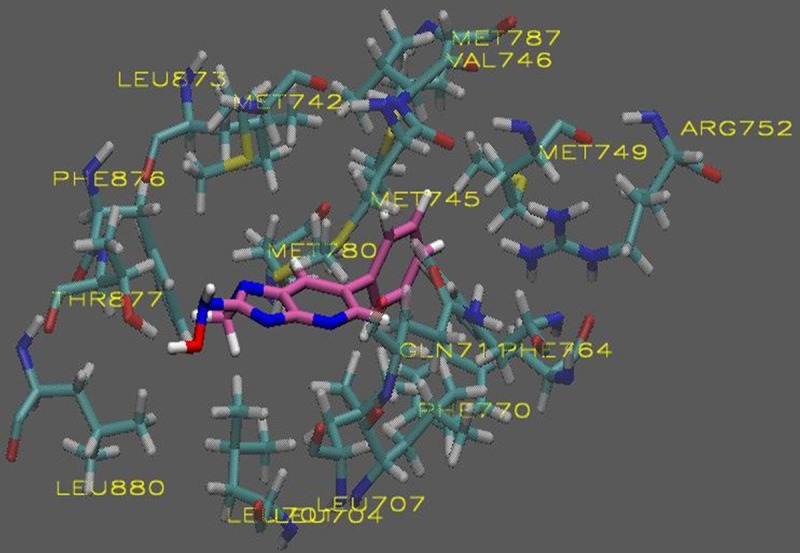
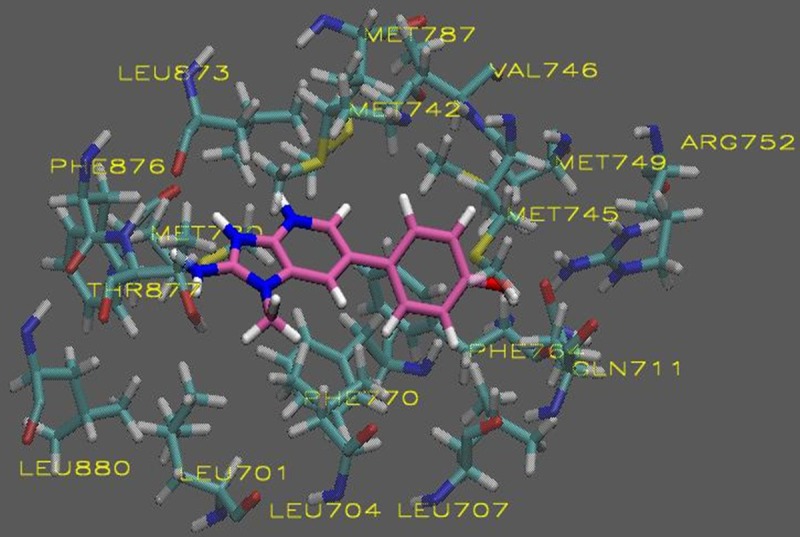
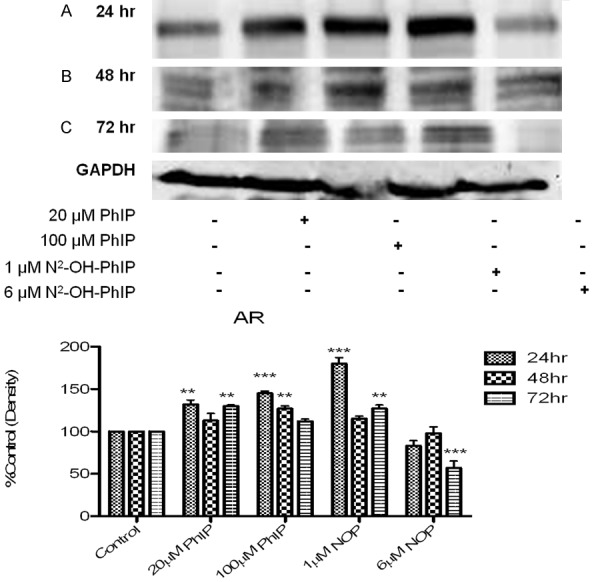
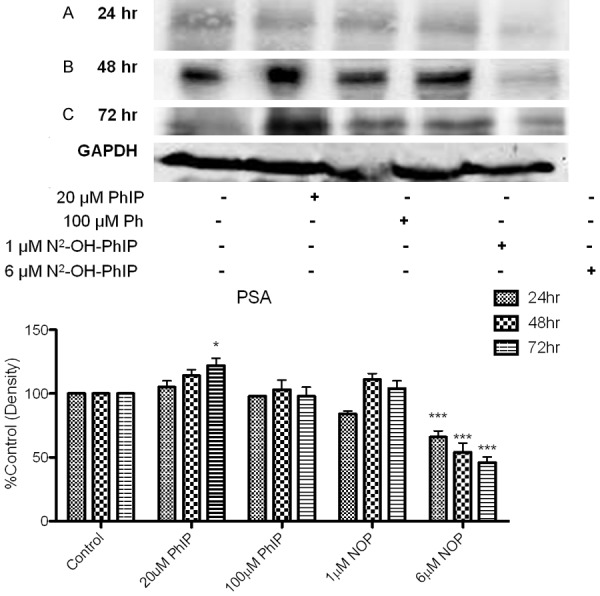
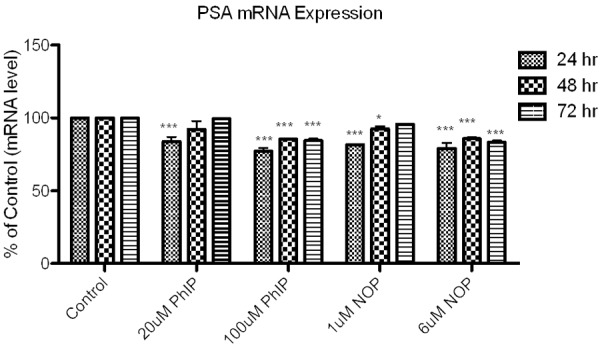
2-amino-1-methyl-6-phenylimidazo[4,5b]pyridine (PhIP) is a dietary mutagenic carcinogen that has been shown not only to induce the formation of DNA adducts, but is capable of inducing tumors in the colon, mammary, and prostate glands. The normal development and maturation of the prostate gland, as well as early progression of prostate cancer, is dependent on androgens acting on the androgen receptor (AR). The actual mechanism by which PhIP interacts with our biological system and its potential interaction at the AR has yet to be fully defined. Here, we describe our work in evaluating the molecular events associated with PhIP-mediated disruption of AR function in LNCaP human prostate cancer cells. We demonstrate, by molecular docking simulation, that PhIP and its metabolite can bind to the ligand-binding domain (LBD). The binding competes with dihydrotestosterone (DHT) in the native AR binding cavity of the receptor. In vitro assays show that PhIP increase AR protein expression in LNCaP cells and alters its responsiveness through PSA protein and mRNA expression. We propose that the mechanism for the tissue-specific carcinogenicity seen in the rat prostate tumors and the presumptive human prostate cancer associated with the consumption of well-done meat may be mediated by this receptor activation. Our results indicate that PhIP may play an important role in modifications of AR function.
Keywords: 2-amino-1-methyl-6-phenylimidazo[4; 5b]pyridine (PhIP); dietary carcinogenesis; molecular modeling; prostate cancer.
Figures
References
-
- Sugimura T. Food and cancer. Toxicology. 2002;181-182:17–21. - PubMed
-
- Felton JS, Knize MG. New mutagens from cooked food. Prog Clin Biol Res. 1990;347:19–38. - PubMed
-
- Kolonel LN, Nomura AM, Cooney RV. Dietary fat and prostate cancer: current status. J Natl Cancer Inst. 1999;91:414–428. - PubMed
-
- Lauber SN, Gooderham NJ. The cooked meat-derived mammary carcinogen 2-amino-1-methyl-6-phenylimidazo[4,5-b] pyridine promotes invasive behaviour of breast cancer cells. Toxicology. 2011;279:139–145. - PubMed
-
- Bennion BJ, Cosman M, Lightstone FC, Knize MG, Montgomery JL, Bennett LM, Felton JS, Kulp KS. PhIP carcinogenicity in breast cancer: computational and experimental evidence for competitive interactions with human estrogen receptor. Chem Res Toxicol. 2005;18:1528–1536. - PubMed
Grants and funding
LinkOut - more resources
Full Text Sources
Research Materials
Miscellaneous