


Metabolism and metabolites of polychlorinated biphenyls
- PMID: 25629923
- PMCID: PMC4383295
- DOI: 10.3109/10408444.2014.999365
Metabolism and metabolites of polychlorinated biphenyls
Abstract
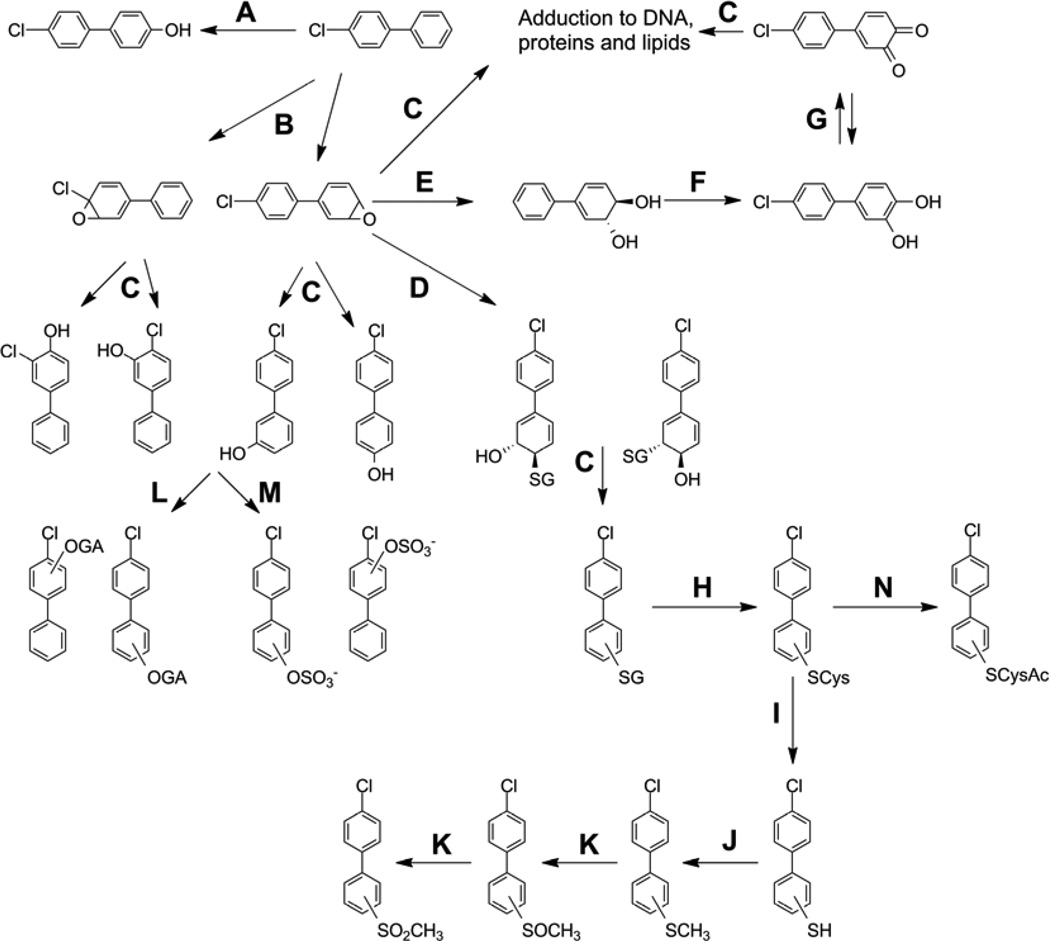
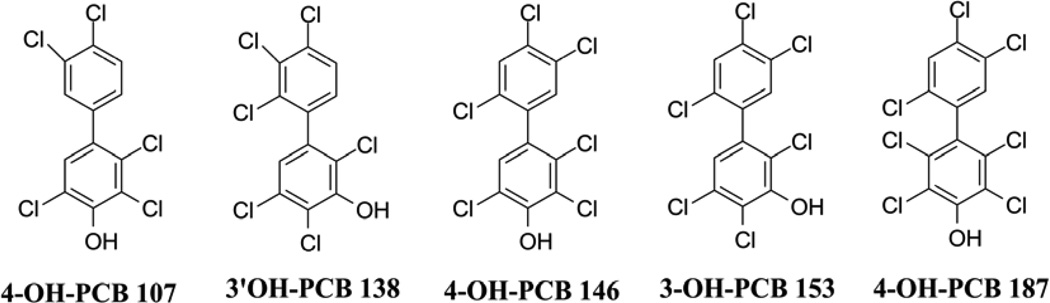
Abstract The metabolism of polychlorinated biphenyls (PCBs) is complex and has an impact on toxicity, and thereby on the assessment of PCB risks. A large number of reactive and stable metabolites are formed in the processes of biotransformation in biota in general, and in humans in particular. The aim of this document is to provide an overview of PCB metabolism, and to identify the metabolites of concern and their occurrence. Emphasis is given to mammalian metabolism of PCBs and their hydroxyl, methylsulfonyl, and sulfated metabolites, especially those that persist in human blood. Potential intracellular targets and health risks are also discussed.
Keywords: PCB methyl sulfones; PCB sulfates; human exposure; hydroxylated PCBs; polychlorobiphenylols; reactive intermediates.
Figures
References
-
- Alvares AP, Fischbein A, Anderson KE, Kappas A. Alterations in drug metabolism in workers exposed to polychlorinated biphenyls. Clin Pharmacol Ther. 1977;22:140–146. - PubMed
-
- Amaro AR, Oakley GG, Bauer U, Spielmann HP, Robertson LW. Metabolic activation of PCBs to quinones: reactivity toward nitrogen and sulfur nucleophiles and influence of superoxide dismutase. Chem Res Toxicol. 1996;9:623–629. - PubMed
-
- Asvold BO, Vatten LJ, Nilsen TI, Bjoro T. The association between TSH within the reference range and serum lipid concentrations in a population-based study. The HUNT Study. Eur J Endocrinol. 2007;156:181–186. - PubMed
-
- ATSDR . Toxicological profile for polychlorinated biphenyls (PCBs) U.S. Dept. Health Services, Public Health Service; 2000. - PubMed
-
- Bakke JE, Bergman AL, Larsen GL. Metabolism of 2,4',5-trichlorobiphenyl by the mercapturic acid pathway. Science. 1982;217:645–647. - PubMed
Publication types
MeSH terms
Substances
Grants and funding
LinkOut - more resources
Full Text Sources
Other Literature Sources
