Endotoxemia as a diagnostic tool for patients with suspected bacteremia caused by gram-negative organisms: a meta-analysis of 4 decades of studies
- PMID: 25631796
- PMCID: PMC4365253
- DOI: 10.1128/JCM.03531-14
Endotoxemia as a diagnostic tool for patients with suspected bacteremia caused by gram-negative organisms: a meta-analysis of 4 decades of studies
Abstract
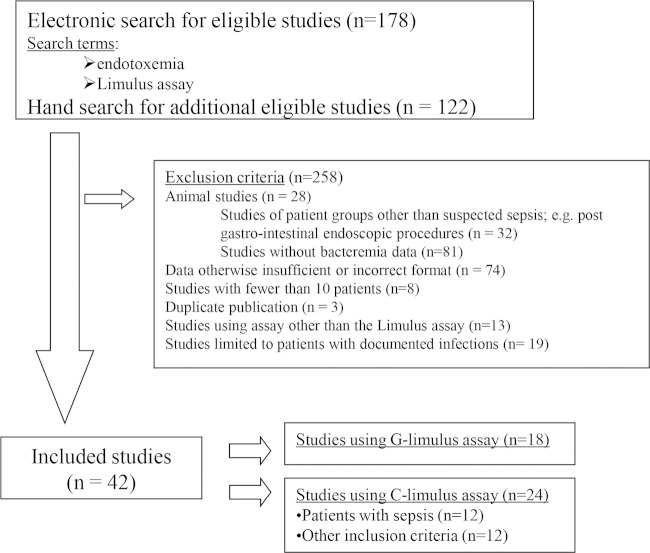
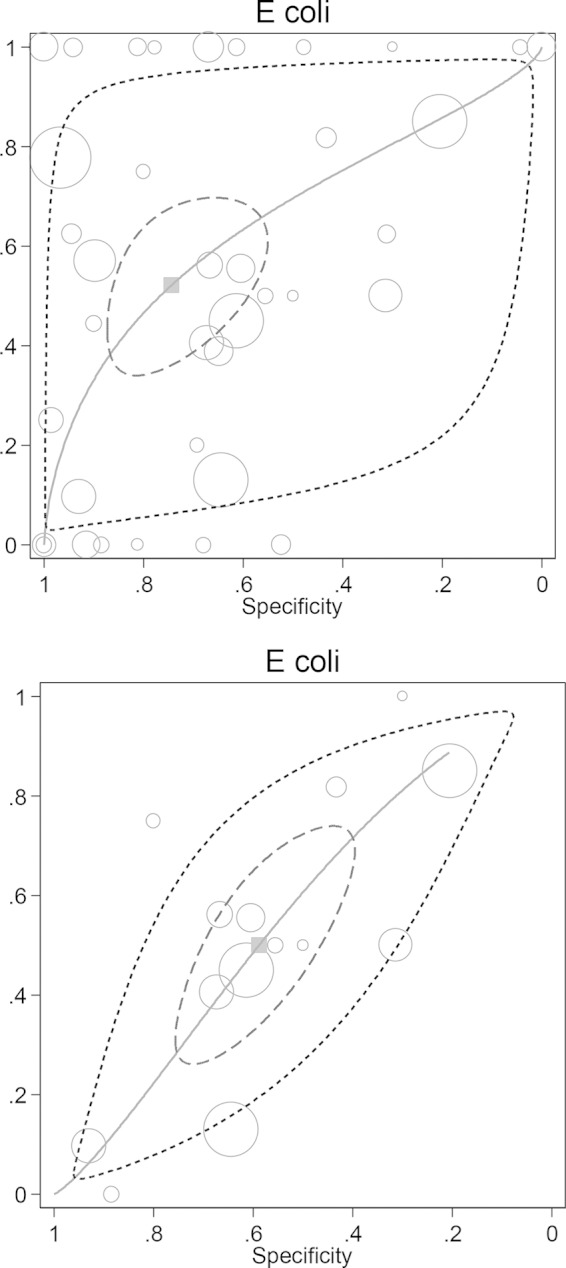
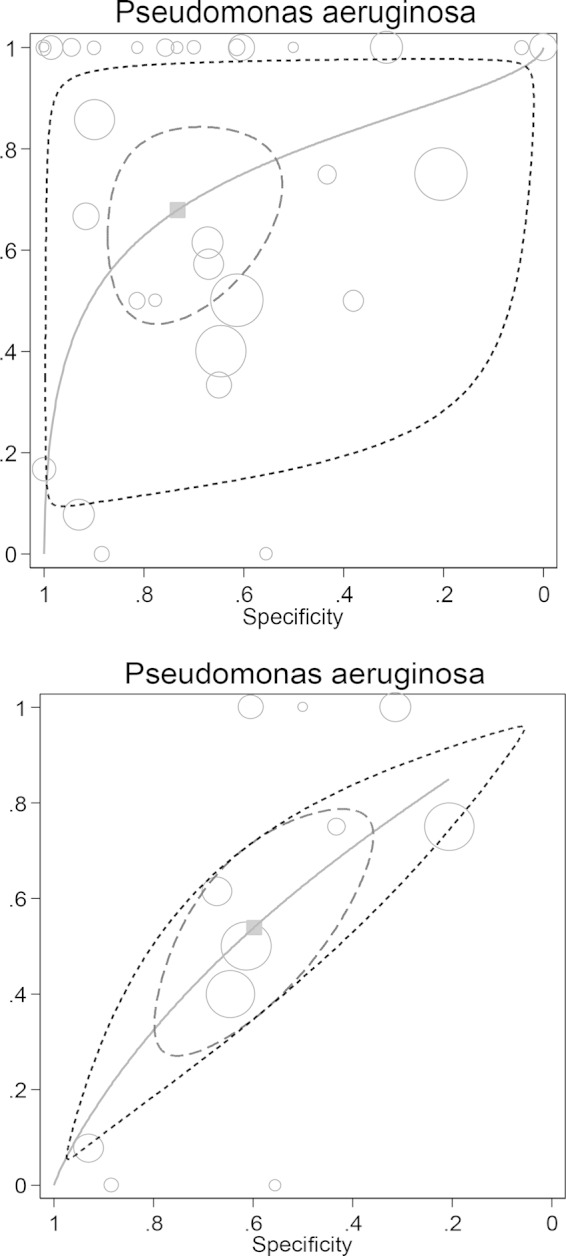
The clinical significance of endotoxin detection in blood has been evaluated for a broad range of patient groups in over 40 studies published over 4 decades. The influences of Gram-negative (GN) bacteremia species type and patient inclusion criteria on endotoxemia detection rates in published studies remain unclear. Studies were identified after a literature search and manual reviews of article bibliographies, together with a direct approach to authors of potentially eligible studies for data clarifications. The concordance between GN bacteremia and endotoxemia expressed as the summary diagnostic odds ratios (DORs) was derived for three GN bacteremia categories across eligible studies by using a hierarchical summary receiver operating characteristic (HSROC) method. Forty-two studies met broad inclusion criteria, with between 2 and 173 GN bacteremias in each study. Among all 42 studies, the DORs (95% confidence interval) were 3.2 (1.7 to 6.0) and 5.8 (2.4 to 13.7) in association with GN bacteremias with Escherichia coli and those with Pseudomonas aeruginosa, respectively. Among 12 studies of patients with sepsis, the proportion of endotoxemia positivity (95% confidence interval) among patients with P. aeruginosa bacteremia (69% [57 to 79%]; P=0.004) or with Proteus bacteremia (76% [51 to 91%]; P=0.04) was significantly higher than that among patients without GN bacteremia (49% [33 to 64%]), but this was not so for patients bacteremic with E. coli (57% [40 to 73%]; P=0.55). Among studies of the sepsis patient group, the concordance of endotoxemia with GN bacteremia was surprisingly weak, especially for E. coli GN bacteremia.
Copyright © 2015, American Society for Microbiology. All Rights Reserved.
Figures
References
-
- Hurley JC. 2013. Endotoxemia: concordance with Gram-negative bacteremia and association with outcome. Doctor of Medical Science thesis, University of Melbourne, Melbourne, Australia: http://repository.unimelb.edu.au/10187/17991 Accessed 22 October 2014.
Publication types
MeSH terms
LinkOut - more resources
Full Text Sources
Miscellaneous