Minireview: Autophagy in pancreatic β-cells and its implication in diabetes
- PMID: 25633274
- PMCID: PMC5414755
- DOI: 10.1210/me.2014-1367
Minireview: Autophagy in pancreatic β-cells and its implication in diabetes
Abstract
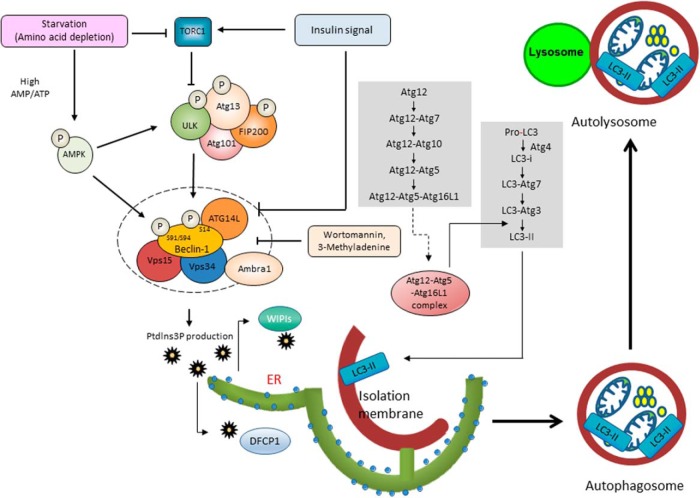
Autophagy is a conserved system for the degradation of cytoplasmic proteins and organelles. During insulin resistance, in which insulin secretion is enhanced and β-cell mass is increased owing to changes in the expression and function of various proteins in pancreatic β-cells, autophagic activity appears to also be enhanced to adapt to the dynamic changes occurring in β-cells. Indeed, defective autophagy in β-cells recapitulates several features that are observed in islets during the development of type 2 diabetes mellitus. In addition, the dyregulation of autophagic activity appears to occur in the β-cells of type 2 diabetic model mice and type 2 diabetes mellitus patients. These lines of evidence suggest that autophagic failure may be implicated in the pathophysiology of type 2 diabetes mellitus. In this review, we summarized the recent findings regarding how autophagy in β-cells is regulated and how dysfunction of the autophagic machinery may lead to the dysfunction of β-cells.
Figures
References
Publication types
MeSH terms
Substances
LinkOut - more resources
Full Text Sources
Other Literature Sources
Medical