


Repeated head trauma is associated with smaller thalamic volumes and slower processing speed: the Professional Fighters' Brain Health Study
- PMID: 25633832
- PMCID: PMC4518758
- DOI: 10.1136/bjsports-2014-093877
Repeated head trauma is associated with smaller thalamic volumes and slower processing speed: the Professional Fighters' Brain Health Study
Abstract
Objectives: Cumulative head trauma may alter brain structure and function. We explored the relationship between exposure variables, cognition and MRI brain structural measures in a cohort of professional combatants.
Methods: 224 fighters (131 mixed martial arts fighters and 93 boxers) participating in the Professional Fighters Brain Health Study, a longitudinal cohort study of licensed professional combatants, were recruited, as were 22 controls. Each participant underwent computerised cognitive testing and volumetric brain MRI. Fighting history including years of fighting and fights per year was obtained from self-report and published records. Statistical analyses of the baseline evaluations were applied cross-sectionally to determine the relationship between fight exposure variables and volumes of the hippocampus, amygdala, thalamus, caudate, putamen. Moreover, the relationship between exposure and brain volumes with cognitive function was assessed.
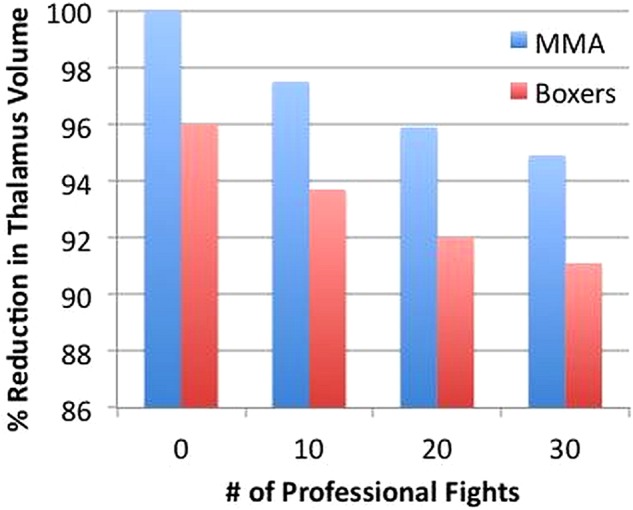
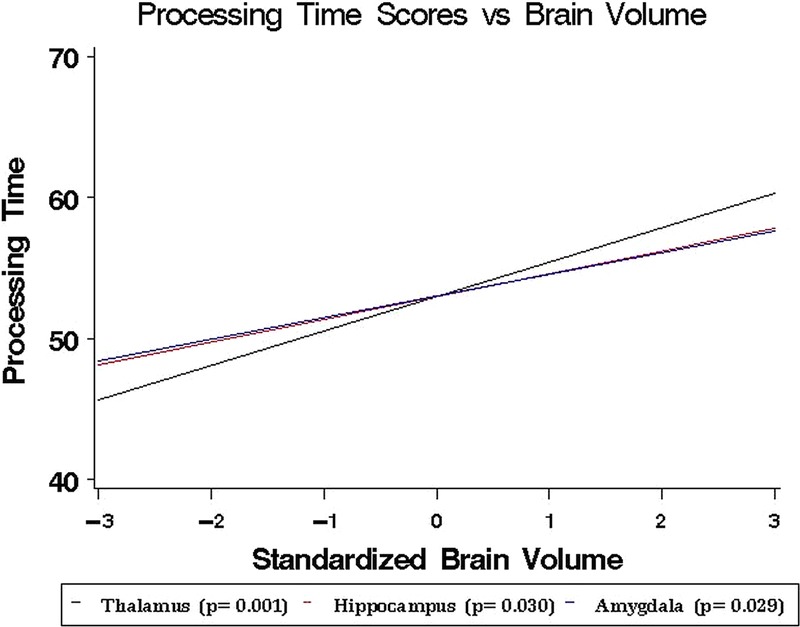
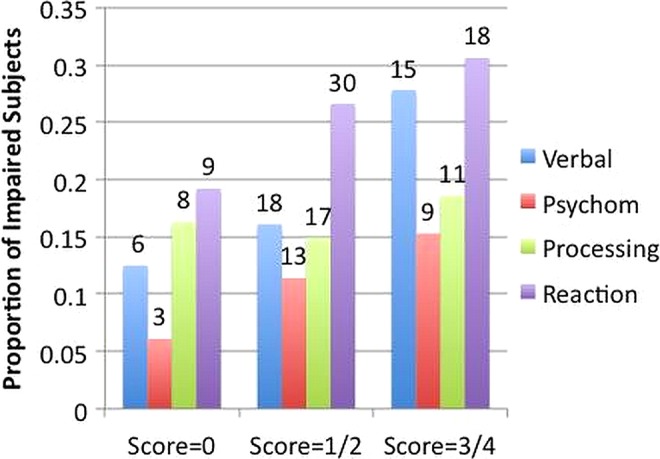
Results: Increasing exposure to repetitive head trauma measured by number of professional fights, years of fighting, or a Fight Exposure Score (FES) was associated with lower brain volumes, particularly the thalamus and caudate. In addition, speed of processing decreased with decreased thalamic volumes and with increasing fight exposure. Higher scores on a FES used to reflect exposure to repetitive head trauma were associated with greater likelihood of having cognitive impairment.
Conclusions: Greater exposure to repetitive head trauma is associated with lower brain volumes and lower processing speed in active professional fighters.
Keywords: Boxing/Kick Boxing; Concussion; Contact sports; Epidemiology; Neurology.
Published by the BMJ Publishing Group Limited. For permission to use (where not already granted under a licence) please go to http://group.bmj.com/group/rights-licensing/permissions.
Figures
References
MeSH terms
LinkOut - more resources
Full Text Sources
Other Literature Sources
Medical
Miscellaneous
