


Genealogical relationships between early medieval and modern inhabitants of Piedmont
- PMID: 25635682
- PMCID: PMC4312042
- DOI: 10.1371/journal.pone.0116801
Genealogical relationships between early medieval and modern inhabitants of Piedmont
Abstract
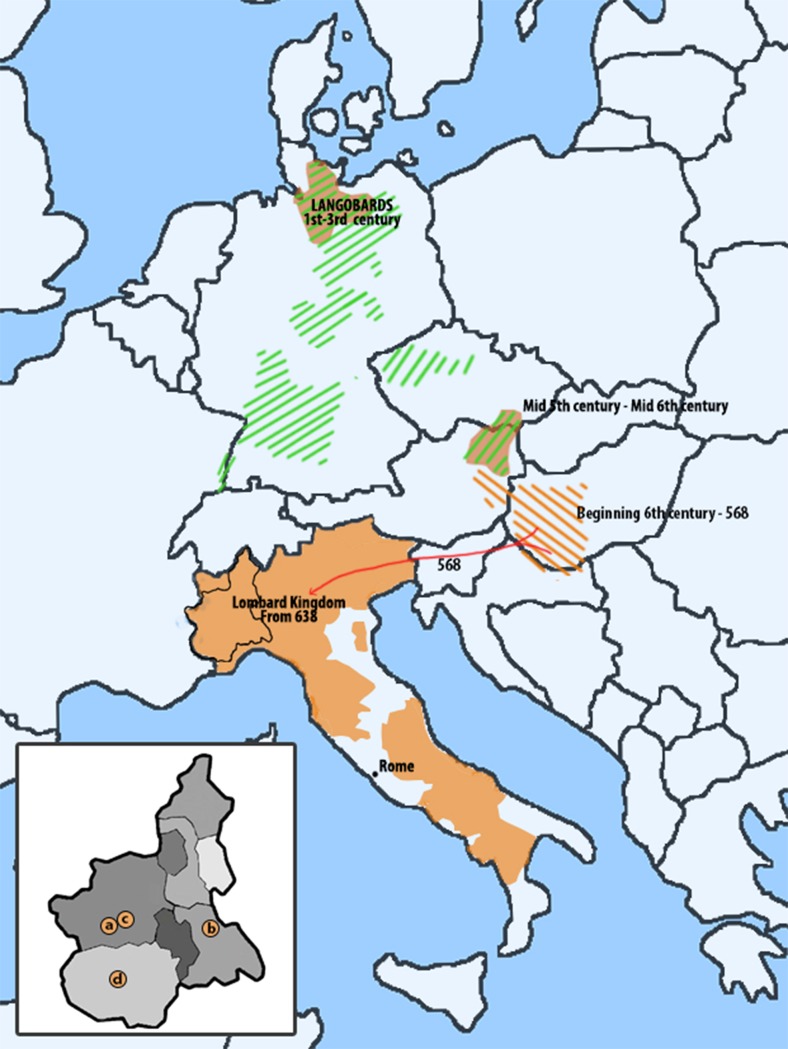
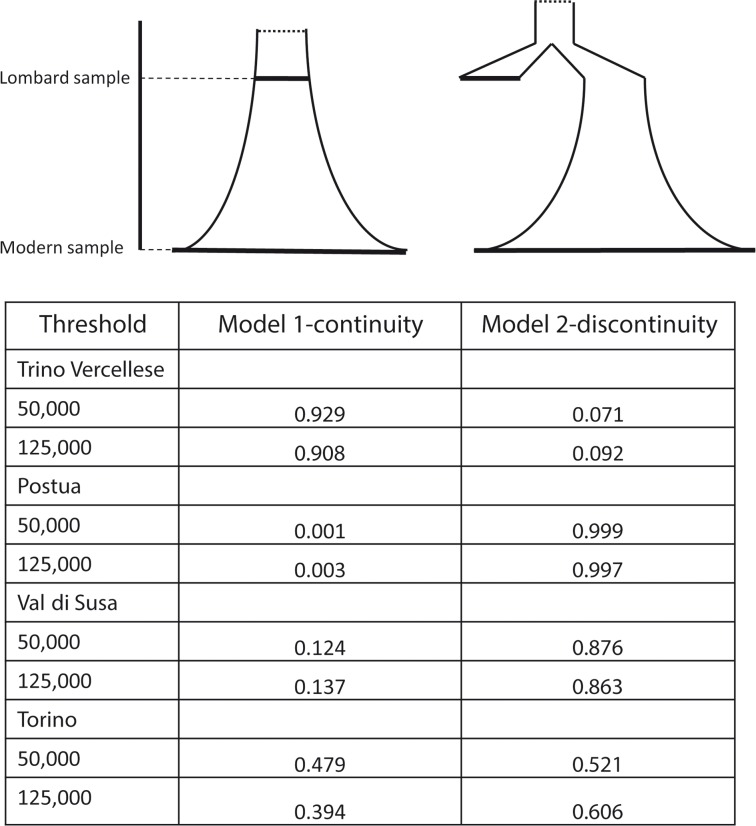
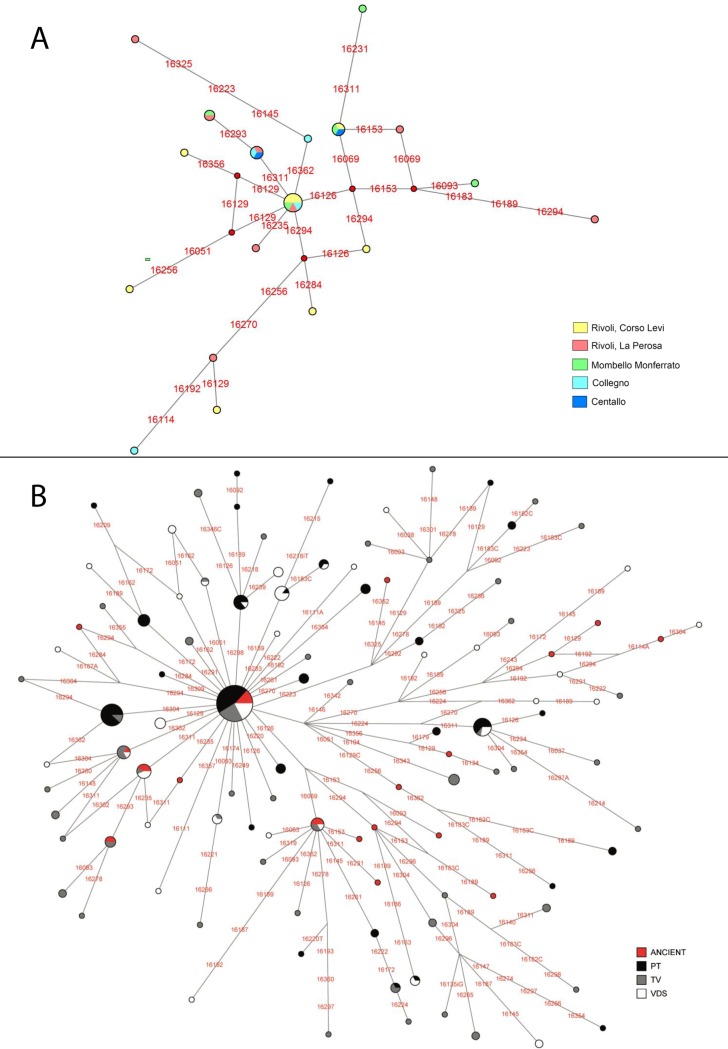
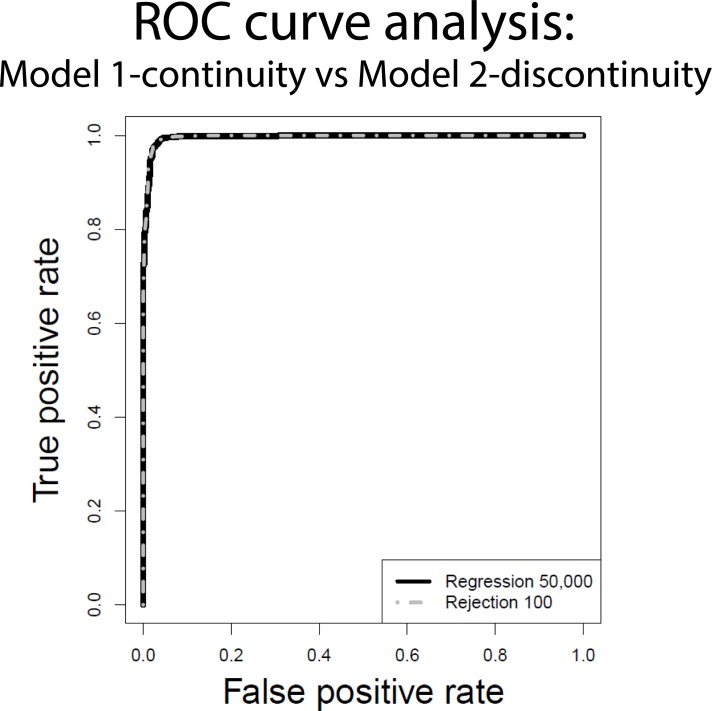
In the period between 400 to 800 AD, also known as the period of the Barbarian invasions, intense migration is documented in the historical record of Europe. However, little is known about the demographic impact of these historical movements, potentially ranging from negligible to substantial. As a pilot study in a broader project on Medieval Europe, we sampled 102 specimens from 5 burial sites in Northwestern Italy, archaeologically classified as belonging to Lombards or Longobards, a Germanic people ruling over a vast section of the Italian peninsula from 568 to 774. We successfully amplified and typed the mitochondrial hypervariable region I (HVR-I) of 28 individuals. Comparisons of genetic diversity with other ancient populations and haplotype networks did not suggest that these samples are heterogeneous, and hence allowed us to jointly compare them with three isolated contemporary populations, and with a modern sample of a large city, representing a control for the effects of recent immigration. We then generated by serial coalescent simulations 16 millions of genealogies, contrasting a model of genealogical continuity with one in which the contemporary samples are genealogically independent from the medieval sample. Analyses by Approximate Bayesian Computation showed that the latter model fits the data in most cases, with one exception, Trino Vercellese, in which the evidence was compatible with persistence up to the present time of genetic features observed among this early medieval population. We conclude that it is possible, in general, to detect evidence of genealogical ties between medieval and specific modern populations. However, only seldom did mitochondrial DNA data allow us to reject with confidence either model tested, which indicates that broader analyses, based on larger assemblages of samples and genetic markers, are needed to understand in detail the effects of medieval migration.
Conflict of interest statement
Figures
References
-
- Pohl W, Erhart P, editors (2005) Die Langobarden. Herrschaft und Identität. Forschungen zur Geschichte des Mittelalters 9 Wien.
-
- Barbiera I (2005) Changing Lands in Changing Memories. Migration and Identity during the Lombard Invasions. Florence: All’Insegna del Giglio. 189 p.
-
- Brather S (2010) Bestattungen und Identitäten. Gruppierungen innerhalb frühmittelalterlicher Gesellschaften. In: Pohl W, Mehoffer M, editors. Archaeology of Identity—Archäologie der Identität Forschungen zur Geschichte des Mittelalters 17 Wien: pp. 25–49.
-
- Geary P (2002) The Myth of Nations: Princeton.
-
- Giostra C (2011) Goths and Lombards in Italy: the potential of archaeology with respect to ethnocultural identification. Post-Classical Archaeologies, 1:7–36.
Publication types
MeSH terms
Substances
LinkOut - more resources
Full Text Sources
Other Literature Sources
Research Materials
