


Impaired allocentric spatial processing in posttraumatic stress disorder
- PMID: 25636201
- PMCID: PMC4384783
- DOI: 10.1016/j.nlm.2015.01.007
Impaired allocentric spatial processing in posttraumatic stress disorder
Abstract
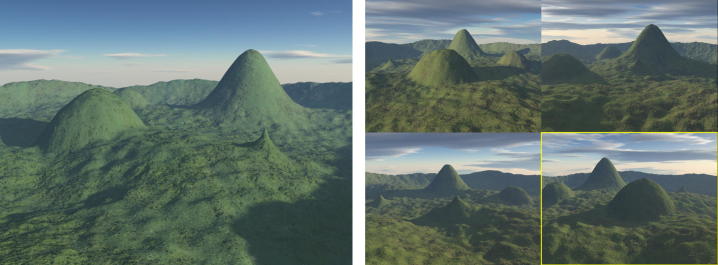
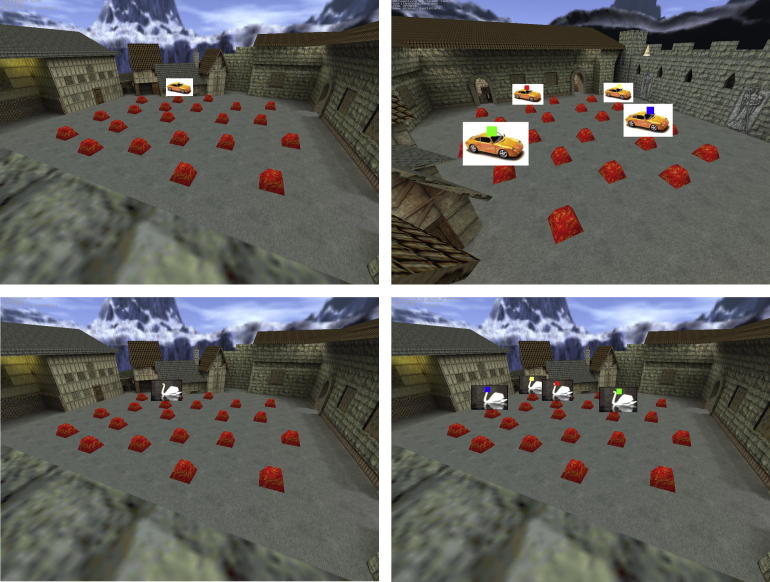
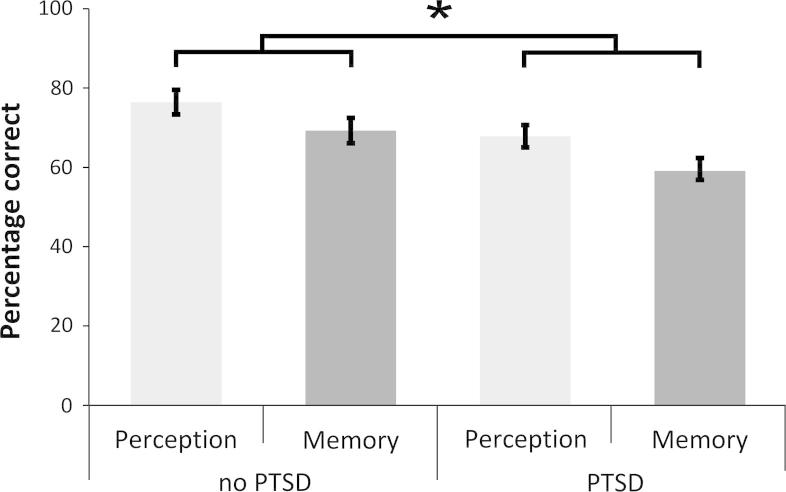
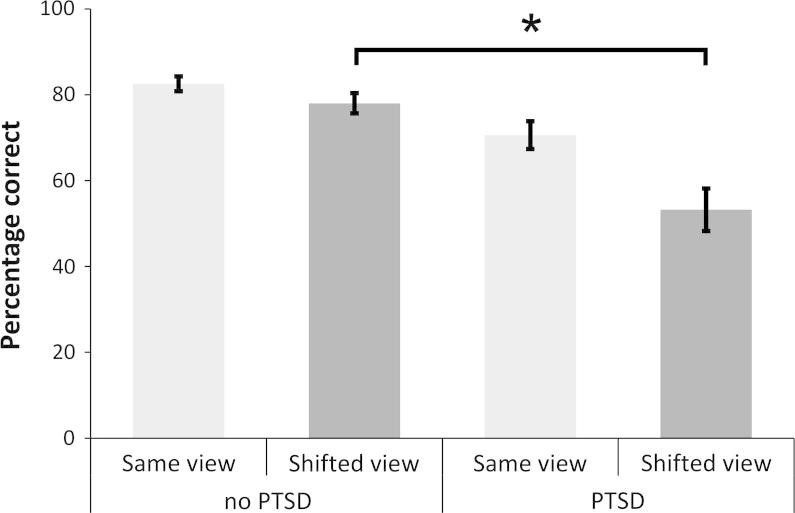
A neurobiological dual representation model of PTSD proposes that reduced hippocampus-dependent contextual processing contributes to intrusive imagery due to a loss of control over hippocampus-independent sensory and affective representations. We investigated whether PTSD sufferers show impaired allocentric spatial processing indicative of reduced hippocampal functioning. Trauma-exposed individuals with (N=29) and without (N=30) a diagnosis of PTSD completed two tests of spatial processing: a topographical recognition task comprising perceptual and memory components, and a test of memory for objects' locations within a virtual environment in which the test is from either the same viewpoint as presentation (solvable with egocentric memory) or a different viewpoint (requiring allocentric memory). Participants in the PTSD group performed significantly worse on allocentric spatial processing than trauma-exposed controls. Groups performed comparably on egocentric memory and non-spatial memory for lists of objects. Exposure to repeated incident trauma was also associated with significantly worse spatial processing in the PTSD group. Results show a selective impairment in allocentric spatial processing, implicating weak hippocampal functioning, as predicted by a neurobiological dual representation model of PTSD. These findings have important clinical implications for cognitive therapy.
Keywords: Allocentric memory; Hippocampus; PTSD; Spatial memory; Trauma.
Copyright © 2015 The Authors. Published by Elsevier Inc. All rights reserved.
Figures
References
-
- Abrahams S., Morris R.G., Polkey C.E., Jarosz J.M., Cox T.C., Graves M. Hippocampal involvement in spatial and working memory: A structural MRI analysis of patients with unilateral medial temporal lobe sclerosis. Brain and Cognition. 1999;41:39–65. - PubMed
-
- American Psychiatric Association . 4th ed. American Psychiatric Association; Washington, DC: 2000. Diagnostic and statistical manual of mental disorders.
-
- Astur R.S., German S.A., St, Tolin D., Ford J., Russell D., Stevens M. Hippocampus function predicts severity of post-traumatic stress disorder. Cyberpsychology & Behavior. 2006;9:234–240. - PubMed
-
- Beck A.T., Steer R.A., Brown G.K. Psychological Corporation; San Antonio, TX: 1996. Manual for the BDI-II.
-
- Bisby J., King J.A., Brewin C.R., Burgess N., Curran H.V. Acute effects of alcohol on intrusive memory development and viewpoint dependence in spatial memory support a dual representation model. Biological Psychiatry. 2010;68:280–286. - PubMed
Publication types
MeSH terms
Grants and funding
LinkOut - more resources
Full Text Sources
Other Literature Sources
Medical
