


MMP generated matrikines
- PMID: 25636538
- PMCID: PMC4838901
- DOI: 10.1016/j.matbio.2015.01.016
MMP generated matrikines
Abstract
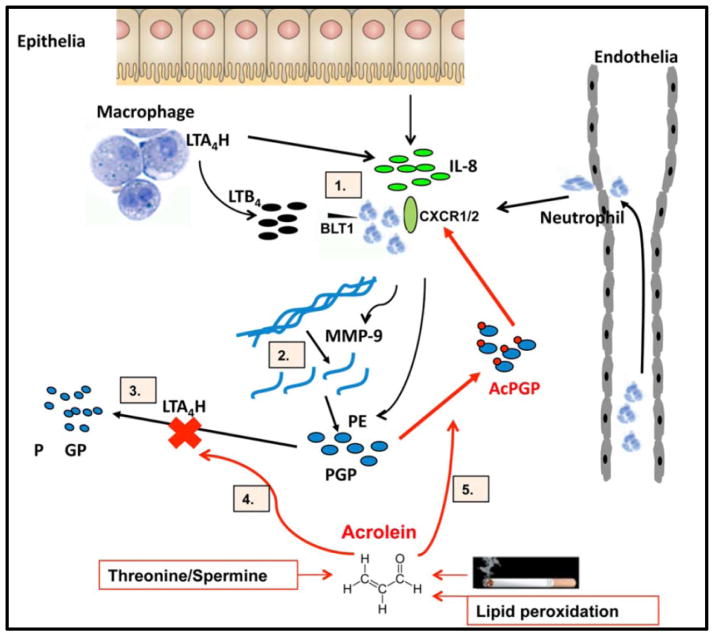
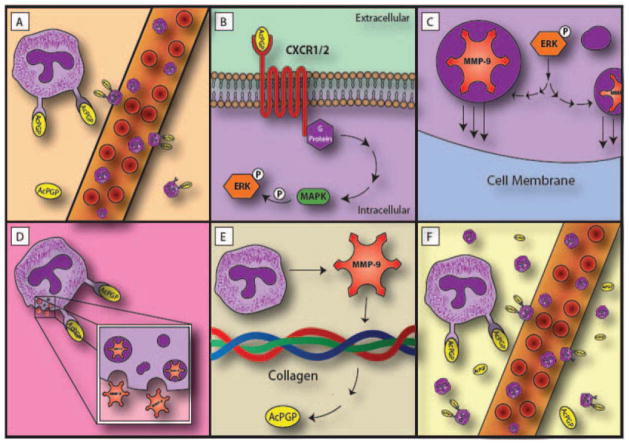
Matrikines originate from the fragmentation of extracellular matrix proteins and regulate cellular activities by interacting with specific receptors. Matrikines are implicated in inflammation, immune responses, organ development, wound repair, angiogenesis, atherosclerosis, tumor progression and metastasis due to their ability to alter cellular migration, chemotaxis, and mitogenesis. Matrix metalloproteinases (MMPs) degrade extracellular matrix components under normal circumstances and in disease processes. Of the 20 MMPs identified, MMP-1, MMP-2, MMP-8, MMP-9, and MMP-12 have been implicated in regulating the matrikines Val-Gly-Val-Ala-Pro-Gly (elastin peptide) and proline-glycine-proline (PGP). Elastin peptide fragments are generated by elastolytic enzymes and have implications in atherosclerosis, neovascularization, chronic obstructive pulmonary disease, skin disease, as well as tumor invasion and spread. PGP is produced through a multistep pathway that liberates the tripeptide fragment from extracellular collagen. PGP is best described for its role in neutrophil chemotaxis and is implicated in the pathogenesis of corneal ulcers and in chronic lung conditions. In chronic cigarette smoke related lung disease, the PGP pathway can become a self-propagating cycle of inflammation through cigarette-smoke mediated inhibition of leukotriene A4 hydrolase, the enzyme responsible for degrading PGP and halting acute inflammation. This review highlights the roles of MMPs in generating these important matrikines.
Keywords: COPD; Elastin; Matrix metalloproteinase; Proline–glycine–proline.
Copyright © 2015. Published by Elsevier B.V.
Figures
References
-
- Duca L, Floquet N, Alix AJ, Haye B, Debelle L. Elastin as a matrikine. Crit Rev Oncol Hematol. 2004;49:235–44. - PubMed
-
- Weathington NM, van Houwelingen AH, Noerager BD, Jackson PL, Kraneveld AD, Galin FS, Folkerts G, Nijkamp FP, Blalock JE. A novel peptide CXCR ligand derived from extracellular matrix degradation during airway inflammation. Nat Med. 2006;12:317–23. - PubMed
-
- Yamanaka O, Sumioka T, Saika S. The role of extracellular matrix in corneal wound healing. Cornea. 2013;32(Suppl 1):S43–5. - PubMed
-
- Tran KT, Griffith L, Wells A. Extracellular matrix signaling through growth factor receptors during wound healing. Wound Repair Regen. 2004;12:262–8. - PubMed
-
- Ramont L, Brassart-Pasco S, Thevenard J, Deshorgue A, Venteo L, Laronze JY, Pluot M, Monboisse JC, Maquart FX. The NC1 domain of type XIX collagen inhibits in vivo melanoma growth. Mol Cancer Ther. 2007;6:506–14. - PubMed
Publication types
MeSH terms
Substances
Grants and funding
LinkOut - more resources
Full Text Sources
Other Literature Sources
Medical
Miscellaneous
