


Dopamine-dependent corticostriatal synaptic filtering regulates sensorimotor behavior
- PMID: 25637802
- PMCID: PMC4494866
- DOI: 10.1016/j.neuroscience.2015.01.022
Dopamine-dependent corticostriatal synaptic filtering regulates sensorimotor behavior
Abstract
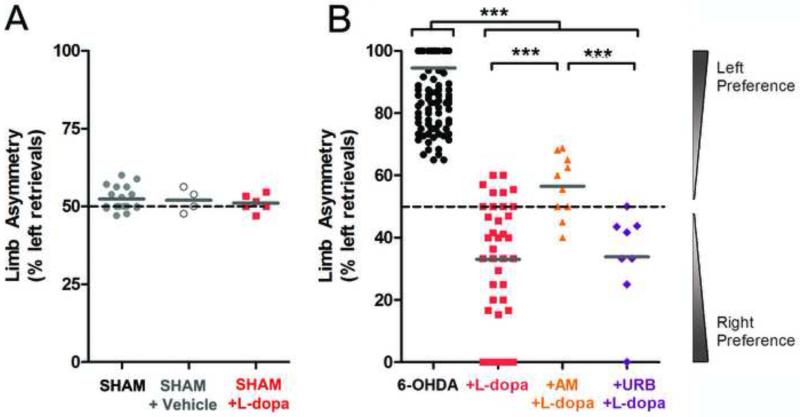
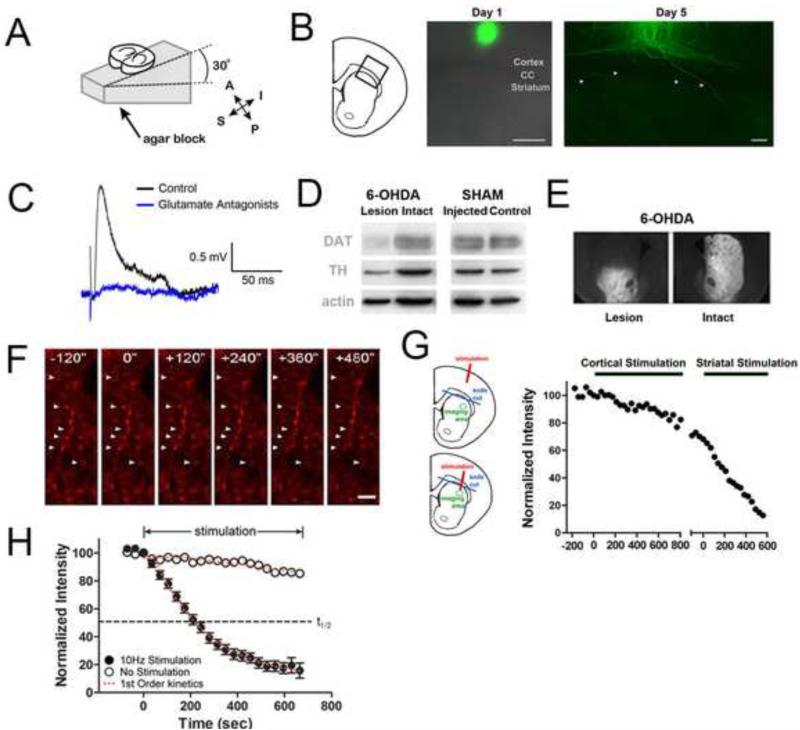
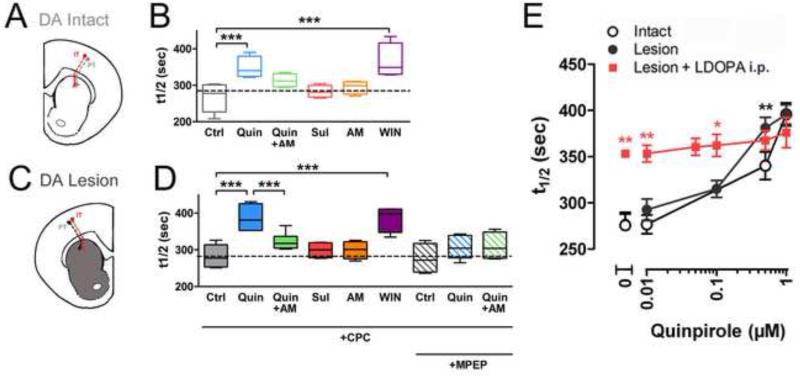
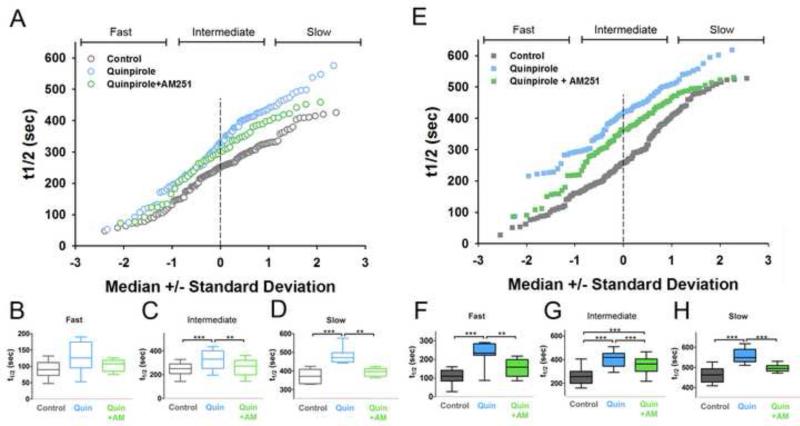
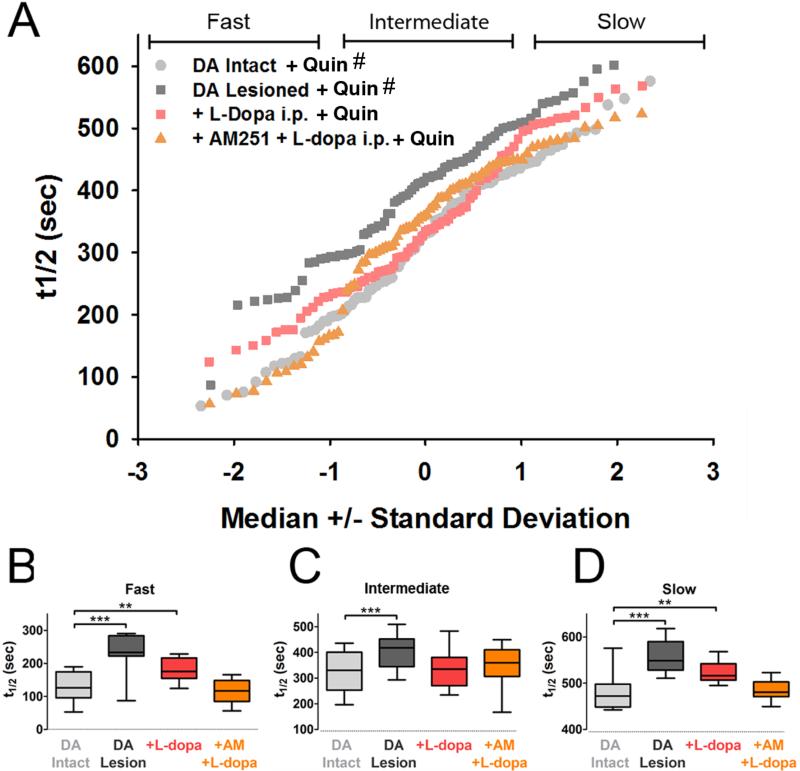
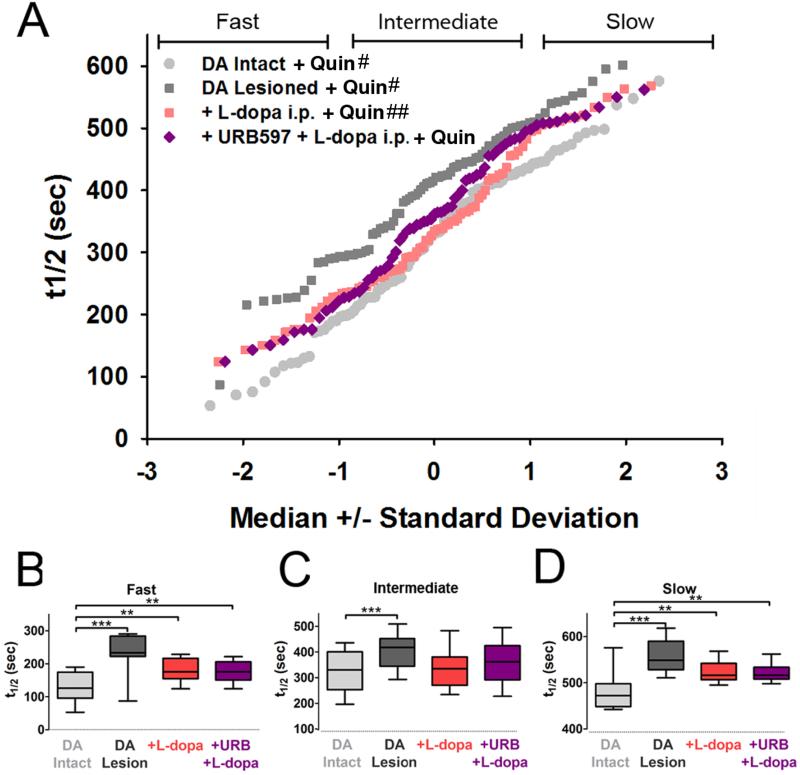
Modulation of corticostriatal synaptic activity by dopamine is required for normal sensorimotor behaviors. After loss of nigrostriatal dopamine axons in Parkinson's disease, l-3,4-dihydroxyphenlalanine (l-DOPA) and dopamine D2-like receptor agonists are used as replacement therapy, although these drugs also trigger sensitized sensorimotor responses including dyskinesias and impulse control disorders. In mice, we lesioned dopamine projections to the left dorsal striatum and assayed unilateral sensorimotor deficits with the corridor test as well as presynaptic corticostriatal activity with the synaptic vesicle probe, FM1-43. Sham-lesioned mice acquired food equivalently on both sides, while D2 receptor activation filtered the less active corticostriatal terminals, a response that required coincident co-activation of mGlu-R5 metabotropic glutamate and CB1 endocannabinoid receptors. Lesioned mice did not acquire food from their right, but overused that side following treatment with l-DOPA. Synaptic filtering on the lesioned side was abolished by either l-DOPA or a D2 receptor agonist, but when combined with a CB1 receptor antagonist, l-DOPA or D2 agonists normalized both synaptic filtering and behavior. Thus, high-pass filtering of corticostriatal synapses by the coordinated activation of D2, mGlu-R5, and CB1 receptors is required for normal sensorimotor response to environmental cues.
Keywords: Parkinson’s; corticostriatal; dopamine; l-DOPA; synapses.
Copyright © 2015 IBRO. Published by Elsevier Ltd. All rights reserved.
Figures
References
-
- Andre VM, Cepeda C, Cummings DM, Jocoy EL, Fisher YE, William Yang X, Levine MS. Dopamine modulation of excitatory currents in the striatum is dictated by the expression of D1 or D2 receptors and modified by endocannabinoids. Eur J Neurosci. 2010;31:14–28. - PubMed
Publication types
MeSH terms
Substances
Grants and funding
- P01 DA010154/DA/NIDA NIH HHS/United States
- DA10154/DA/NIDA NIH HHS/United States
- U54 HD083091/HD/NICHD NIH HHS/United States
- DA07418/DA/NIDA NIH HHS/United States
- P50 NS038370/NS/NINDS NIH HHS/United States
- R01 NS060803/NS/NINDS NIH HHS/United States
- U54HD083091/HD/NICHD NIH HHS/United States
- NS38370/NS/NINDS NIH HHS/United States
- R01NS060803/NS/NINDS NIH HHS/United States
- R01NS075222/NS/NINDS NIH HHS/United States
- R01 NS075222/NS/NINDS NIH HHS/United States
- R01 AA019801/AA/NIAAA NIH HHS/United States
- R01 DA007418/DA/NIDA NIH HHS/United States
LinkOut - more resources
Full Text Sources
Other Literature Sources
