


Practical aspects of the cellular force inference toolkit (CellFIT)
- PMID: 25640437
- PMCID: PMC4750379
- DOI: 10.1016/bs.mcb.2014.10.010
Practical aspects of the cellular force inference toolkit (CellFIT)
Abstract
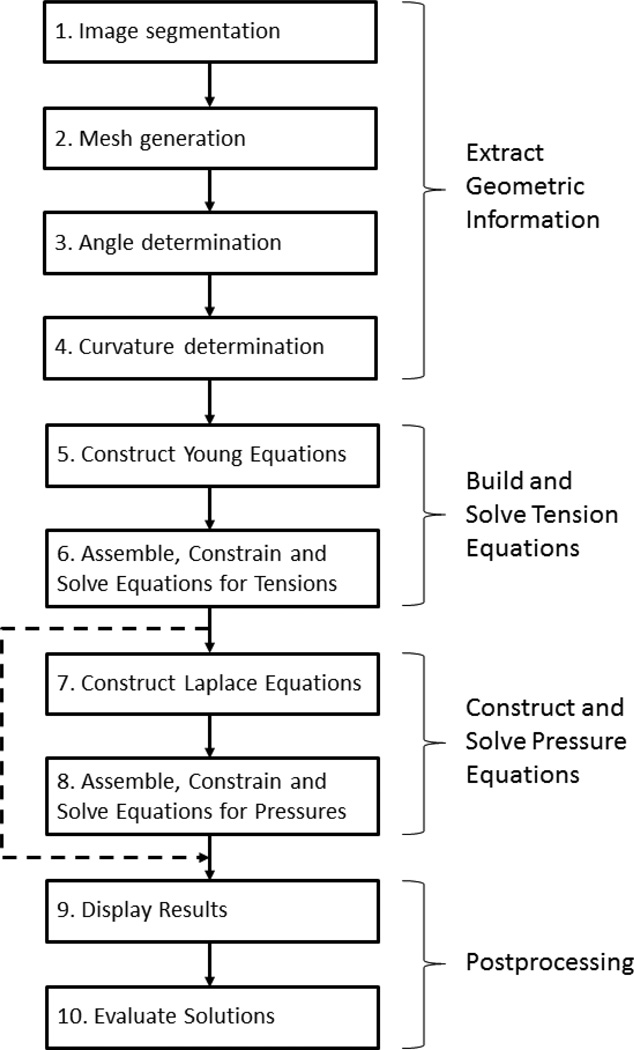
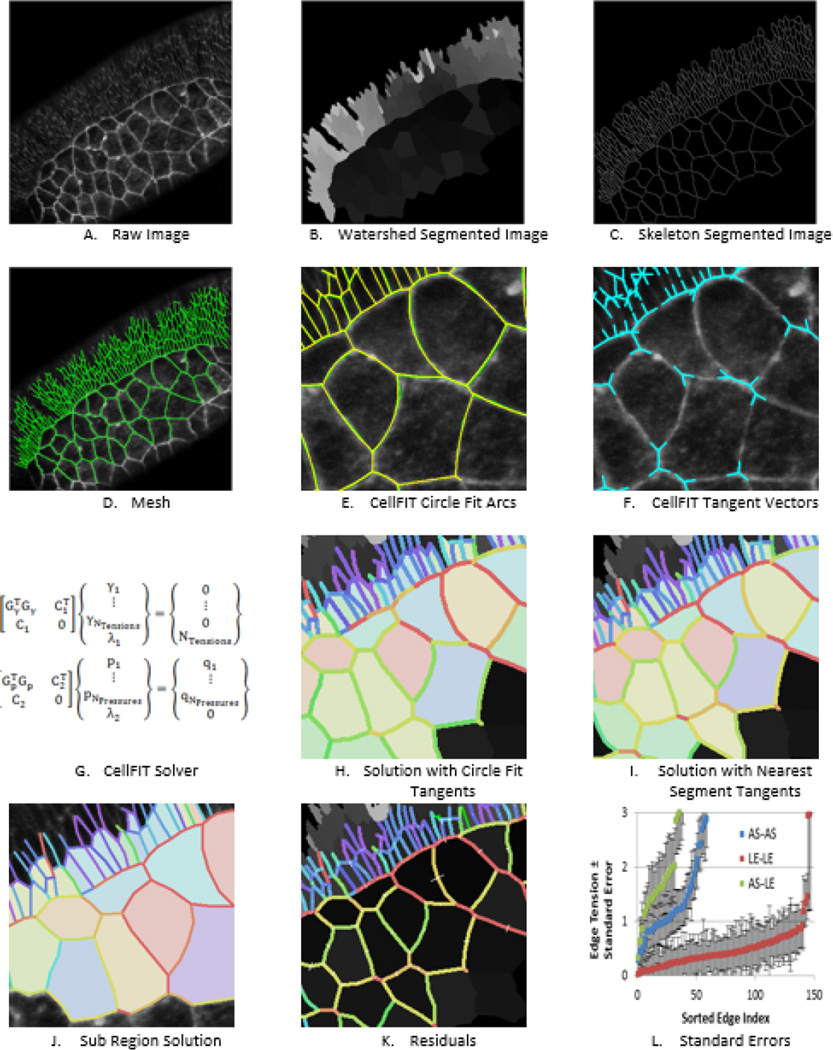
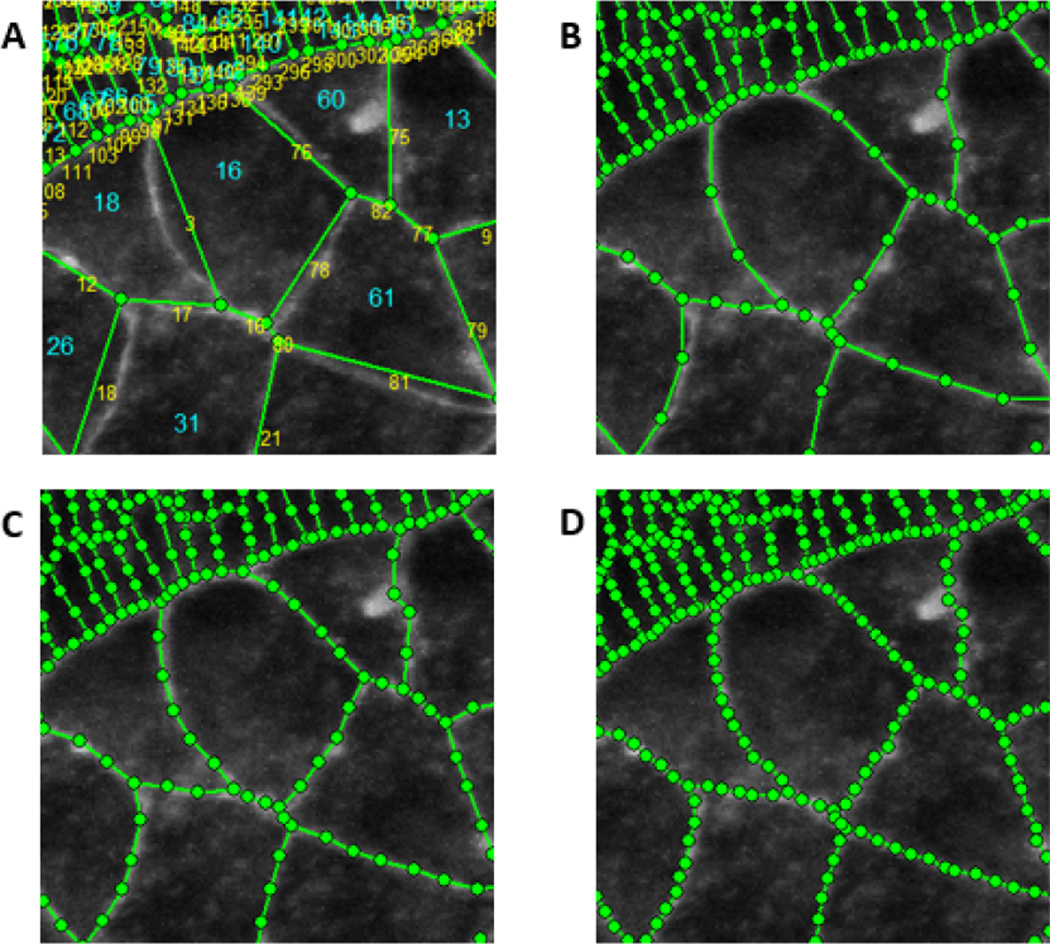
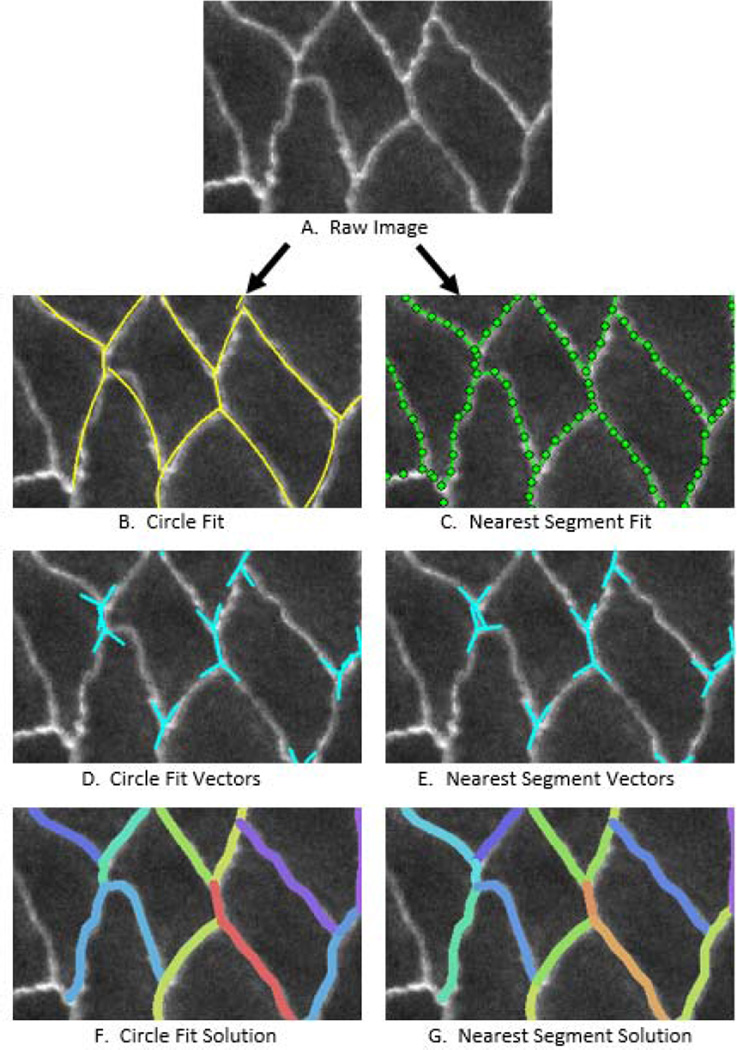
If we are to fully understand the reasons that cells and tissues move and acquire their distinctive geometries during processes such as embryogenesis and wound healing, we will need detailed maps of the forces involved. One of the best current prospects for obtaining this information is noninvasive force-from-images techniques such as CellFIT, the Cellular Force Inference Toolkit, whose various steps are discussed here. Like other current quasistatic approaches, this one assumes that cell shapes are produced by interactions between interfacial tensions and intracellular pressures. CellFIT, however, allows cells to have curvilinear boundaries, which can significantly improve inference accuracy and reduce noise sensitivity. The quality of a CellFIT analysis depends on how accurately the junction angles and edge curvatures are measured, and a software tool we describe facilitates determination and evaluation of this information. Special attention is required when edges are crenulated or significantly different in shape from a circular arc. Because the tension and pressure equations are overdetermined, a select number of edges can be removed from the analysis, and these might include edges that are poorly defined in the source image, too short to provide accurate angles or curvatures, or noncircular. The approach works well for aggregates with as many as 1000 cells, and introduced errors have significant effects on only a few adjacent cells. An understanding of these considerations will help CellFIT users to get the most out of this promising new technique.
Keywords: Cell mechanics; Cell shape; CellFIT; Force inference techniques; Force-from-shape methods; Interfacial tensions; Intracellular pressures; Morphogenetic forces.
Copyright © 2015 Elsevier Inc. All rights reserved.
Figures
References
-
- Beer FP, Johnston ER, Dewolf JT. Mechanics of Materials. New York: McGraw-Hill Science; 2005.
-
- Brodland GW. The Differential Interfacial Tension Hypothesis (DITH): a comprehensive theory for the self-rearrangement of embryonic cells and tissues. Journal of Biomechanical Engineering. 2002;124(2):188–197. - PubMed
Publication types
MeSH terms
Grants and funding
LinkOut - more resources
Full Text Sources
Other Literature Sources
