


'Someday it will be the norm': physician perspectives on the utility of genome sequencing for patient care in the MedSeq Project
- PMID: 25642274
- PMCID: PMC4306284
- DOI: 10.2217/pme.14.68
'Someday it will be the norm': physician perspectives on the utility of genome sequencing for patient care in the MedSeq Project
Abstract
Aim: To describe practicing physicians' perceived clinical utility of genome sequencing.
Materials & methods: We conducted a mixed-methods analysis of data from 18 primary care physicians and cardiologists in a study of the clinical integration of whole-genome sequencing. Physicians underwent brief genomics continuing medical education before completing surveys and semi-structured interviews.
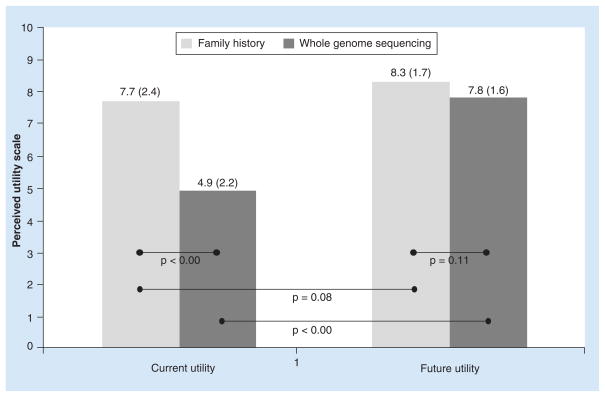
Results: Physicians described sequencing as currently lacking clinical utility because of its uncertain interpretation and limited impact on clinical decision-making, but they expressed the idea that its clinical integration was inevitable. Potential clinical uses for sequencing included complementing other clinical information, risk stratification, motivating patient behavior change and pharmacogenetics.
Conclusion: Physicians given genomics continuing medical education use the language of both evidence-based and personalized medicine in describing the utility of genome-wide testing in patient care.
Keywords: genomics; high-throughput nucleotide sequencing; pharmacogenetics; physician’s practice patterns; qualitative research.
Figures
References
Grants and funding
LinkOut - more resources
Full Text Sources
Medical
Molecular Biology Databases
