


Blubber cortisol: a potential tool for assessing stress response in free-ranging dolphins without effects due to sampling
- PMID: 25643144
- PMCID: PMC4314064
- DOI: 10.1371/journal.pone.0115257
Blubber cortisol: a potential tool for assessing stress response in free-ranging dolphins without effects due to sampling
Abstract
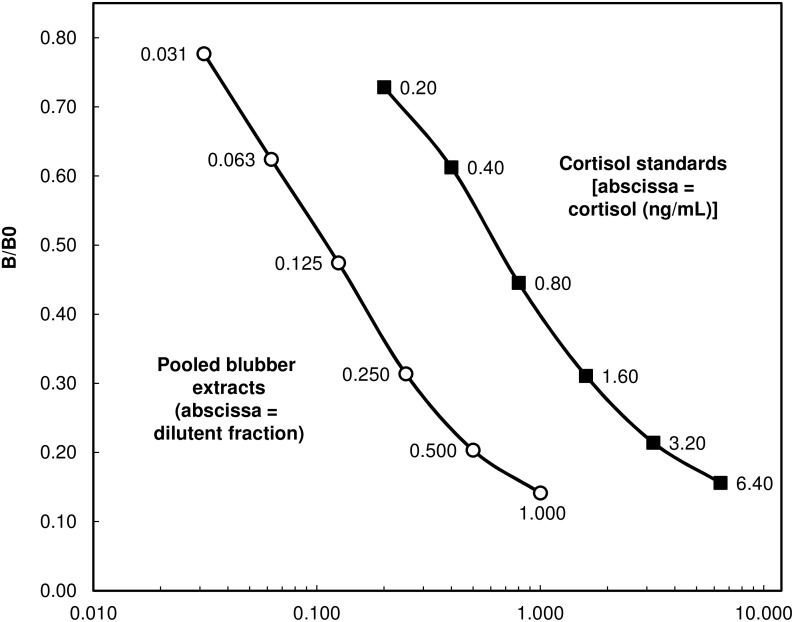
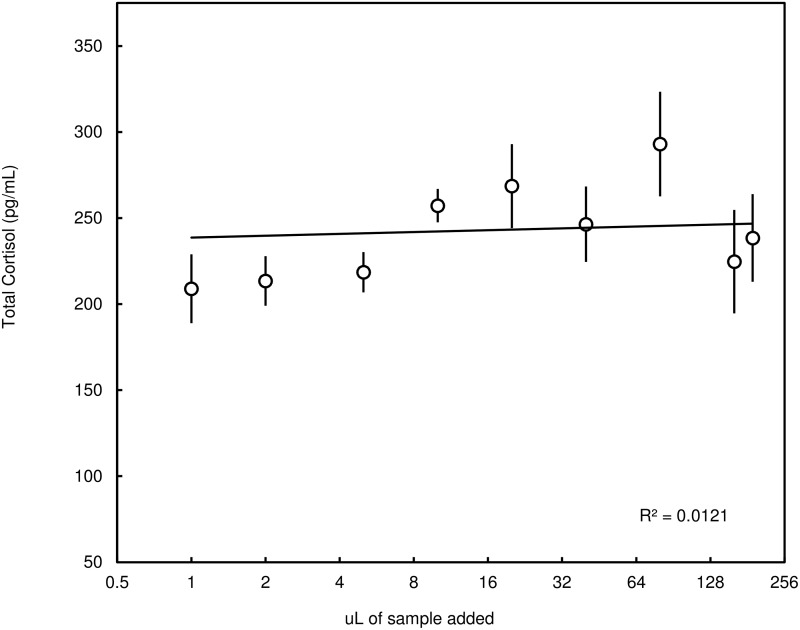
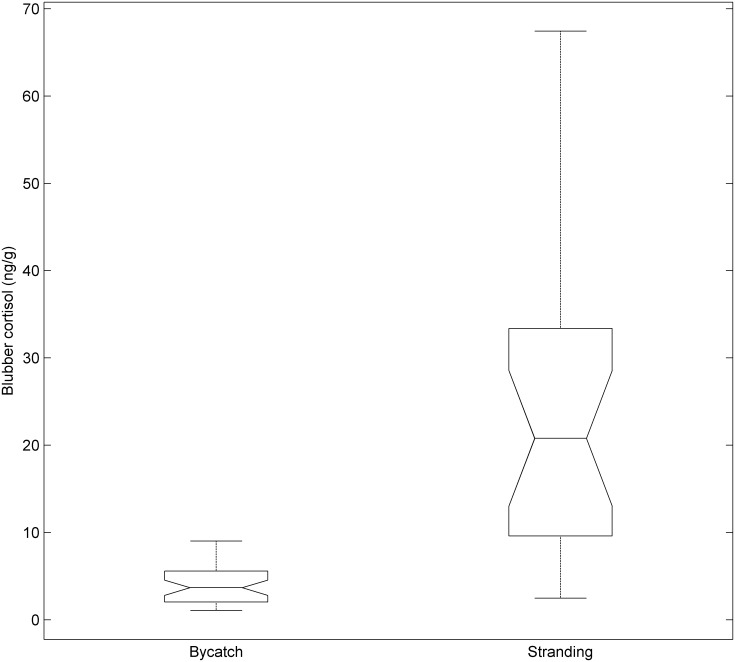
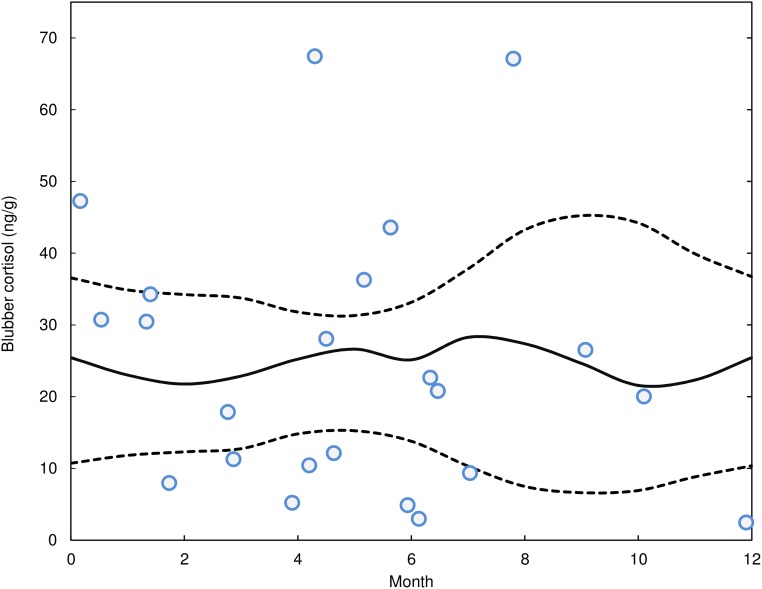
When paired with dart biopsying, quantifying cortisol in blubber tissue may provide an index of relative stress levels (i.e., activation of the hypothalamus-pituitary-adrenal axis) in free-ranging cetacean populations while minimizing the effects of the act of sampling. To validate this approach, cortisol was extracted from blubber samples collected from beach-stranded and bycaught short-beaked common dolphins using a modified blubber steroid isolation technique and measured via commercially available enzyme immunoassays. The measurements exhibited appropriate quality characteristics when analyzed via a bootstraped stepwise parallelism analysis (observed/expected = 1.03, 95%CI: 99.6 - 1.08) and showed no evidence of matrix interference with increasing sample size across typical biopsy tissue masses (75-150 mg; r(2) = 0.012, p = 0.78, slope = 0.022 ng(cortisol deviation)/ul(tissue extract added)). The relationships between blubber cortisol and eight potential cofactors namely, 1) fatality type (e.g., stranded or bycaught), 2) specimen condition (state of decomposition), 3) total body length, 4) sex, 5) sexual maturity state, 6) pregnancy status, 7) lactation state, and 8) adrenal mass, were assessed using a Bayesian generalized linear model averaging technique. Fatality type was the only factor correlated with blubber cortisol, and the magnitude of the effect size was substantial: beach-stranded individuals had on average 6.1-fold higher cortisol levels than those of bycaught individuals. Because of the difference in conditions surrounding these two fatality types, we interpret this relationship as evidence that blubber cortisol is indicative of stress response. We found no evidence of seasonal variation or a relationship between cortisol and the remaining cofactors.
Conflict of interest statement
Figures
References
-
- Sapolsky RM, Romero LM, Munck AU (2000) How do glucocorticoids influence stress responses? Integrating permissive, suppressive, stimulatory, and preparative actions. Endocrine Reviews 21: 55–89. - PubMed
-
- Wingfield JC, Romero LM (2001) Adrenocortical responses to stress and their modulation in free-living vertebrates In: McEwen BS, Goodman HM, editors. Handbook of Physiology, section 7: the endocrine system Coping with the environment: neural and endocrine mechanisms. Oxford: Oxford University Press; pp. 211–236.
-
- Johnson EO, Kamilaris TC, Chrousos GP, Gold PW (1992) Mechanisms of stress: A dynamic overview of hormonal and behavioral homeostasis. Neuroscience and Biobehavioral Reviews 16: 115–130. - PubMed
Publication types
MeSH terms
Substances
LinkOut - more resources
Full Text Sources
Other Literature Sources
