


doi: 10.1186/s12916-014-0254-7.
Global malaria eradication and the importance of Plasmodium falciparum epidemiology in Africa
Affiliations
- PMID: 25644195
- PMCID: PMC4314741
- DOI: 10.1186/s12916-014-0254-7
Item in Clipboard
Global malaria eradication and the importance of Plasmodium falciparum epidemiology in Africa
BMC Med.
.
Abstract
The global agenda for malaria has, once again, embraced the possibility of eradication. As history has shown, there will be no single magic bullet that can be applied to every epidemiological setting. Africa has a diverse malaria ecology, lending itself to some of the highest disease burden areas of the world and a wide range of clinical epidemiological patterns making control with our current tools challenging. This commentary highlights why the epidemiology of Plasmodium falciparum malaria in Africa should not be forgotten when planning an eradication strategy, and why forgetting Africa will, once again, be the single largest threat to any hope for global eradication.
Figures
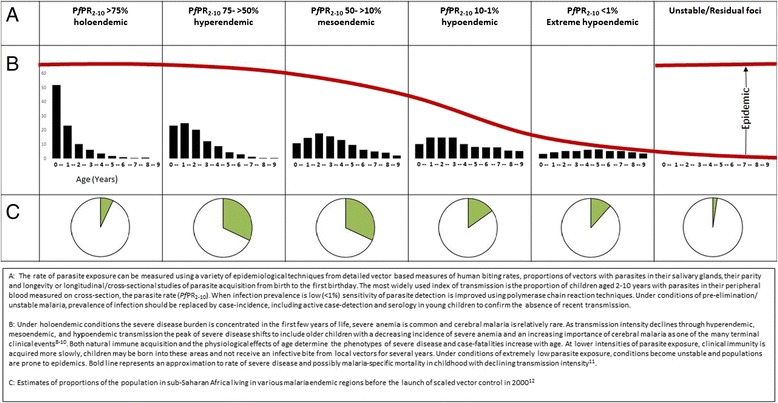
Conceptual framework of the clinical epidemiology of
Plasmodium falciparum
under declining parasite transmission intensity in Africa.
References
-
- Snow RW, Gilles HM. The epidemiology of malaria. In: Warrell DA, Gilles HM, editors. Essential malariology. 4. London: Arnold; 2002. pp. 85–106.
-
- Dobson MJ, Malowany M, Snow RW. Malaria control in East Africa: the Kampala Conference and the Pare-Taveta Scheme: a meeting of common and high ground. Parassitologia. 2000;42:149–66. - PubMed
Publication types
MeSH terms
Grants and funding
LinkOut - more resources
Full Text Sources
Other Literature Sources
Medical
Research Materials
