Related factors and adverse neonatal outcomes in women with preterm premature rupture of membranes complicated by histologic chorioamnionitis
- PMID: 25644559
- PMCID: PMC4325828
- DOI: 10.12659/MSM.891203
Related factors and adverse neonatal outcomes in women with preterm premature rupture of membranes complicated by histologic chorioamnionitis
Abstract
Background: The aim of this study was to identify factors predicting histologic chorioamnionitis (HCA) in women with preterm premature rupture of membranes (PPROM).
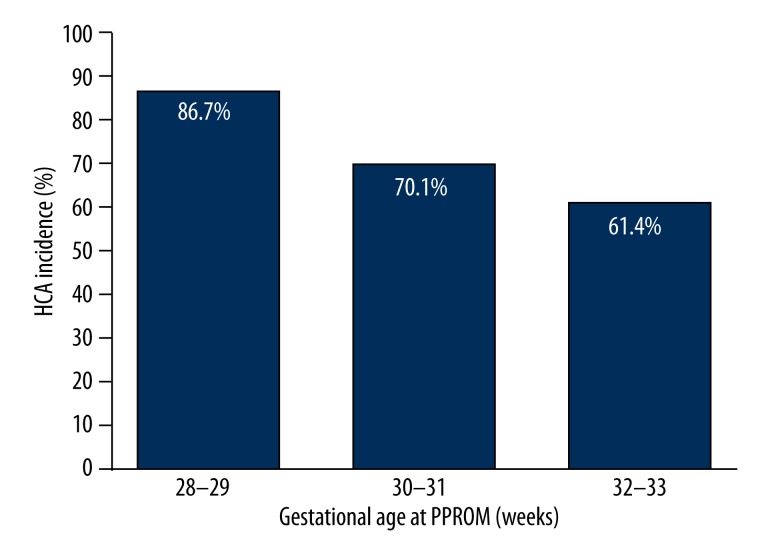
Material and methods: We retrospectively enrolled 371 women diagnosed with PPROM at less than 34 weeks of gestation at the Second Affiliated Hospital of Wenzhou Medical University between January 2008 and December 2012. HCA was diagnosed by placental histopathology in 70% of participants. Binary logistic regression was used to identify factors associated with HCA and neonatal outcomes.
Results: Patient age, rate of parity, tocolysis, cesarean section, serum C reactive protein (CRP) level at admission, white blood cell count, and latency duration did not significantly differ between the 2 groups. Binary logistic regression revealed that oligohydramnios at admission, gestational age at PPROM, and serum CRP >8 mg/L before delivery were significantly associated with HCA. Gestational age at delivery and birth weight were significantly lower in HCA patients than control patients. The rate of 1-min Apgar score <7, abnormal neonatal intracranial ultrasound findings, neonatal pneumonia, bronchopulmonary dysplasia, early-onset neonatal sepsis, and mortality were higher in HCA patients, but no significant difference was observed in the incidence of neonatal respiratory distress syndrome, necrotizing enterocolitis, hyperbilirubinemia, or hypoglycemia.
Conclusions: Younger gestational age at time of PPROM, higher CRP level before delivery, and oligohydramnios at admission in women with PPROM are associated with HCA, and HCA is associated with some adverse neonatal outcomes.
Figures
References
-
- Lee T, Silver H. Etiology and epidemiology of preterm premature rupture of the membranes. Clin Perinatol. 2001;28:721–34. - PubMed
-
- Gopalani S, Krohn M, Meyn L, et al. Contemporary management of preterm premature rupture of membranes: determinants of latency and neonatal outcome. Am J Perinatol. 2004;21:183–90. - PubMed
-
- Garite TJ. Management of premature rupture of membranes. Clin Perinatol. 2001;28:837–47. - PubMed
-
- Goldenberg RL, Hauth JC, Andrews WW. Intrauterine infection and preterm delivery. N Engl J Med. 2000;342:1500–7. - PubMed
-
- Asrat T. Intra-amniotic infection in patients with preterm prelabor rupture of membranes. Pathophysiology, detection, and management. Clin Perinatol. 2001;28:735–51. - PubMed
Publication types
MeSH terms
Substances
LinkOut - more resources
Full Text Sources
Medical
Research Materials
Miscellaneous