. 2015 Mar 16:200:19-23.
doi: 10.1016/j.virusres.2015.01.018. Epub 2015 Jan 30.

Role of dietary antioxidants in human metapneumovirus infection

Affiliations

Role of dietary antioxidants in human metapneumovirus infection

Narayana Komaravelli et al. Virus Res. .

Abstract

Human metapneumovirus (hMPV) is a major cause of respiratory tract infections in children, elderly and immunocompromised hosts, for which no vaccine or treatment are currently available. Oxidative stress and inflammatory responses represent important pathogenic mechanism(s) of hMPV infection. Here, we explored the potential protective role of dietary antioxidants in hMPV infection. Treatment of airway epithelial cells with resveratrol and quercetin during hMPV infection significantly reduced cellular oxidative damage, inflammatory mediator secretion and viral replication, without affecting viral gene transcription and protein synthesis, indicating that inhibition of viral replication occurred at the level of viral assembly and/or release. Modulation of proinflammatory mediator expression occurred through the inhibition of transcription factor nuclear factor (NF)-κB and interferon regulatory factor (IRF)-3 binding to their cognate site of endogenous gene promoters. Our results indicate the use of dietary antioxidants as an effective treatment approach for modulating hMPV induced lung oxidative damage and inflammation.

Keywords: Human metapneumovirus; Quercetin; Resveratrol.


Figures

Figure 1
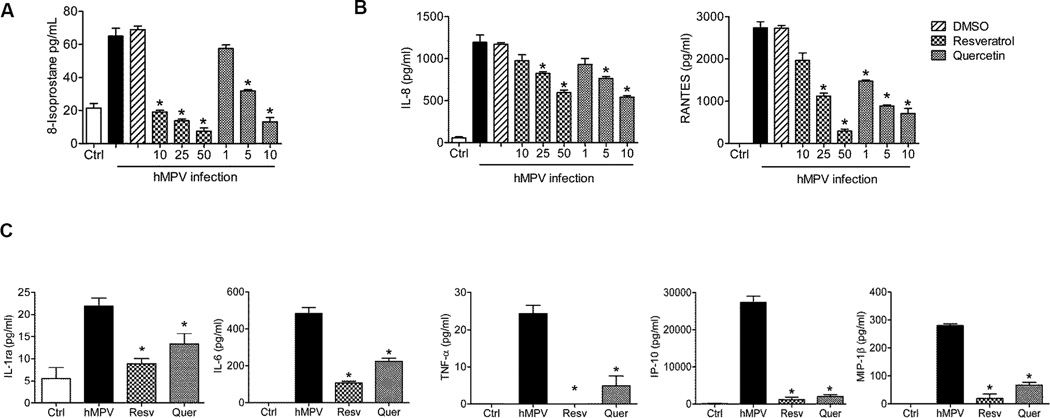
Figure 1. Effect of resveratrol and quercetin on oxidative stress and inflammatory mediator production
A549 cells were either mock-infected (Ctrl) or infected with hMPV in the presence or absence of DMSO at MOI of 1 for 24h and treated or untreated with resveratrol (10–50 µM in DMSO) or quercetin (1–10 µM in DMSO). Culture supernatants were harvested to measure (A) oxidative stress marker 8-isoprostane; (B) IL-8 and RANTES (C) Since DMSO did not have any significant effect on hMPV infection, we did not include vehicle control in further experiments. Supernatants from A549 cells either uninfected (Ctrl) or infected with hMPV and treated or untreated with resveratrol (50 µM) or quercetin (10 µM) were measured for cytokines and chemokines. Results are expressed as mean ± standard error and are representative of three independent experiments. *P < 0.05 relative to hMPV-infected cells.
Figure 2
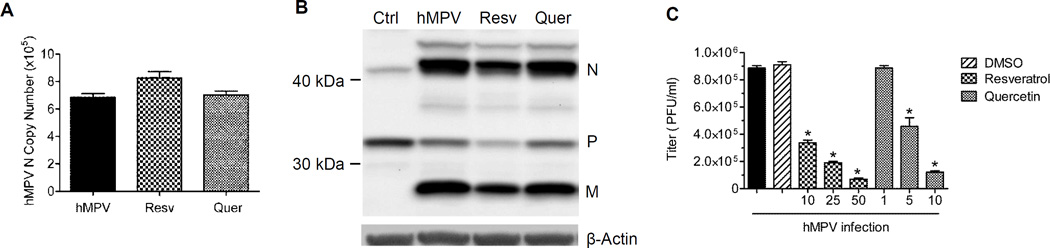
Figure 2. Effect of resveratrol and quercetin on viral replication
A549 cells were either mock-infected (Ctrl) or infected with hMPV at MOI of 1 for 24h in the presence or absence of 50 µM resveratrol or 10 µM quercetin, and harvested to prepare (A) total RNA to quantify RSV N gene expression by qRT-PCR; and (B) total cell lysates for western blot analysis for hMPV viral protein expression. For loading controls, membrane was stripped and reprobed with anti β-actin antibody; (C) A549 cells infected with hMPV at MOI of 1 for 24h and treated or untreated with various doses of resveratrol (10 – 50 µM in DMSO) or quercetin (1 – 10 µM in DMSO) or vehicle alone were harvested to measure viral titer by plaque assay. Results are expressed as mean ± standard error and are representative of three independent experiments. *P < 0.05 relative to hMPV-infected cells.
Figure 3
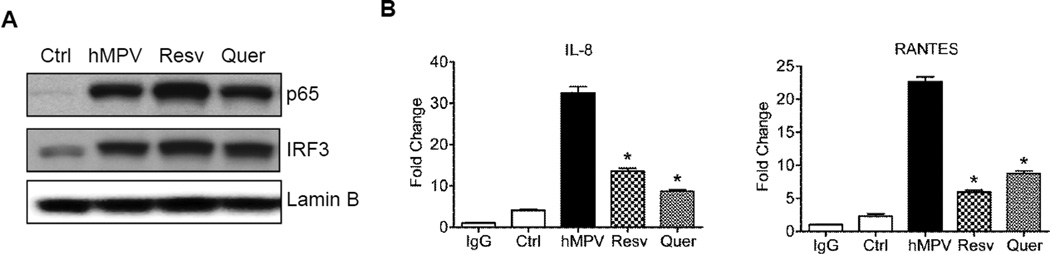
Figure 3. Effect of resveratrol and quercetin on transcription factor activation
A549 cells were infected with hMPV at MOI of 1 for 24h in the presence or absence of 50 µM resveratrol or 10 µM quercetin. (A) Nuclear proteins were analyzed for NF-κB/p65 and IRF-3 levels by Western blot. For loading controls, membranes were stripped and reprobed with anti lamin B antibody. (B) ChIP-QgPCR analysis of p65 occupancy of the IL-8 gene promoter NF-κB site (left panel) and IRF-3 occupancy of the RANTES gene promoter ISRE site (right panel). Data shown is representative of three independent experiments. *P < 0.05 relative to 24h hMPV infected cells.

References

    1. Angeloni C, Spencer JP, Leoncini E, Biagi PL, Hrelia S. Role of quercetin and its in vivo metabolites in protecting H9c2 cells against oxidative stress. Biochimie. 2007;89:73–82. - PubMed
    1. Bao X, Kolli D, Ren J, Liu T, Garofalo RP, Casola A. Human metapneumovirus glycoprotein G disrupts mitochondrial signaling in airway epithelial cells. PLoS ONE. 2013;8:e62568. - PMC - PubMed
    1. Bao X, Liu T, Shan Y, Li K, Garofalo RP, Casola A. Human metapneumovirus glycoprotein G inhibits innate immune responses. PLoS Pathog. 2008a;4:e1000077. - PMC - PubMed
    1. Bao X, Liu T, Spetch L, Kolli D, Garofalo RP, Casola A. Airway epithelial cell response to human metapneumovirus infection. Virology. 2007;368:91–101. - PMC - PubMed
    1. Bao X, Sinha M, Liu T, Hong C, Luxon BA, Garofalo RP, Casola A. Identification of human metapneumovirus-induced gene networks in airway epithelial cells by microarray analysis. Virology. 2008b;374:114–127. - PMC - PubMed

Publication types

MeSH terms