


Review
doi: 10.1161/CIRCULATIONAHA.114.001382.
Pharmacogenomics: personalizing pediatric heart transplantation
Affiliations
- PMID: 25645611
- PMCID: PMC4318121
- DOI: 10.1161/CIRCULATIONAHA.114.001382
Item in Clipboard
Review
Pharmacogenomics: personalizing pediatric heart transplantation
Circulation.
.
No abstract available
Keywords: drugs; pediatrics; pharmacogenetics; transplantation.
Conflict of interest statement
Figures
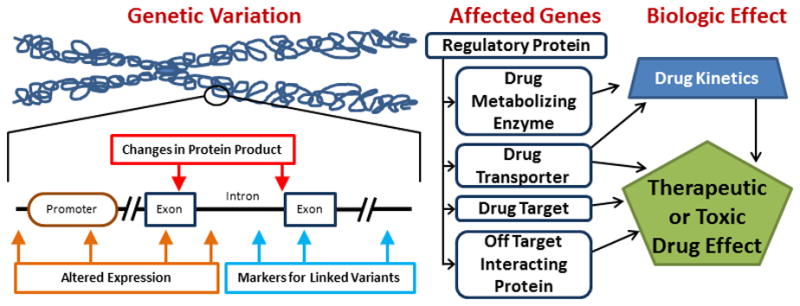
Mechanisms of Pharmacogenomic Effect. Several types of genetic variation may lead to alterations in gene products. Pharmacogenes include those coding for a variety of cellular functions, and may alter drug response via pharmacokinetic (absorption, distribution, metabolism or excretion) or pharmacodynamic (direct drug effect) pathways.
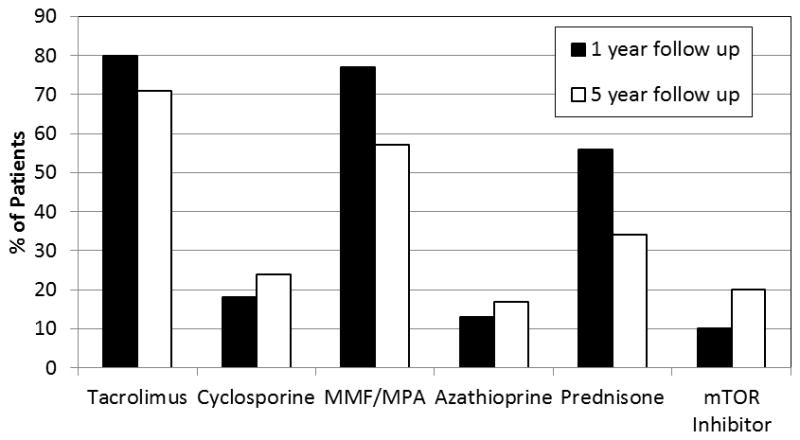
Maintenance Immunosuppressant Use in Pediatric Heart Transplantation. Maintenance immunosuppression at 1 year (black bars) and 5 year (white bars) follow up in pediatric heart transplant recipients with visits from 2007 onwards. Percent of all patients receiving each drug is plotted on the Y axis. Sum across medications is greater than 100% due to concomitant use of two or more medications. MMF – mycophenolate mofetil; MPA – mycophenolic acid; mTOR – mammalian target of rapamycin. Based on published data.
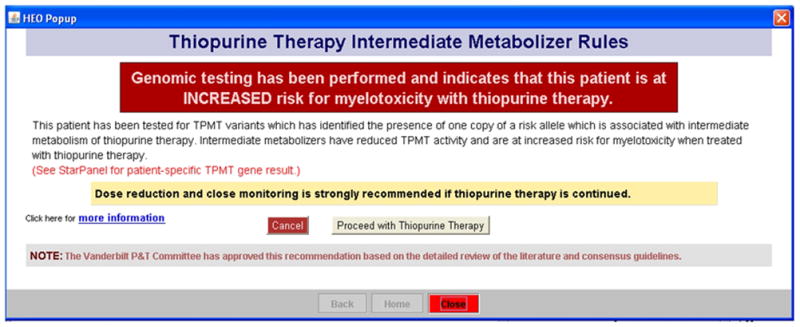
Clinical Implementation of Pharmacogenomics for Pediatric Cardiac Transplantation. A) Example of clinical decision support implemented by the Vanderbilt University Medical Center Pharmacogenomic Resource for Enhanced Decisions in Care & Treatment. This warning is shown in the inpatient order system for individuals with one functional and one nonfunctional TPMT allele if an order is entered for a thiopurine drug. B) Result interpretation and prescribing guidance for CYP3A5*1 homozygosity, available at MyDrugGenome.org.
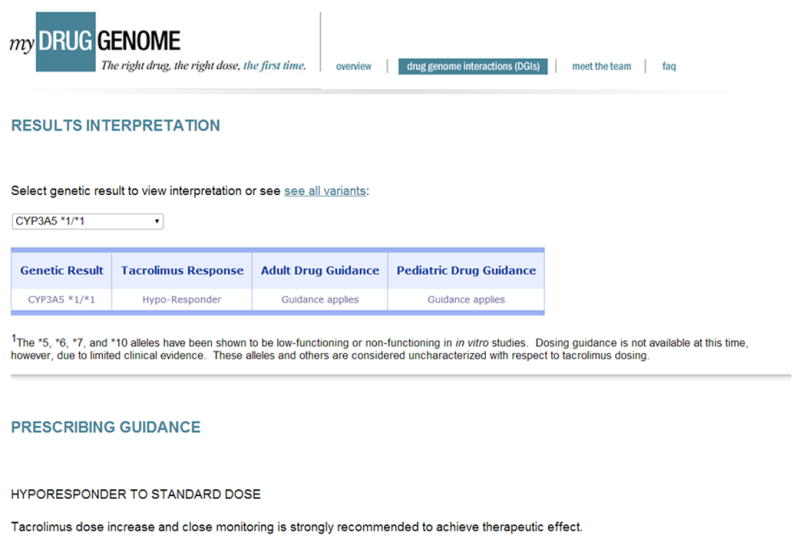
Clinical Implementation of Pharmacogenomics for Pediatric Cardiac Transplantation. A) Example of clinical decision support implemented by the Vanderbilt University Medical Center Pharmacogenomic Resource for Enhanced Decisions in Care & Treatment. This warning is shown in the inpatient order system for individuals with one functional and one nonfunctional TPMT allele if an order is entered for a thiopurine drug. B) Result interpretation and prescribing guidance for CYP3A5*1 homozygosity, available at MyDrugGenome.org.
References
-
- Dipchand AI, Kirk R, Mahle WT, Tresler MA, Naftel DC, Pahl E, Miyamoto SD, Blume E, Guleserian KJ, White-Williams C, Kirklin JK. Ten yr of pediatric heart transplantation: A report from the Pediatric Heart Transplant Study. Pediatr Transplant. 2013;17:99–111. - PubMed
-
- Manickaraj AK, Mital S. Personalized medicine in pediatric cardiology: do little changes make a big difference? Curr Opin Pediatr. 2012;24:584–591. - PubMed
-
- Xie H-G. Personalized immunosuppressive therapy in pediatric heart transplantation: Progress, pitfalls and promises. Pharmacol Ther. 2010;126:146–158. - PubMed
-
- Burckart GJ, Amur S. Update on the clinical pharmacogenomics of organ transplantation. Pharmacogenomics. 2010;11:227–236. - PubMed
Publication types
MeSH terms
Substances
Grants and funding
LinkOut - more resources
Full Text Sources
Medical
Miscellaneous
