


Small for gestational age births among South Indian women: temporal trend and risk factors from 1996 to 2010
- PMID: 25645738
- PMCID: PMC4324804
- DOI: 10.1186/s12884-015-0440-4
Small for gestational age births among South Indian women: temporal trend and risk factors from 1996 to 2010
Abstract
Background: The birth weight and gestational age at birth are two important variables that define neonatal morbidity and mortality. In developed countries, chronic maternal diseases like hypertension, diabetes mellitus, renal disease or collagen vascular disease is the most common cause of intrauterine growth restriction (IUGR). Maternal nutrition, pregnancy induced hypertension, chronic maternal infections, and other infections such as cytomegalovirus, parvovirus, rubella and malaria are the other causes of IUGR. The present study examines the secular trend of Small for Gestational Age (SGA) over 15 years and risk factors for SGA from a referral hospital in India.
Methods: Data from 1996 to 2010 was obtained from the labour room register. A rotational sampling scheme was used i.e. 12 months of the year were divided into 4 quarters. Taking into consideration all deliveries that met the inclusion criteria, babies whose birth weights were less than 10(th) percentile of the cut off values specific for gestational ages, were categorized as SGA. Only deliveries of live births that occurred between 22 and 42 weeks of pregnancy were considered in this study. Besides bivariate analyses, multivariable logistic regression analysis was done. Nagelkerke R(2) statistics and Hosmer and Lemeshow chi-square statistics were used as goodness of fit statistics.
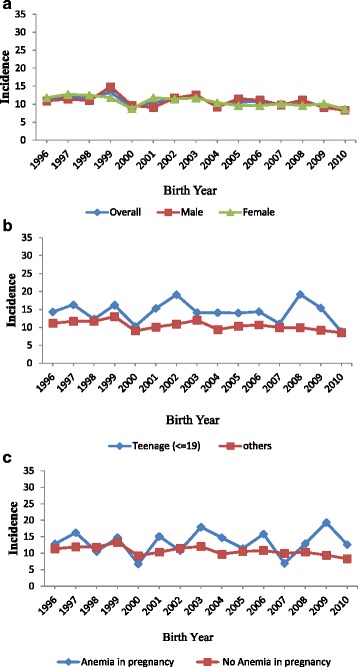
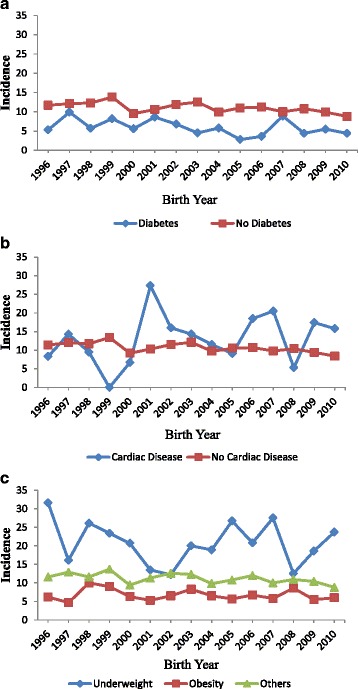
Results: Based on the data from 36,674 deliveries, the incidence of SGA was 11.4% in 1996 and 8.4% in 2010. Women who had multiple pregnancies had the higher odds of having SGA babies, 2.8 (2.3-3.3) times. The women with hypertensive disease had 1.8 (1.5-1.9) times higher odds of having SGA. Underweight women had 1.7 (1.3 - 2.1) times and anaemic mothers had 1.29 (1.01 - 1.6) times higher odds. The mothers who had cardiac disease were 1.4 (1.01 - 2.0) times at higher odds for SGA. In teenage pregnancies, the odds of SGA was 1.3 (1.1 - 1.5) times higher than mothers in the age group 20 to 35 years.
Conclusions: There is a significant reduction in the incidence of SGA by 26% over 15 years. The women with the above modifiable risk factors need to be identified early and provided with health education on optimal birth weight.
Figures
References
-
- Villar J, Belizán JM. The relative contribution of prematurity and fetal growth retardation to low birth weight in developing and developed societies. Am J Obstet Gynecol. 1982;143:793–8. - PubMed
-
- Lee AC, Katz J, Blencowe H, Cousens S, Kozuki N, Vogel JP, et al. National and regional estimates of term and preterm babies born small for gestational age in 138 low-income and middle-income countries in 2010. Lancet Glob Health. 2013;1:e26–36. doi: 10.1016/S2214-109X(13)70006-8. - DOI - PMC - PubMed
MeSH terms
LinkOut - more resources
Full Text Sources
Other Literature Sources
Medical
Miscellaneous
