


Serum 25-hydroxy vitamin D and survival in advanced colorectal cancer: a retrospective analysis
- PMID: 25646565
- PMCID: PMC4385477
- DOI: 10.1080/01635581.2015.998838
Serum 25-hydroxy vitamin D and survival in advanced colorectal cancer: a retrospective analysis
Abstract
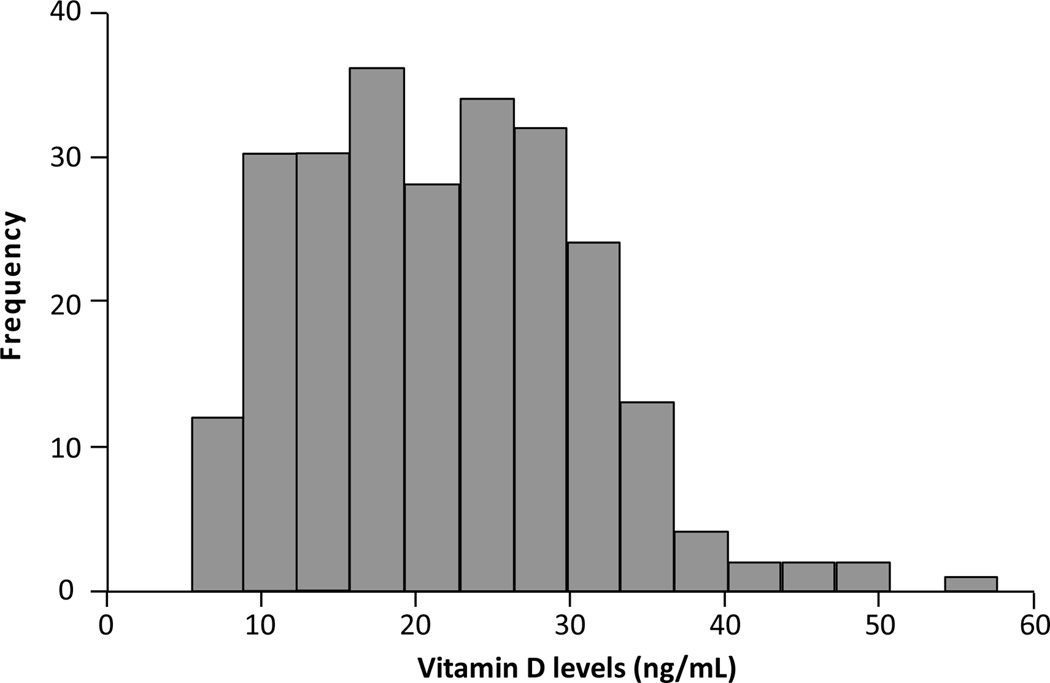
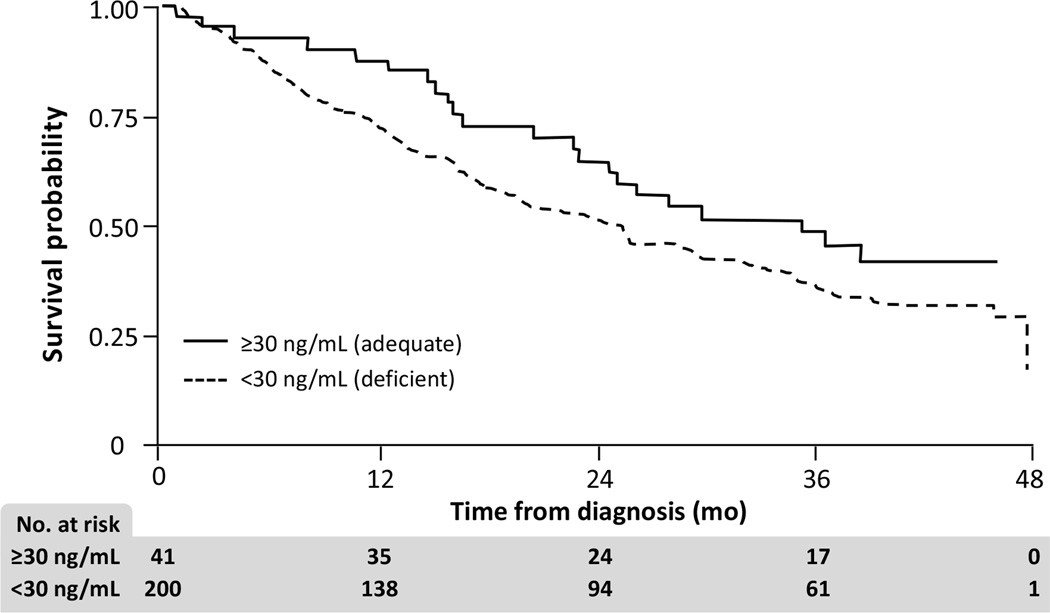
Higher serum 25-hydroxy vitamin D [25(OH)D] levels are associated with decreased colorectal cancer (CRC) incidence. In this retrospective study of Stage IV CRC patients, we evaluate whether 25(OH)D levels at diagnosis correlate with survival. Stored sera from carcinoembryonic antigen (CEA) measurements obtained between February 2005 and March 2006 were screened. The first 250 patients with CEA ± 30 days of Stage IV CRC diagnosis were included. Serum 25(OH)D levels were determined and categorized as adequate ≥ 30 ng/mL, or deficient <30 ng/mL. Multivariable Cox regression models controlling for albumin and Eastern Cooperative Oncology Group performance status were used to investigate whether higher 25(OH)D levels were associated with prolonged survival. A total of 207 patients (83%) were vitamin D-deficient (median = 21 ng/mL), with deficiencies significantly more likely among non-Hispanic black patients (P = 0.009). Higher levels were associated with prolonged survival in categorical variable analysis: adequate vs. deficient, hazard ratio = 0.61, 95% confidence interval = 0.38-0.98, P = 0.041. A majority of newly diagnosed Stage IV CRC patients are vitamin D-deficient. Our data suggest that higher 25(OH)D levels are associated with better overall survival. Clinical trials to determine whether aggressive vitamin D repletion would improve outcomes for vitamin D-deficient CRC patients are warranted.
Figures
References
-
- Martins D, Wolf M, Pan D, Zadshir A, Tareen N, et al. Prevalence of cardiovascular risk factors and the serum levels of 25-hydroxyvitamin D in the United States: data from the Third National Health and Nutrition Examination Survey. Arch Intern Med. 2007;167:1159–1165. - PubMed
-
- Lee JH, O'Keefe JH, Bell D, Hensrud DD, Holick MF. Vitamin D deficiency an important, common, and easily treatable cardiovascular risk factor? J Am Coll Cardiol. 2008;52:1949–1956. - PubMed
-
- Holick MF, Binkley NC, Bischoff-Ferrari HA, Gordon CM, Hanley DA, et al. Evaluation, treatment, and prevention of vitamin D deficiency: an Endocrine Society clinical practice guideline. J Clin Endocrinol Metab. 2011;96:1911–1930. - PubMed
Publication types
MeSH terms
Substances
Grants and funding
LinkOut - more resources
Full Text Sources
Other Literature Sources
Medical
