


Mesenchymal stem cells are enriched in head neck squamous cell carcinoma, correlates with tumour size and inhibit T-cell proliferation
- PMID: 25647013
- PMCID: PMC4333504
- DOI: 10.1038/bjc.2015.15
Mesenchymal stem cells are enriched in head neck squamous cell carcinoma, correlates with tumour size and inhibit T-cell proliferation
Abstract
Background: Cancer is a multifactorial disease not only restricted to transformed epithelium, but also involving cells of the immune system and cells of mesenchymal origin, particularly mesenchymal stem cells (MSCs). Mesenchymal stem cells contribute to blood- and lymph- neoangiogenesis, generate myofibroblasts, with pro-invasive activity and may suppress anti-tumour immunity.
Methods: In this paper, we evaluated the presence and features of MSCs isolated from human head neck squamous cell carcinoma (HNSCC).
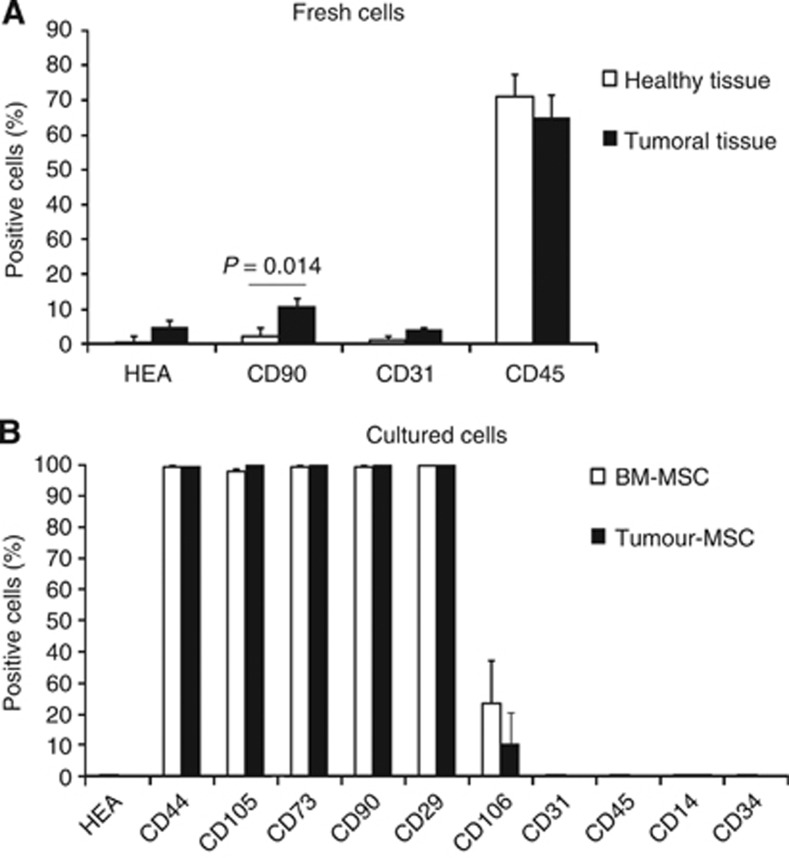
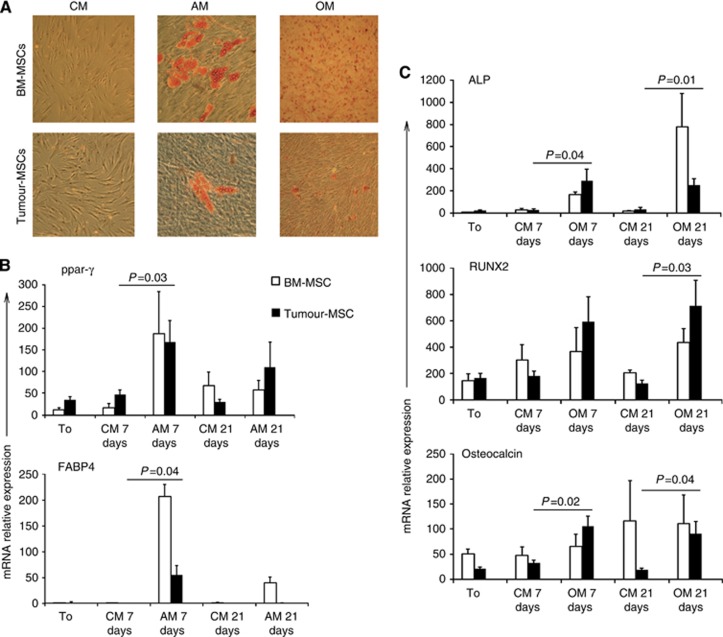
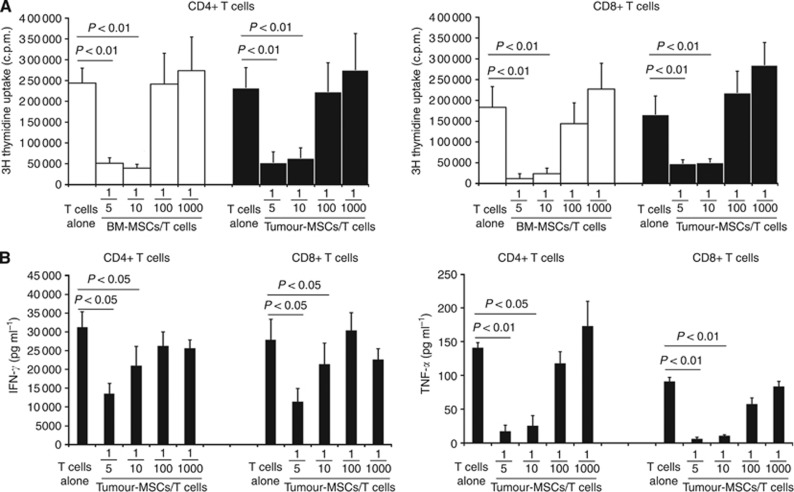
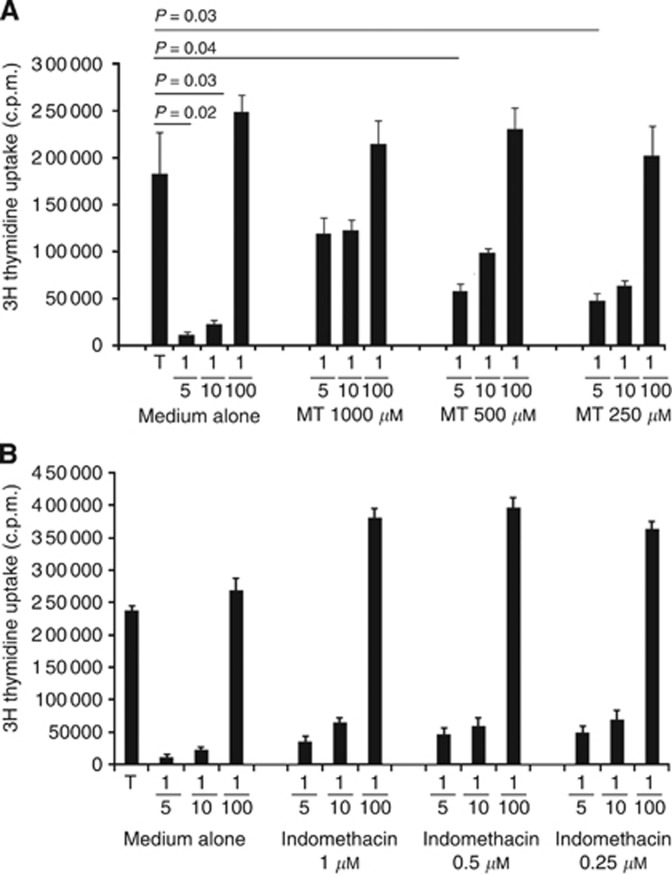
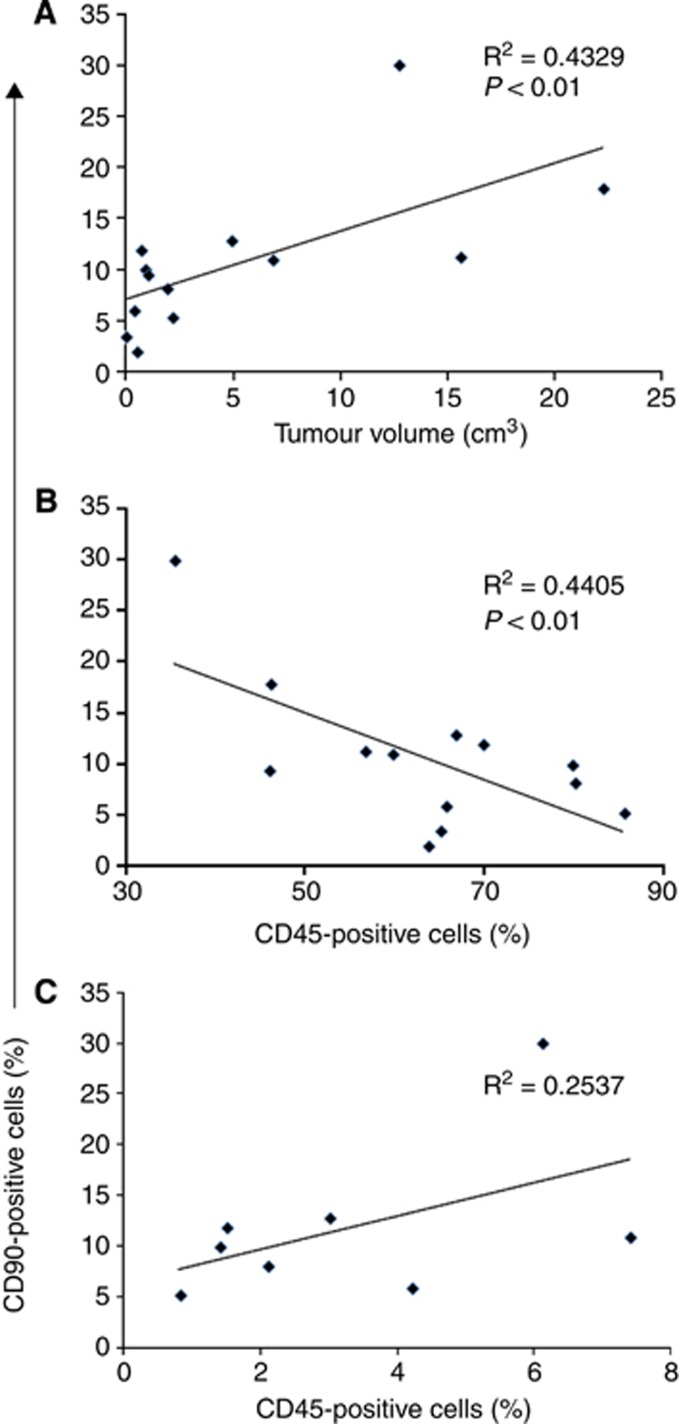
Results: Fresh specimens of HNSCC showed higher proportions of CD90+ cells compared with normal tissue; these cells co-expressed CD29, CD105, and CD73, but not CD31, CD45, CD133, and human epithelial antigen similarly to bone marrow-derived MSCs (BM-MSCs). Adherent stromal cells isolated from tumour shared also differentiation potential with BM-MSCs, thus we named them as tumour-MSCs. Interestingly, tumour-MSCs showed a clear immunosuppressive activity on in vitro stimulated T lymphocytes, mainly mediated by indoelamine 2,3 dioxygenase activity, like BM-MSCs. To evaluate their possible role in tumour growth in vivo, we correlated tumour-MSC proportions with neoplasm size. Tumour-MSCs frequency directly correlated with tumour volume and inversely with the frequency of tumour-infiltrating leukocytes.
Conclusions: These data support the concept that tumour-MSCs may favour tumour growth not only through their effect on stromal development, but also by inhibiting the anti-tumour immune response.
Figures
References
-
- Annunziato F, Romagnani S. The transient nature of the Th17 phenotype. Eur J Immunol. 2010;40:3312–3316. - PubMed
-
- Baker KS, DeFor TE, Burns LJ, Ramsay NK, Neglia JP, Robison LL. New malignancies after blood or marrow stem-cell transplantation in children and adults: incidence and risk factors. J Clin Oncol. 2003;21:1352–1358. - PubMed
-
- Baron F, Lechanteur C, Willems E, Bruck F, Baudoux E, Seidel L, Vanbellinghen JF, Hafraoui K, Lejeune M, Gothot A, Fillet G, Beguin Y. Cotransplantation of mesenchymal stem cells might prevent death from graft-versus-host disease (GVHD) without abrogating graft-versus-tumor effects after HLA-mismatched allogeneic transplantation following nonmyeloablative conditioning. Biol Blood Marrow Transplant. 2010;16:838–847. - PubMed
-
- Bartholomew A, Sturgeon C, Siatskas M, Ferrer K, McIntosh K, Patil S, Hardy W, Devine S, Ucker D, Deans R, Moseley A, Hoffman R. Mesenchymal stem cells suppress lymphocyte proliferation in vitro and prolong skin graft survival in vivo. Exp Hematol. 2002;30:42–48. - PubMed
Publication types
MeSH terms
Substances
LinkOut - more resources
Full Text Sources
Other Literature Sources
Medical
Research Materials
Miscellaneous
