. 2015 Feb 3;10(2):e0117601.
doi: 10.1371/journal.pone.0117601. eCollection 2015.

Endogenous cholinergic neurotransmission contributes to behavioral sensitization to morphine

Affiliations

Endogenous cholinergic neurotransmission contributes to behavioral sensitization to morphine

Dusica Bajic et al. PLoS One. .

Abstract

Neuroplasticity in the mesolimbic dopaminergic system is critical for behavioral adaptations associated with opioid reward and addiction. These processes may be influenced by cholinergic transmission arising from the laterodorsal tegmental nucleus (LDTg), a main source of acetylcholine to mesolimbic dopaminergic neurons. To examine this possibility we asked if chronic systemic morphine administration affects expression of genes in ventral and ventrolateral periaqueductal gray at the level of the LDTg using rtPCR. Specifically, we examined gene expression changes in the area of interest using Neurotransmitters and Receptors PCR array between chronic morphine and saline control groups. Analysis suggested that chronic morphine administration led to changes in expression of genes associated, in part, with cholinergic neurotransmission. Furthermore, using a quantitative immunofluorescent technique, we found that chronic morphine treatment produced a significant increase in immunolabeling of the cholinergic marker (vesicular acetylcholine transporter) in neurons of the LDTg. Finally, systemic administration of the nonselective and noncompetitive neuronal nicotinic antagonist mecamylamine (0.5 or 2 mg/kg) dose-dependently blocked the expression, and to a lesser extent the development, of locomotor sensitization. The same treatment had no effect on acute morphine antinociception, antinociceptive tolerance or dependence to chronic morphine. Taken together, the results suggest that endogenous nicotinic cholinergic neurotransmission selectively contributes to behavioral sensitization to morphine and this process may, in part, involve cholinergic neurons within the LDTg.


Conflict of interest statement

Competing Interests: Funding from Endo Pharmaceuticals does not alter the authors’ adherence to PLOS ONE policies on sharing data and materials.

Figures

Fig 1
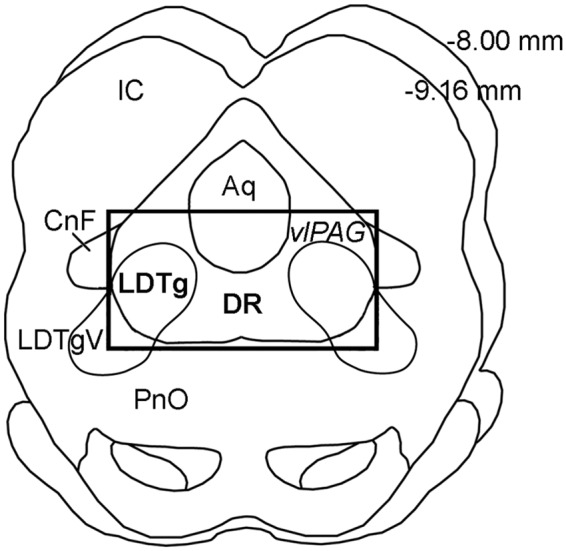
Fig 1. Area of Tissue Dissection for Molecular Experiments.
Schematic drawing illustrates rat transverse midbrain section at the level of the inferior colliculus (IC). It corresponds to Plates 52–56 of the adult rat brain atlas [31]. Rectangle encloses area dissected for the isolation of the tissue used in molecular experiments. It includes laterodorsal tegmental nucleus (LDTg) of the ventrolateral periaqueductal gray (vlPAG) and dorsal raphe (DR). Numbers in the upper right corner illustrate distance from Bregma. Abbreviations: Aq, aqueduct (Sylvius); CnF, cuneiform nucleus; LDTgV, laterodorsal tegmental nucleus, ventral part; PnO, pontine reticular nucleus, oral part.
Fig 2
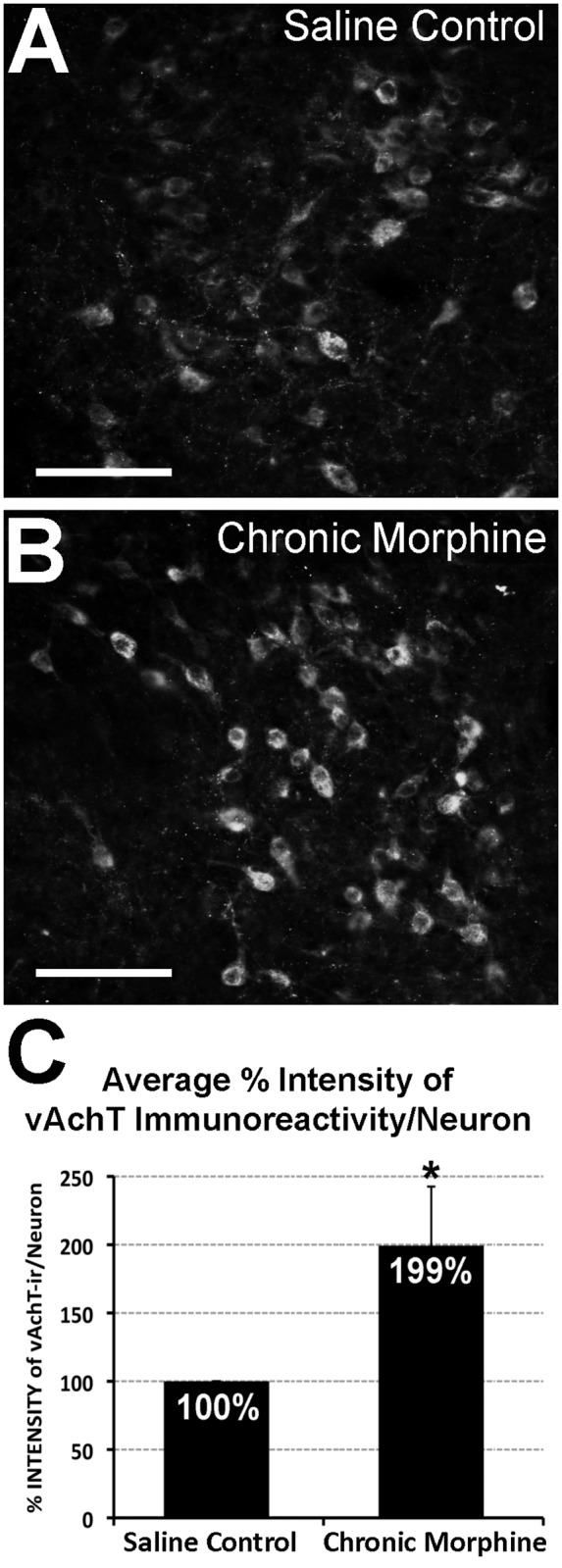
Fig 2. Cholinergic Neurons of the Laterodorsal Tegmental Nucleus in the Ventrolateral Periaqueductal Gray.
Photomicrographs illustrate vesicular acetylcholine transporter (vAChT) immunofluorescence in the laterodorsal tegmental nucleus. Cholinergic neurons are labeled more intensely following chronic morphine treatment (B) in comparison to saline control group (A). Graph in Panel C illustrates average percentage (%) intensity of vAChT immunoreactivity per individual cholinergic neuron in the laterodorsal tegmental nucleus (± SD; n = 6/group). There is a statistically significant increase (*) in intensity of vAChT immulabeling/neuron following chronic morphine administration when compared to control (99% ± 43.31; t(10) = -5.61, two-tailed p<0.001). Scale bar = 100 μm.
Fig 3
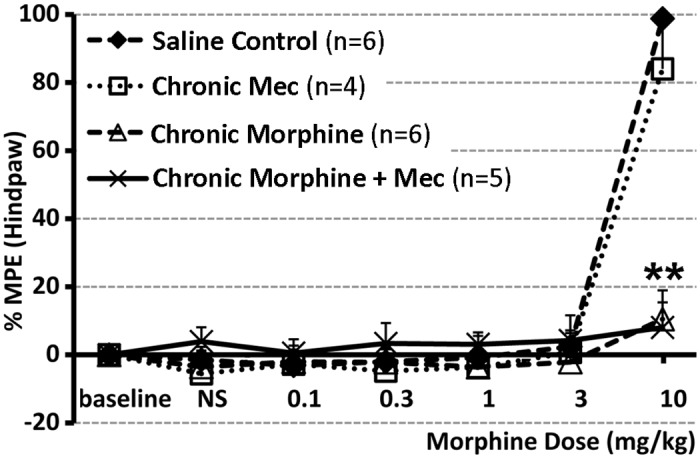
Fig 3. Behavioral Analysis of Rat Antinociceptive Tolerance with Hot-Plate Test.
Hot Plate test was done in the afternoon on day 7 of treatment to evaluate development of antinociceptive tolerance. Chronic morphine administration (10 mg/kg sc twice-daily for 6.5 days; n = 6) was associated with development of antinociceptive tolerance in comparison to saline control group (n = 6). Chronic mecamylamine (Mec) administration (2 mg/kg sc twice-daily for 6.5 days; n = 4) did not change morphine antinociceptive effect. In addition, when given chronically with morphine, mecamylamine did not change development of antinociceptive tolerance (n = 5). Results are presented as a percentage of maximum possible effect (%MPE ± SD) according to the method of Harris and Pierson [38] to construct dose-response curves for morphine’s antinociceptive effect. Two-way ANOVA shows a significant effect of morphine (F(1,17) = 377.69, p<0.0001 at 10 mg/kg testing dose), while there is no significant effect of mecamylamine nor interaction effect. **, p<0.01.
Fig 4
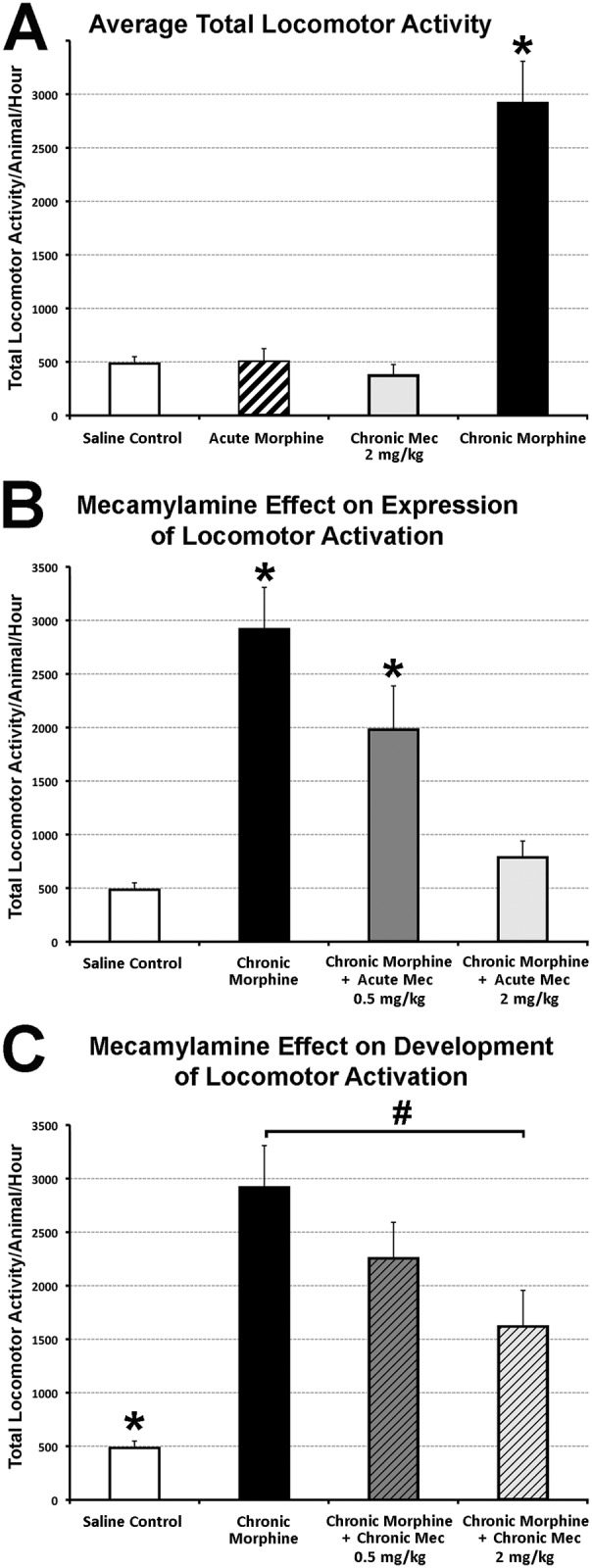
Fig 4. Behavioral Analysis of Rat Locomotor Activity.
Graphs illustrate average total locomotor activity (ambulatory, fine, and rearing movements) ± SEM. (A) Chronic morphine administration (10 mg/kg sc twice-daily for 6.5 days; n = 11) was associated with locomotor sensitization when measured on day 7. It was significantly different (F(3,30) = 26.05, p<0.001) in comparison to saline control (n = 9; p<0.001), acute morphine group (saline sc twice-daily for 6 days and morphine 10 mg/kg sc in the morning on day 7; n = 9; p<0.001), and chronic mecamylamine (Mec) administration (2 mg/kg sc twice-daily for 6.5 days; n = 5; p<0.001). Panel B illustrates acute Mec effect on expression of locomotor activation (F(3,30) = 15.21, p<0.001). Mec was administered in a single dose on day 7 (0.5 or 2 mg/kg dose) to animals that were chronically treated with morphine. Although 0.5 mg/kg acute Mec dose (n = 7) statistically decreased locomotor sensitization associated with chronic morphine administration (p = 0.036), it was the 2 mg/kg dose (n = 7; p<0.001) that decreased it to the saline control level. Panel C illustrates chronic Mec effect on development of locomotor sensitization (F(3,30) = 12.37, P<0.001). Mec was administered twice daily in 0.5 or 2 mg/kg dose along morphine for 6 days. Prior to the locomotor testing in the morning of day 7, animals received only morphine. Smaller Mec dose (n = 7) had no effect, while 2 mg/kg chronic Mec administration (n = 7) significantly decreased development of locomotor sensitization in comparison to the chronic morphine group (p>0.006). However, it was still significantly higher in comparison to saline control (p<0.02). Data for saline control and chronic morphine group is the same in A–C. One-way ANOVA with LSD post-hoc test; *, statistically different from all other groups; #, statistical difference only between marked groups.
Fig 5
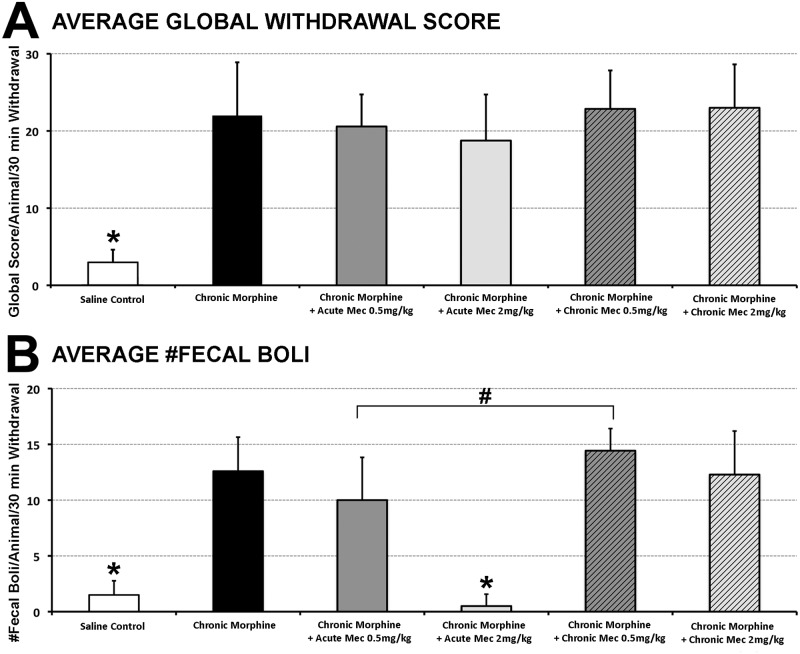
Fig 5. Behavioral Analysis of Rat Morphine Withdrawal.
Panel A graph illustrates average global withdrawal score ± SD. It is significantly higher (F(5,38) = 22.40; p<0.001) following chronic morphine administration (n = 5) in comparison to saline control group (n = 10). However, it was not different from either acute mecamylamine (Mec) (n = 7 for 0.5 mg/kg dose; n = 8 for 2 mg/kg dose group), or chronic Mec groups (n = 7/group). (B) There were no differences in average number of individual behaviors among groups (not shown), except for the average number of fecal boli (#fecal boli/animal/30 min withdrawal ± SD; F(5,38) = 41.068, p<0.001). Only 2 mg/kg acute dose of Mec significantly decreased average diarrhea following chronic morphine administration (p<0.001) to a saline control level. Although average number of fecal boli is significantly decreased following 0.5 mg/kg acute dose of Mec in comparison to its chronic application (p<0.003), it was still not different from chronic MSO4 group. One-way ANOVA with LSD post-hoc test. *, statistically different from all other groups except each other; #, statistical difference only between marked groups.

References

    1. Cicero TJ, Inciardi JA, Munoz A (2005) Trends in abuse of Oxycontin and other opioid analgesics in the United States: 2002–2004. J Pain 6: 662–672. - PubMed
    1. Wise RA (2004) Dopamine, learning and motivation. Nat Rev Neurosci 5: 483–494. - PubMed
    1. Van den Heuvel DM, Pasterkamp RJ (2008) Getting connected in the dopamine system. Prog Neurobiol 85: 75–93. 10.1016/j.pneurobio.2008.01.003 - DOI - PubMed
    1. Schmidt HD, Anderson SM, Famous KR, Kumaresan V, Pierce RC (2005) Anatomy and pharmacology of cocaine priming-induced reinstatement of drug seeking. Eur J Pharmacol 526: 65–76. - PubMed
    1. Pierce RC, Kumaresan V (2006) The mesolimbic dopamine system: the final common pathway for the reinforcing effect of drugs of abuse? Neurosci Biobehav Rev 30: 215–238. - PubMed

Publication types

MeSH terms

Substances

LinkOut - more resources