


Hair nicotine levels in children with bronchopulmonary dysplasia
- PMID: 25647675
- PMCID: PMC4533246
- DOI: 10.1542/peds.2014-2501
Hair nicotine levels in children with bronchopulmonary dysplasia
Abstract
Background: Tobacco smoke exposure (TSE) may increase respiratory morbidities in young children with bronchopulmonary dysplasia (BPD). Rapid respiratory rates, close proximity to a smoking caregiver, and increased dermal absorption of tobacco smoke components can contribute to systemic exposure. In this study, hair nicotine levels were used as a biomarker of chronic TSE in young children with BPD to determine if hair nicotine levels correlate with caregiver self-report of TSE and respiratory morbidities.
Methods: From 2012 to 2014, hair nicotine levels were measured from consecutive children seen in a BPD outpatient clinic and compared with caregiver questionnaires on household smoking. The relationship between respiratory morbidities and self-reported TSE or hair nicotine level was assessed.
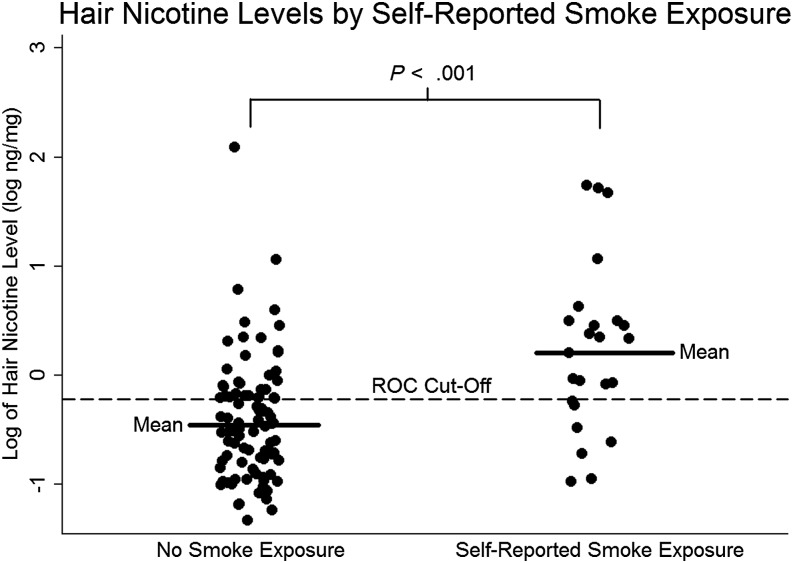
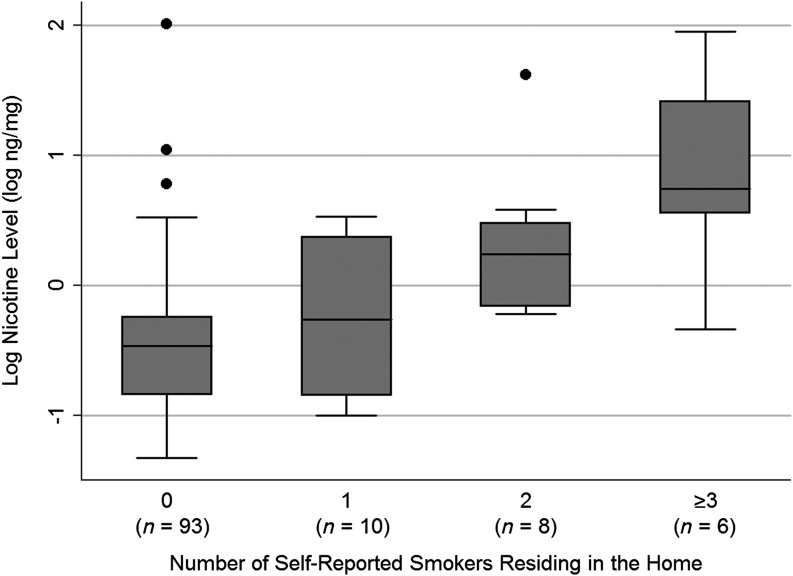
Results: The mean hair nicotine level from 117 children was 3.1 ± 13.2 ng/mg. Hair nicotine levels were significantly higher in children from smoking households by caregiver self-report compared with caregivers who reported no smoking (8.2 ± 19.7 ng/mg vs 1.8 ± 10.7; P < .001). In households that reported smoking, hair nicotine levels were higher in children with a primary caregiver who smoked compared with a primary caregiver who did not smoke. Among children with BPD who required respiratory support (n = 50), a significant association was found between higher log hair nicotine levels and increased hospitalizations and limitation of activity.
Conclusions: Chronic TSE is common in children with BPD, with hair nicotine levels being more likely to detect TSE than caregiver self-report. Hair nicotine levels were also a better predictor of hospitalization and activity limitation in children with BPD who required respiratory support at outpatient presentation.
Keywords: bronchopulmonary dysplasia; nicotine; prematurity; respiratory outcomes; secondhand smoke; tobacco smoke exposure.
Copyright © 2015 by the American Academy of Pediatrics.
Figures
References
-
- Lemons JA, Bauer CR, Oh W, et al. NICHD Neonatal Research Network . Very low birth weight outcomes of the National Institute of Child health and human development neonatal research network, January 1995 through December 1996. Pediatrics. 2001;107(1). Available at: www.pediatrics.org/cgi/content/full/107/1/e1 - PubMed
-
- Ehrenkranz RA, Walsh MC, Vohr BR, et al. National Institutes of Child Health and Human Development Neonatal Research Network . Validation of the National Institutes of Health consensus definition of bronchopulmonary dysplasia. Pediatrics. 2005;116(6):1353–1360 - PubMed
-
- Ambalavanan N, Walsh M, Bobashev G, et al. NICHD Neonatal Research Network . Intercenter differences in bronchopulmonary dysplasia or death among very low birth weight infants. Pediatrics. 2011;127(1). Available at: www.pediatrics.org/cgi/content/full/127/1/e106 - PMC - PubMed
-
- Greenough A. Long-term pulmonary outcome in the preterm infant. Neonatology. 2008;93(4):324–327 - PubMed
Publication types
MeSH terms
Substances
Grants and funding
LinkOut - more resources
Full Text Sources
Other Literature Sources
Medical
Molecular Biology Databases
