


Biting behaviour of African malaria vectors: 1. where do the main vector species bite on the human body?
- PMID: 25650005
- PMCID: PMC4320538
- DOI: 10.1186/s13071-015-0677-9
Biting behaviour of African malaria vectors: 1. where do the main vector species bite on the human body?
Abstract
Background: Malaria control in Africa relies heavily on indoor vector management, primarily indoor residual spraying and insecticide treated bed nets. Little is known about outdoor biting behaviour or even the dynamics of indoor biting and infection risk of sleeping household occupants. In this paper we explore the preferred biting sites on the human body and some of the ramifications regarding infection risk and exposure management.
Methods: We undertook whole-night human landing catches of Anopheles arabiensis in South Africa and Anopheles gambiae s.s. and Anopheles funestus in Uganda, for seated persons wearing short sleeve shirts, short pants, and bare legs, ankles and feet. Catches were kept separate for different body regions and capture sessions. All An. gambiae s.l. and An. funestus group individuals were identified to species level by PCR.
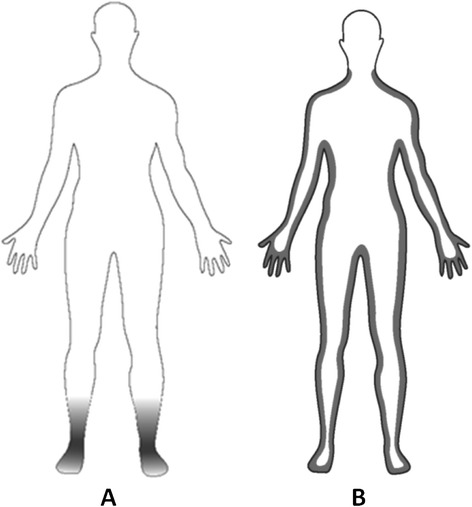
Results: Three of the main vectors of malaria in Africa (An. arabiensis, An. gambiae s.s. and An. funestus) all have a preference for feeding close to ground level, which is manifested as a strong propensity (77.3% - 100%) for biting on lower leg, ankles and feet of people seated either indoors or outdoors, but somewhat randomly along the lower edge of the body in contact with the surface when lying down. If the lower extremities of the legs (below mid-calf level) of seated people are protected and therefore exclude access to this body region, vector mosquitoes do not move higher up the body to feed at alternate body sites, instead resulting in a high (58.5% - 68.8%) reduction in biting intensity by these three species.
Conclusions: Protecting the lower limbs of people outdoors at night can achieve a major reduction in biting intensity by malaria vector mosquitoes. Persons sleeping at floor level bear a disproportionate risk of being bitten at night because this is the preferred height for feeding by the primary vector species. Therefore it is critical to protect children sleeping at floor level (bednets; repellent-impregnated blankets or sheets, etc.). Additionally, the opportunity exists for the development of inexpensive repellent-impregnated anklets and/or sandals to discourage vectors feeding on the lower legs under outdoor conditions at night.
Figures
References
-
- Roll Back Malaria Partnership. The global malaria action plan for a malaria free world. 2008. Geneva: RBM. Available: http://www.rollbackmalaria.org/gmap/gmap.pdf.
-
- Bill & Melinda Gates Foundation Malaria Forum Day 2 transcript. 17-10-2007. Available: http://www.gatesfoundation.org/speeches-commentary/Pages/melinda-french-....
-
- WHO . World Malaria Report 2013. Geneva, Switzerland: World Health Organization; 2013.
Publication types
MeSH terms
LinkOut - more resources
Full Text Sources
Other Literature Sources
Medical
