. 2015 Jan 27:3:e740.
doi: 10.7717/peerj.740. eCollection 2015.

First genomic insights into members of a candidate bacterial phylum responsible for wastewater bulking

Affiliations

First genomic insights into members of a candidate bacterial phylum responsible for wastewater bulking

Yuji Sekiguchi et al. PeerJ. .

Abstract

Filamentous cells belonging to the candidate bacterial phylum KSB3 were previously identified as the causative agent of fatal filament overgrowth (bulking) in a high-rate industrial anaerobic wastewater treatment bioreactor. Here, we obtained near complete genomes from two KSB3 populations in the bioreactor, including the dominant bulking filament, using differential coverage binning of metagenomic data. Fluorescence in situ hybridization with 16S rRNA-targeted probes specific for the two populations confirmed that both are filamentous organisms. Genome-based metabolic reconstruction and microscopic observation of the KSB3 filaments in the presence of sugar gradients indicate that both filament types are Gram-negative, strictly anaerobic fermenters capable of non-flagellar based gliding motility, and have a strikingly large number of sensory and response regulator genes. We propose that the KSB3 filaments are highly sensitive to their surroundings and that cellular processes, including those causing bulking, are controlled by external stimuli. The obtained genomes lay the foundation for a more detailed understanding of environmental cues used by KSB3 filaments, which may lead to more robust treatment options to prevent bulking.

Keywords: Anaerobic biotechnology; Candidate phylum; Filamentous bulking; KSB3 phylum; Metagenomics; Wastewater treatment.


Conflict of interest statement

Yuji Sekiguchi and Akiko Ohashi are employees of the National Institute of Advanced Industrial Science and Technology (AIST). Toshihiro Yamauchi is an employee of Kubota Kasui Corporation.

Figures
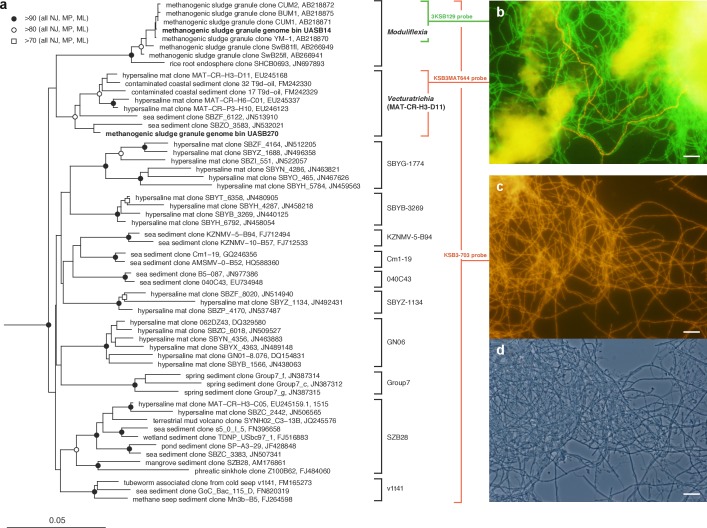
Figure 1
Figure 1. Phylogenetic structure of the Modulibacteria (KSB3) phylum based on comparative analysis of 16S rRNA gene sequences, and imaging of KSB3 cells.
(A) Maximum-likelihood phylogenetic tree (RAxML) of public data (accession numbers shown) and the 16S rRNA sequence determined in this study for UASB14. Sequences from the bacterial phyla Nitrospirae, Tenericutes, and Chloroflexi were used to root the tree (not shown). Reproducible interior nodes are indicated as a black circle (>90% bootstrap support for neighbor-joining [NJ], maximum parsimony [MP], and maximum-likelihood [ML] inferences), open circle (>80% support); or open rectangle (>70% support). Nodes without symbols were not reproducible between trees. The scale bar represents 5% estimated sequence divergence. Class-level clades are bracketed to the right of the figure in black. The target ranges of KSB3-specific FISH (fluorescence in situ hybridization) probes used in this study are indicated by colored brackets with the colors corresponding to cell color in (B) and (D). (B) 16S rRNA-targeted FISH detection of UASB14 and UASB270 filaments in the UASB sludge. The abundant UASB14 filaments are labeled green and the low abundance UASB270 filaments are labeled red. (C) Total KSB3 filament abundance highlighted by a phylum-level FISH probe relative to (D) all cells present in the same field (phase-contrast image). Bars in (B–D) represent 10 µm.
Figure 2
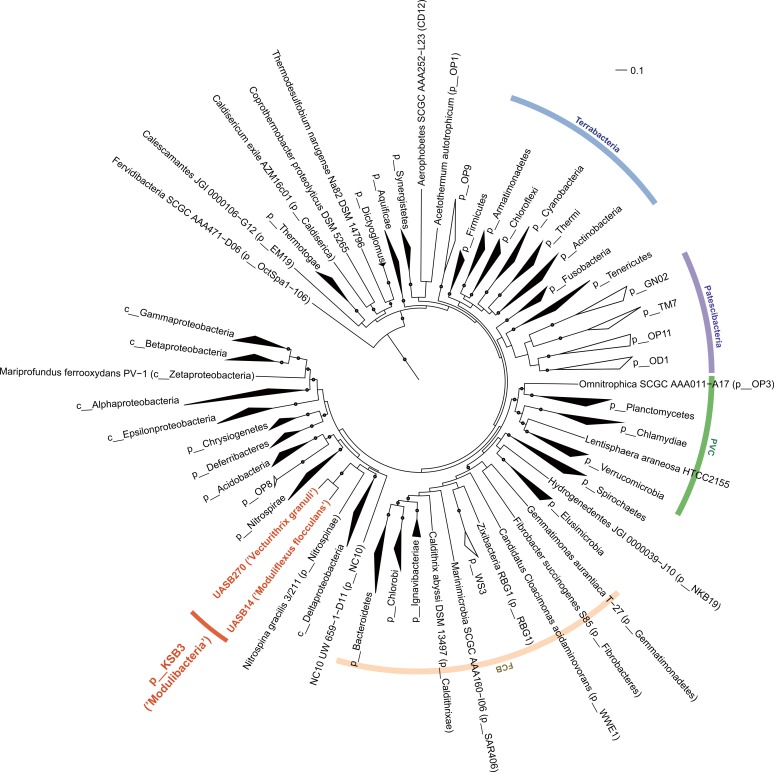
Figure 2. Maximum-likelihood phylogenetic inference of Modulibacteria (KSB3) population genomes among known bacterial phyla.
The tree was constructed using RAxML based on up to 38 marker genes (using taxon-outgroup configuration Config 3, Table S3) and sequences were collapsed at the phylum level except for classes in the Proteobacteria. Ranks are indicated by prefix; p__ (phylum), c__ (class). KSB3 genomes obtained in this study are highlighted in red. Superphyla (Terrabacteria, Patescibacteria, Fibrobacteres-Chlorobi-Bacteroidetes [FCB], and Planctomycetes-Verrucomicrobia-Chlamydiae [PVC]) are highlighted with color ranges. Taxa comprising cultivated representatives are shown in black; taxa with no cultivated representatives are indicated by outline. Reproducible associations (>80% bootstrap values from 100 resamplings) are indicated by dots on interior nodes. Alignments of homologous proteins from archaeal genomes were used to root the tree (not shown). The scale bar represents 10% estimated sequence divergence.
Figure 3
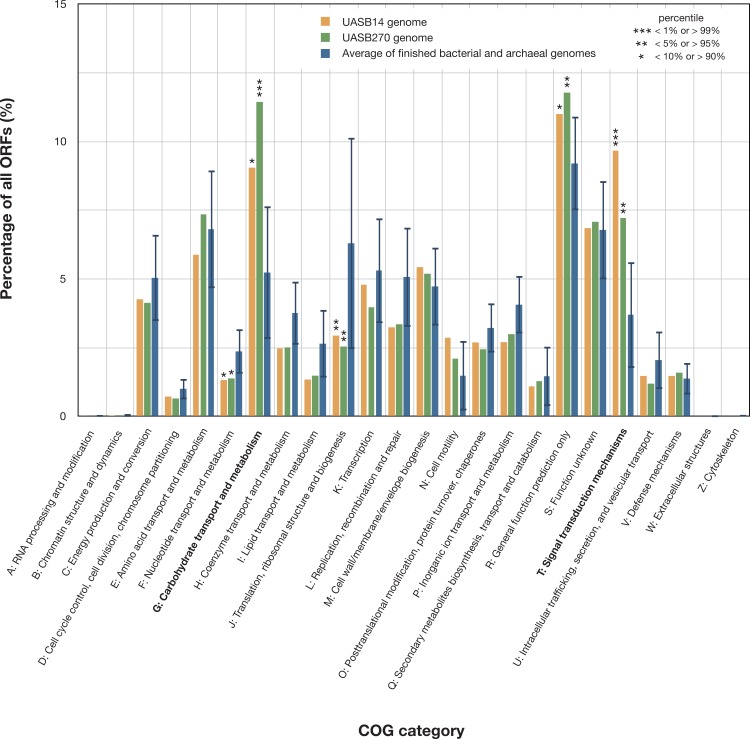
Figure 3. Relative representation of COG categories by predicted ORFs in the UASB14 and UASB270 genomes.
Global averages and standard deviation (bars) are shown for 2,279 publicly available finished bacterial and archaeal genomes (Markowitz et al., 2014). Statistically significant differences are indicated by percentile of scores for all the available finished bacterial and archaeal genomes.
Figure 4
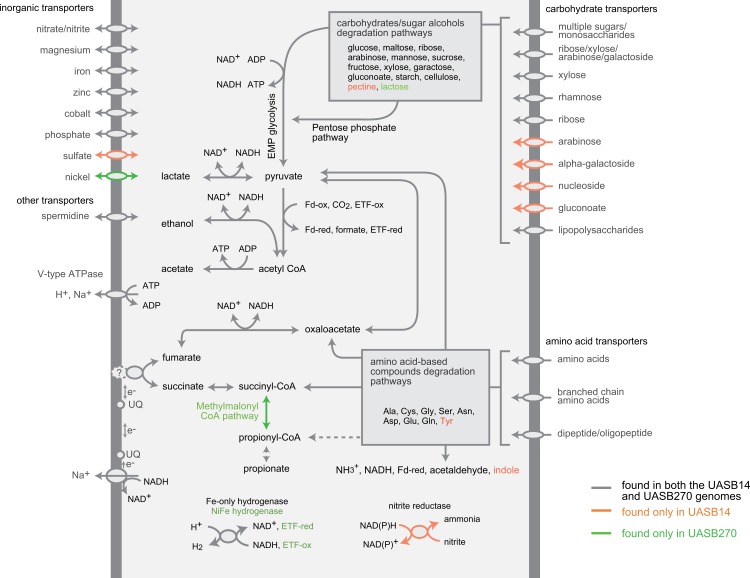
Figure 4. Composite metabolic overview of the Modulibacteria (KSB3) genomes based on identified genes and pathways.
Gray indicates elements common to both genomes, while orange and green show elements specific to UASB14 and UASB270, respectively. Both filament types have the genes necessary to produce acetate, ethanol, lactate, and hydrogen (and possibly propionate) as fermentative end products, likely generating energy through the glycolytic Embden-Meyerhof-Parnas (EMP) pathway and the fermentation of amino acids and sugars. Abbreviations: ETF, electron transfer flavoprotein; Fd-ox and Fd-red, oxidized and reduced ferredoxin, respectively; UQ, ubiquinone.
Figure 5
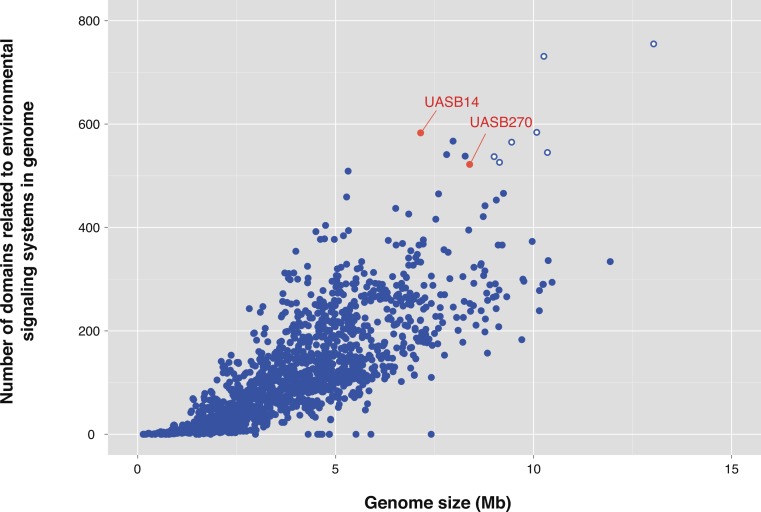
Figure 5. Number of protein domains inferred to be involved in environmental signaling for the two Modulibacteria (KSB3) genomes and finished bacterial and archaeal genomes.
Number of protein domains inferred to be involved in environmental signaling (Table S8) as a function of genome size for the two Modulibacteria (KSB3) genomes (in red) and 2,279 publicly available finished bacterial and archaeal genomes (in blue). The KSB3 filaments have among the highest proportion of signaling domains, only surpassed by members of the Myxobacteria (open blue circles), which are capable of fruiting body formation by contact-mediated signaling.

References

    1. Ahring BK. Biomethanation I. Berlin: Springer; 2003a. (Advances in biochemical engineering/biotechnology).
    1. Ahring BK. Biomethanation I. Berlin: Springer; 2003b. Perspectives for anaerobic digestion; pp. 1–30. (Advances in biochemical engineering/biotechnology). - PubMed
    1. Albertsen M, Hugenholtz P, Skarshewski A, Nielsen KL, Tyson GW, Nielsen PH. Genome sequences of rare, uncultured bacteria obtained by differential coverage binning of multiple metagenomes. Nature Biotechnology. 2013;31:533–538. doi: 10.1038/nbt.2579. - DOI - PubMed
    1. Angelidaki I, Karakashev D, Batstone DJ, Plugge CM, Stams AJM. Biomethanation and its potential. Methods in Enzymology. 2011;494:327–351. doi: 10.1016/B978-0-12-385112-3.00016-0. - DOI - PubMed
    1. Aoki-Kinoshita KF, Kanehisa M. Gene annotation and pathway mapping in KEGG. Methods in Molecular Biology. 2007;396:71–91. - PubMed

LinkOut - more resources