


Venous thromboembolism in the elderly: efficacy and safety of non-VKA oral anticoagulants
- PMID: 25650285
- PMCID: PMC4314657
- DOI: 10.1186/1477-9560-12-21
Venous thromboembolism in the elderly: efficacy and safety of non-VKA oral anticoagulants
Abstract
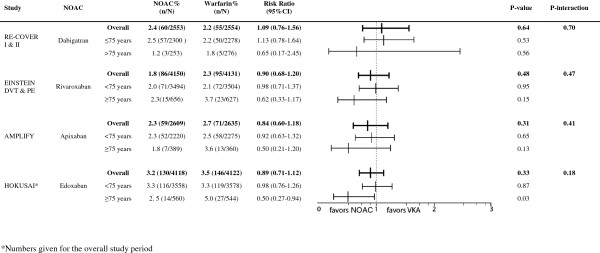
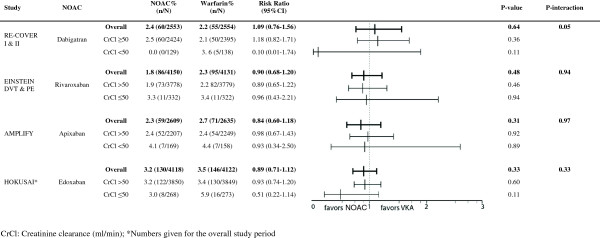
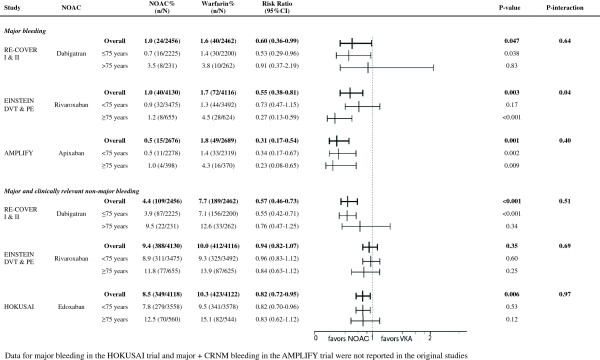
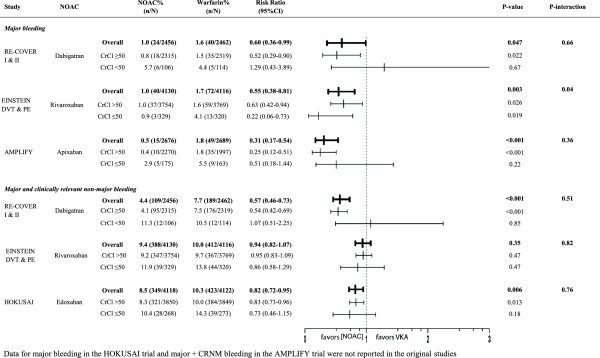
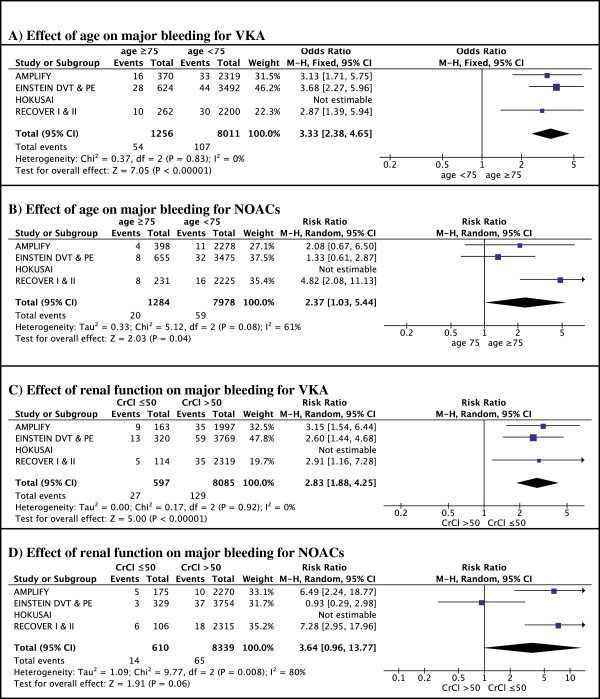
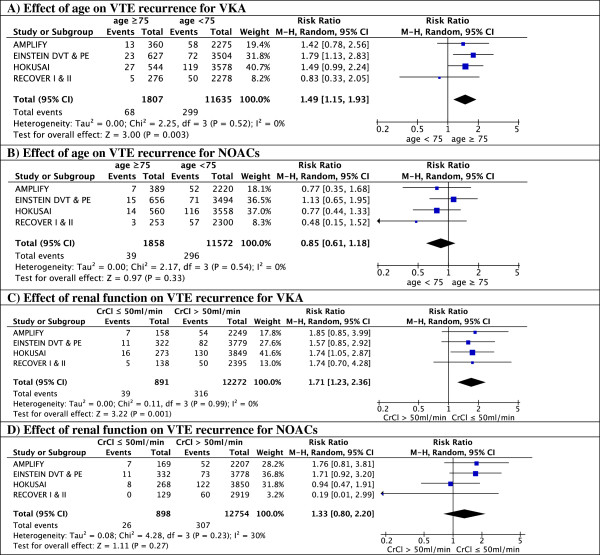
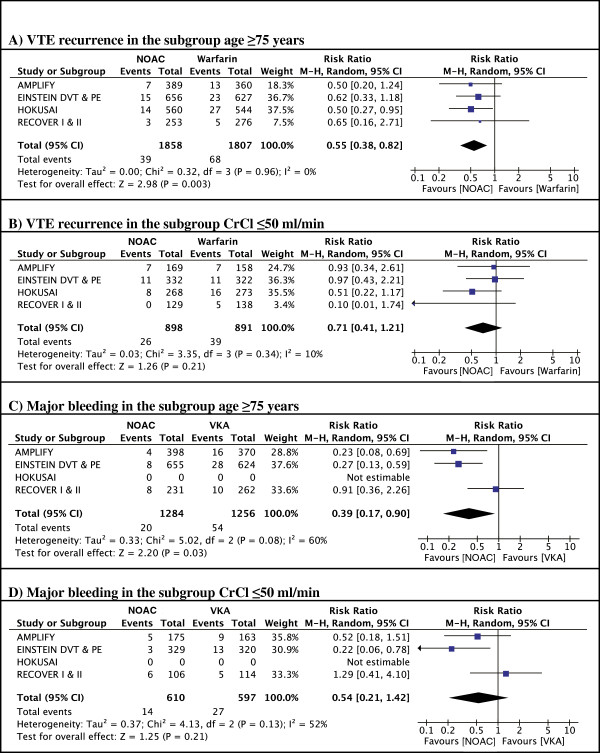
Increasing age and renal impairment are risk factors for venous thrombosis but also for anticoagulant-induced bleeding. In large-scale phase III trials, non-VKA oral anticoagulants (NOACs) were at least as effective and safe for the treatment of acute venous thromboembolism as warfarin. Here, we review the efficacy and safety of dabigatran, rivaroxaban, apixaban and edoxaban in the subgroups of elderly patients (≥75 years) and patients with impaired renal function (creatinine clearance ≤50 ml/min). In all phase III trials, the efficacy of NOACs in the prevention of recurrent VTE was conserved both in the elderly subgroup and in the subgroup with impaired renal function. In a meta-analysis of the pooled results, NOACs reduced VTE recurrence compared with warfarin in elderly patients. In elderly patients and patients with impaired renal function, the safety of NOACs was in line with the results of the overall study. NOACs may offer an effective, safer and more convenient alternative for VKAs also in the elderly. However, the efficacy/safety profile of NOACs in the aged population needs to be confirmed in real-life.
Keywords: Elderly; Non-VKA-acting oral anticoagulants; Novel oral anticoagulants; Renal insufficiency; Venous thromboembolism.
Figures
References
-
- Goldhaber SZ. In: Cardiovascular Medicine. 3. Willerson JT, Cohn JN, Wellens HJ, Holmers DR, editor. 2007. Venous disease; pp. 1705–1716. (London Limited).
-
- Buller HR, Decousus H, Grosso MA, Mercuri M, Middeldorp S, Prins MH, Raskob GE, Schellong SM, Schwocho L, Segers A, Shi M, Verhamme P, Wells P. Hokusai VTE Investigators. Edoxaban versus warfarin for the treatment of symptomatic venous thromboembolism. N Engl J Med. 2013;369:1406–1415. - PubMed
-
- Anderson FA Jr, Wheeler HB, Goldberg RJ, Hosmer DW, Patwardhan NA, Jovanovic B, Forcier A, Dalen JE. A population-based perspective of the hospital incidence and case-fatality rates of deep vein thrombosis and pulmonary embolism: the Worcester DVT study. Arch Intern Med. 1991;151:933–938. doi: 10.1001/archinte.1991.00400050081016. - DOI - PubMed
Publication types
LinkOut - more resources
Full Text Sources
Other Literature Sources
