Streptococcus pneumoniae serotype 1 burden in the African meningitis belt: exploration of functionality in specific antibodies
- PMID: 25651921
- PMCID: PMC4375351
- DOI: 10.1128/CVI.00758-14
Streptococcus pneumoniae serotype 1 burden in the African meningitis belt: exploration of functionality in specific antibodies
Abstract
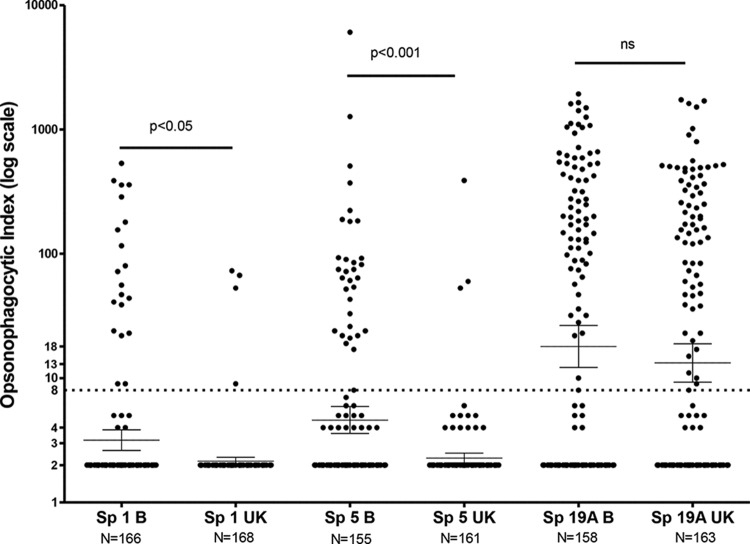
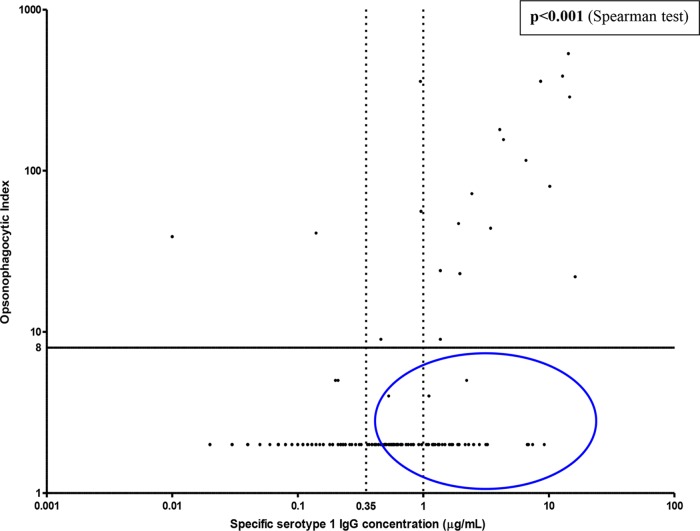
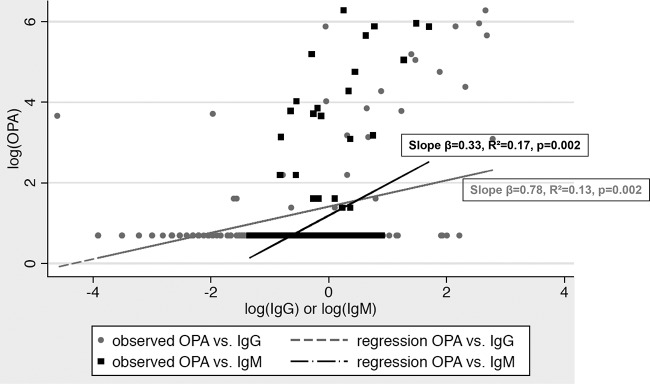
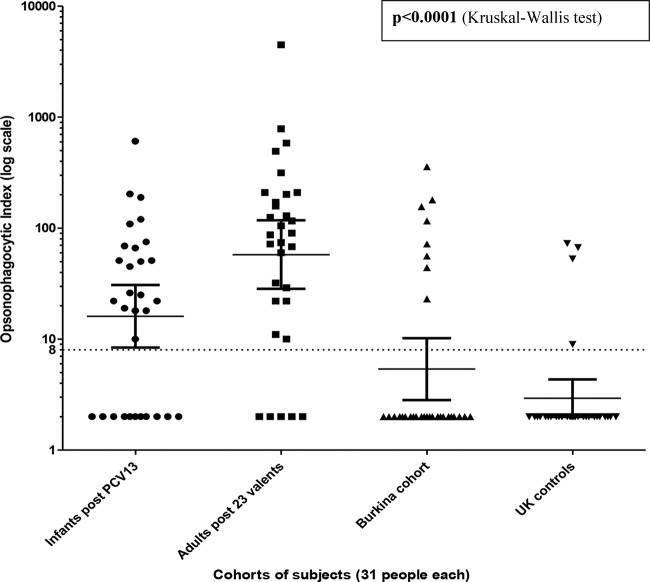
Streptococcus pneumoniae serotype 1 (Sp1) constitutes an important cause of seasonal endemic meningitis in all age groups in the African meningitis belt. Despite a higher meningitis incidence, the Burkinabé population has an Sp1-specific antibody seroprevalence similar to that reported in the United Kingdom (UK). We aimed to establish whether the opsonophagocytic activity (OPA) of pneumococcal IgG naturally present in Burkina Faso differs from that seen in individuals in the UK and to compare the OPAs generated by natural and vaccine-induced immunity. Samples collected from pneumococcal vaccine-naive Burkinabé and UK subjects were matched for age (1 to 39 years) and anti-Sp1 IgG level, analyzed for OPA to 3 S. pneumoniae serotypes (1, 5, and 19A), and compared to postvaccine samples. Furthermore, the Burkinabé samples were assessed for IgG avidity and serotype-specific IgM concentrations. One hundred sixty-nine matched serum samples from both populations were selected. A greater proportion of Burkinabé subjects aged 1 to 19 years had functional Sp1 activity (OPA ≥ 8) compared to UK subjects (12% versus 2%, P < 0.001); however, the proportions were similar among adults (9%). The correlation between Sp1 IgG concentration and OPA was good (P < 0.001), but many individuals had nonfunctional IgG, which was not related to avidity. While the Sp1 IgM concentrations correlated with OPA, not all of the function in serum samples with low IgG could be attributed to IgM. Finally, vaccine-induced Sp1-specific IgG was more functional than equivalent amounts of naturally occurring IgG. In conclusion, despite a substantially higher pneumococcal meningitis incidence, no decreased functional immunity to Sp1 could be evidenced in the Burkinabé population compared to that in the population from the UK. Furthermore, the naturally induced antibodies were less functional than vaccine-induced antibodies.
Copyright © 2015, American Society for Microbiology. All Rights Reserved.
Figures

References
-
- O'Brien KL, Wolfson LJ, Watt JP, Henkle E, Deloria-Knoll M, McCall N, Lee E, Mulholland K, Levine OS, Cherian T, Hib and Pneumococcal Global Burden of Disease Study Team. 2009. Burden of disease caused by Streptococcus pneumoniae in children younger than 5 years: global estimates. Lancet 374:893–902. doi:10.1016/S0140-6736(09)61204-6. - DOI - PubMed
-
- Zangwill KM, Vadheim CM, Vannier AM, Hemenway LS, Greenberg DP, Ward JI. 1996. Epidemiology of invasive pneumococcal disease in southern California; implications for the design and conduct of a pneumococcal conjugate vaccine efficacy trial. J Infect Dis 174:752–759. doi:10.1093/infdis/174.4.752. - DOI - PubMed
-
- Traore Y, Tameklo TA, Njanpop-Lafourcade BM, Lourd M, Yaro S, Niamba D, Drabo A, Mueller JE, Koeck JL, Gessner BD. 2009. Incidence, seasonality, age distribution, and mortality of pneumococcal meningitis in Burkina Faso and Togo. Clin Infect Dis 48(Suppl 2):S181–S189. doi:10.1086/596498. - DOI - PubMed
Publication types
MeSH terms
Substances
LinkOut - more resources
Full Text Sources