


Performance differences between sexes in 50-mile to 3,100-mile ultramarathons
- PMID: 25653567
- PMCID: PMC4309798
- DOI: 10.2147/OAJSM.S76490
Performance differences between sexes in 50-mile to 3,100-mile ultramarathons
Abstract
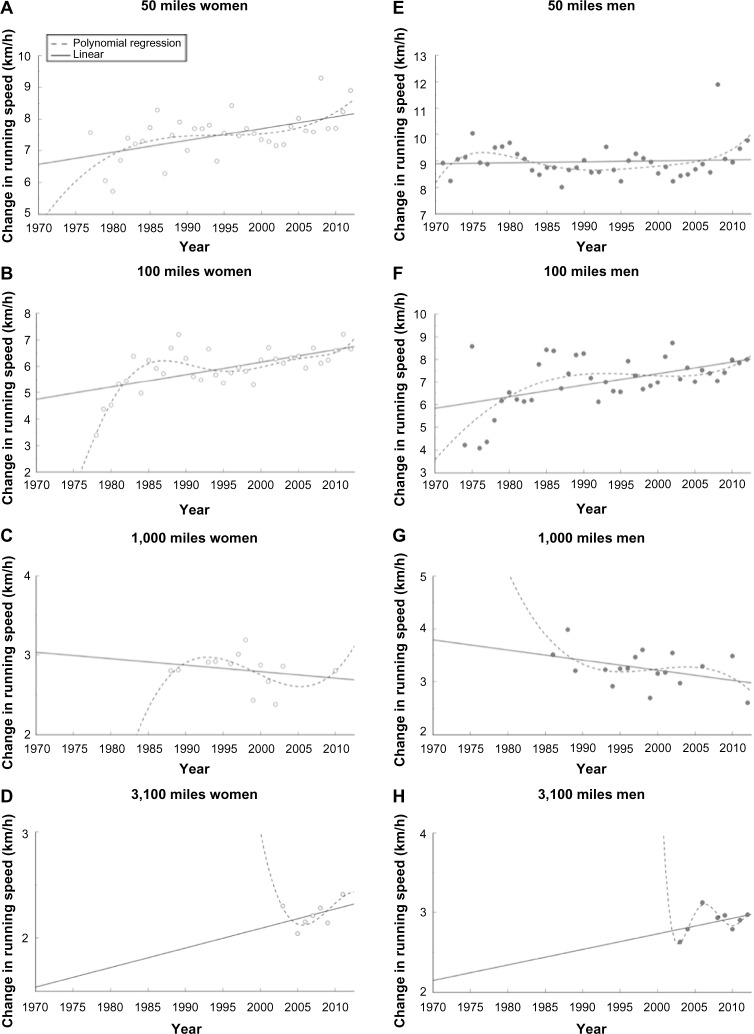
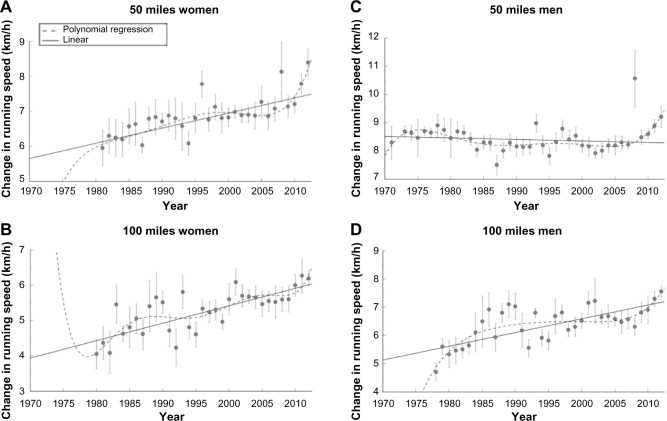
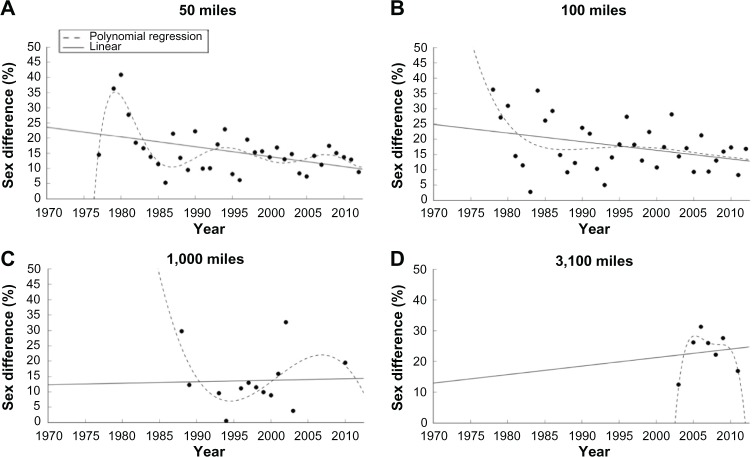
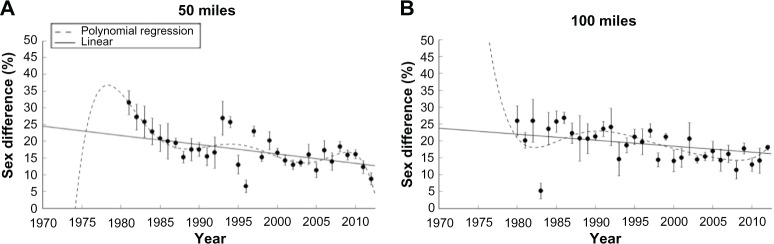
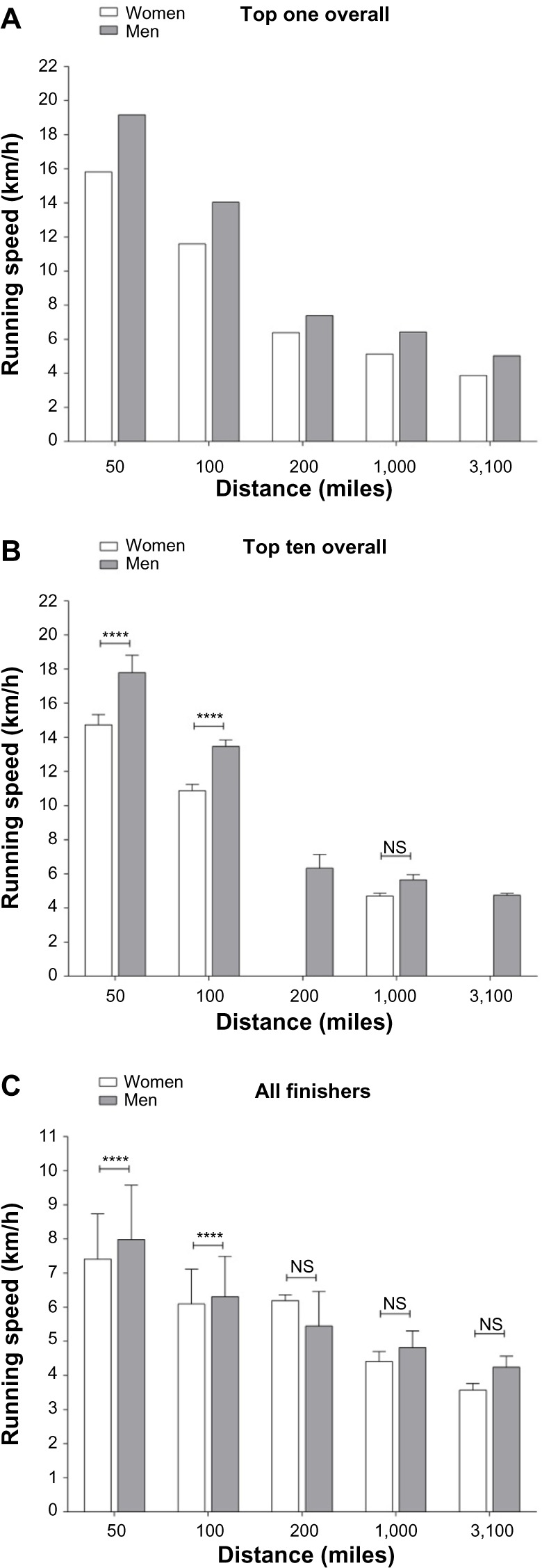
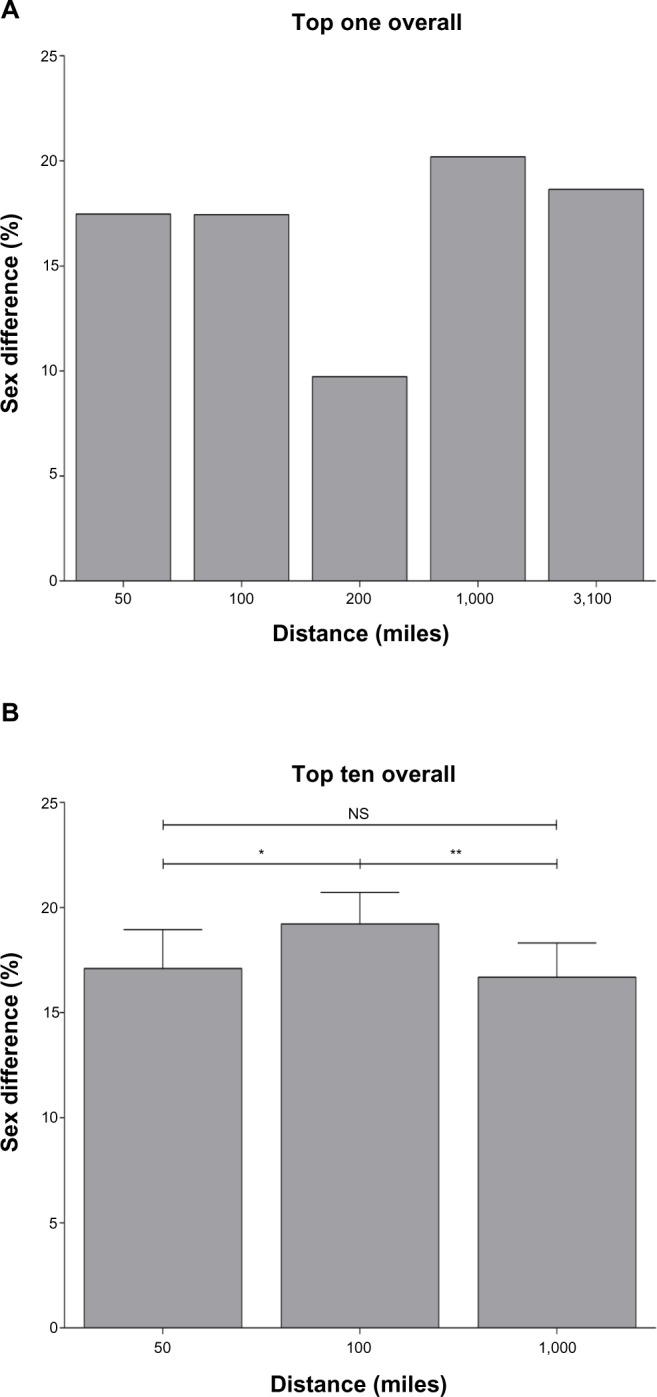
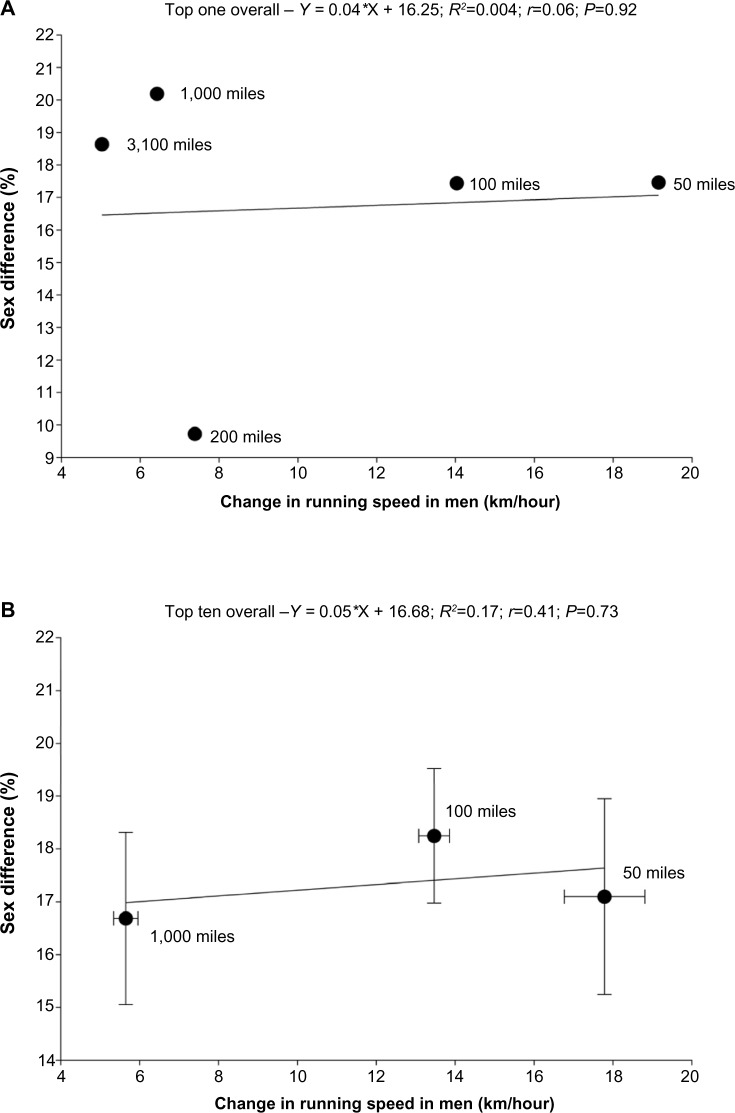
Anecdotal reports have assumed that women would be able to outrun men in long-distance running. The aim of this study was to test this assumption by investigating the changes in performance difference between sexes in the best ultramarathoners in 50-mile, 100-mile, 200-mile, 1,000-mile, and 3,100-mile events held worldwide between 1971 and 2012. The sex differences in running speed for the fastest runners ever were analyzed using one-way analysis of variance with subsequent Tukey-Kramer posthoc analysis. Changes in sex difference in running speed of the annual fastest were analyzed using linear and nonlinear regression analyses, correlation analyses, and mixed-effects regression analyses. The fastest men ever were faster than the fastest women ever in 50-mile (17.5%), 100-mile (17.4%), 200-mile (9.7%), 1,000-mile (20.2%), and 3,100-mile (18.6%) events. For the ten fastest finishers ever, men were faster than women in 50-mile (17.1%±1.9%), 100-mile (19.2%±1.5%), and 1,000-mile (16.7%±1.6%) events. No correlation existed between sex difference and running speed for the fastest ever (r (2)=0.0039, P=0.91) and the ten fastest ever (r (2)=0.15, P=0.74) for all distances. For the annual fastest, the sex difference in running speed decreased linearly in 50-mile events from 14.6% to 8.9%, remained unchanged in 100-mile (18.0%±8.4%) and 1,000-mile (13.7%±9.1%) events, and increased in 3,100-mile events from 12.5% to 16.9%. For the annual ten fastest runners, the performance difference between sexes decreased linearly in 50-mile events from 31.6%±3.6% to 8.9%±1.8% and in 100-mile events from 26.0%±4.4% to 24.7%±0.9%. To summarize, the fastest men were ~17%-20% faster than the fastest women for all distances from 50 miles to 3,100 miles. The linear decrease in sex difference for 50-mile and 100-mile events may suggest that women are reducing the sex gap for these distances.
Keywords: running; running speed; sex difference; ultraendurance.
Figures
References
-
- Whipp BJ, Ward SA. Will women soon outrun men? Nature. 1992;355(6355):25. - PubMed
-
- Bam J, Noakes TD, Juritz J, Dennis SC. Could women outrun men in ultramarathon races? Med Sci Sports Exerc. 1997;29(2):244–247. - PubMed
-
- Cheuvront SN, Carter R, Deruisseau KC, Moffatt RJ. Running performance differences between men and women:an update. Sports Med. 2005;35(12):1017–1024. - PubMed
LinkOut - more resources
Full Text Sources
Miscellaneous
