


Prevalence of psychiatric disorders in U.S. older adults: findings from a nationally representative survey
- PMID: 25655161
- PMCID: PMC4329900
- DOI: 10.1002/wps.20193
Prevalence of psychiatric disorders in U.S. older adults: findings from a nationally representative survey
Abstract
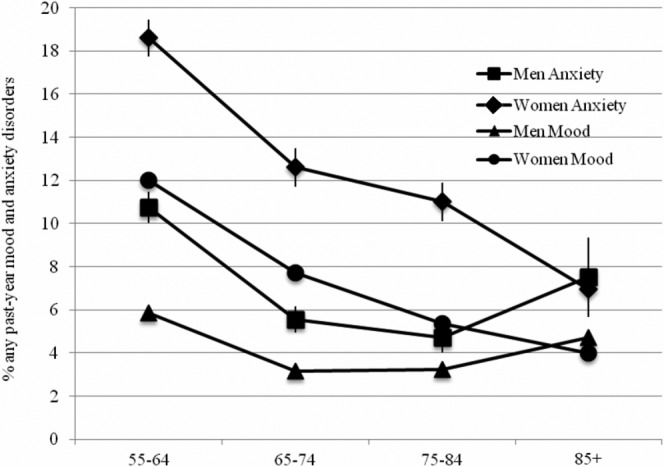
Data on the prevalence of psychiatric disorders in late life are lacking. The present study addresses this gap in the literature by examining the prevalence of the broadest range of psychiatric disorders in late life to date; comparing prevalences across older adult age groups using the largest sample of adults aged 85+; and exploring gender differences in the prevalence of psychiatric disorders in late life. Using data from Wave 2 of the National Epidemiologic Survey on Alcohol and Related Conditions, we examined the prevalence of past-year mood, anxiety, and substance use disorders, and lifetime personality disorders in a nationally representative sample of 12,312 U.S. older adults. We stratified our analyses by gender and by older age groups: young-old (ages 55-64), middle-old (ages 65-74), old-old (ages 75-84), and oldest-old (ages 85+). The proportion of older adults who experienced any past-year anxiety disorder was 11.4%, while the prevalence of any past-year mood disorder was 6.8%. A total of 3.8% of older adults met criteria for any past-year substance use disorder, and 14.5% of older adults had one or more personality disorder. We observed a general pattern of decreasing rates of psychiatric disorders with increasing age. Women experienced higher rates of mood and anxiety disorders, while men had higher rates of substance use disorders and any personality disorder. Gender differences in rates of most psychiatric disorders decreased with increasing age. These data indicate that psychiatric disorders are prevalent among U.S. older adults, and support the importance of prevention, diagnosis, and treatment of psychiatric disorders in this population.
Keywords: Psychiatric disorders; anxiety disorders; mood disorders; older adults; oldest-old; personality disorders; substance use disorders.
© 2015 World Psychiatric Association.
Figures
References
-
- Department of Economic and Social Affairs, United Nations. World population aging 2009. New York: United Nations; 2010.
-
- Beekman ATF, Deeg DJH, van Tilburg T, et al. Major and minor depression in later life: a study of prevalence and risk factors. J Affect Disord. 1995;36:65–75. - PubMed
-
- Forsell Y, Jorm AF, von Strauss E, et al. Prevalence and correlates of depression in a population of nonagenarians. Br J Psychiatry. 1995;167:61–4. - PubMed
-
- Mirowsky J, Reynolds JR. Age, depression, and attrition in the National Survey of Families and Households. Sociol Methods Res. 2000;28:476–504.
-
- Kessler RC, Foster C, Webster PS, et al. The relationship between age and depressive symptoms in two national surveys. Psychol Aging. 1992;7:119–26. - PubMed
LinkOut - more resources
Full Text Sources
Other Literature Sources
Medical
Miscellaneous
