


Renal function affects absorbed dose to the kidneys and haematological toxicity during ¹⁷⁷Lu-DOTATATE treatment
- PMID: 25655484
- PMCID: PMC4382534
- DOI: 10.1007/s00259-015-3001-1
Renal function affects absorbed dose to the kidneys and haematological toxicity during ¹⁷⁷Lu-DOTATATE treatment
Abstract
Purpose: Peptide receptor radionuclide therapy (PRRT) has become an important treatment option in the management of advanced neuroendocrine tumours. Long-lasting responses are reported for a majority of treated patients, with good tolerability and a favourable impact on quality of life. The treatment is usually limited by the cumulative absorbed dose to the kidneys, where the radiopharmaceutical is reabsorbed and retained, or by evident haematological toxicity. The aim of this study was to evaluate how renal function affects (1) absorbed dose to the kidneys, and (2) the development of haematological toxicity during PRRT treatment.
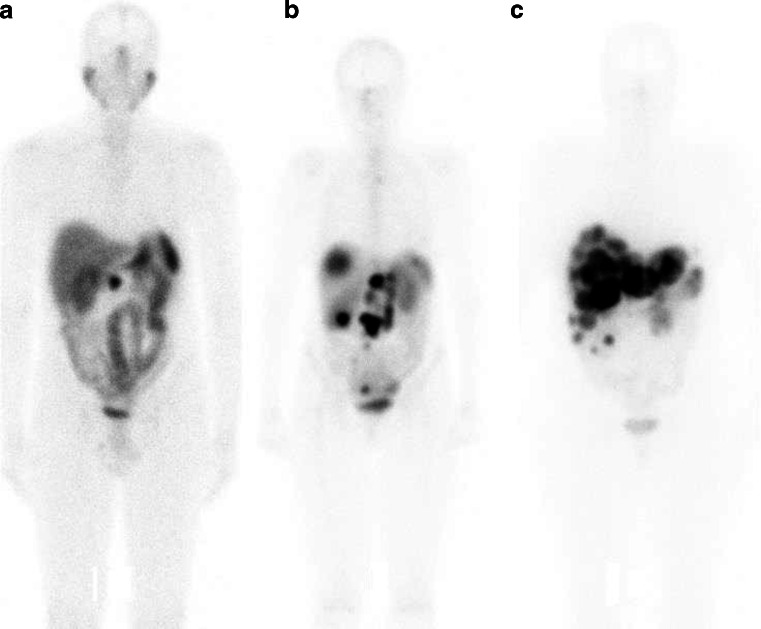
Methods: The study included 51 patients with an advanced neuroendocrine tumour who received (177)Lu-DOTATATE treatment during 2006 - 2011 at Sahlgrenska University Hospital in Gothenburg. An average activity of 7.5 GBq (3.5 - 8.2 GBq) was given at intervals of 6 - 8 weeks on one to five occasions. Patient baseline characteristics according to renal and bone marrow function, tumour burden and medical history including prior treatment were recorded. Renal and bone marrow function were then monitored during treatment. Renal dosimetry was performed according to the conjugate view method, and the residence time for the radiopharmaceutical in the whole body was calculated.
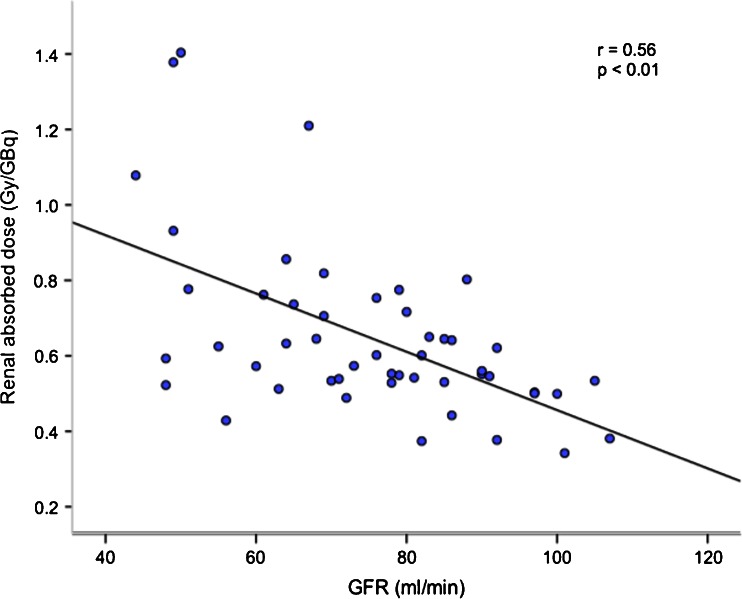
Results: A significant correlation between inferior renal function before treatment and higher received renal absorbed dose per administered activity was found (p < 0.01). Patients with inferior renal function also experienced a higher grade of haematological toxicity during treatment (p = 0.01). The residence time of (177)Lu in the whole body (range 0.89 - 3.0 days) was correlated with grade of haematological toxicity (p = 0.04) but not with renal absorbed dose (p = 0.53).
Conclusion: Patients with inferior renal function were exposed to higher renal absorbed dose per administered activity and developed a higher grade of haematological toxicity during (177)Lu-DOTATATE treatment. The study confirms the tolerability of PRRT in patients with an advanced neuroendocrine tumour but indicates that patients with inferior renal function are at risk of being exposed to higher absorbed doses to normal tissue on treatment.
Figures


References
Publication types
MeSH terms
Substances
LinkOut - more resources
Full Text Sources
Other Literature Sources
Medical
Miscellaneous
