


Accuracy of ICD-9-CM coding to identify small for gestational age newborns
- PMID: 25656656
- PMCID: PMC4533984
- DOI: 10.1002/pds.3740
Accuracy of ICD-9-CM coding to identify small for gestational age newborns
Abstract
Purpose: This study aimed to evaluate the accuracy of the International Classification of Diseases, Ninth Revision, Clinical Modification (ICD-9-CM) diagnosis code for small for gestational age (SGA) recorded in administrative healthcare records using birthweight and gestational age information recorded in electronic medical records.
Methods: We used billing and medical records from women aged 13-55 years who delivered at a tertiary care center in the USA between 2004 and 2011. Information on birthweight, gestational age at birth, and ICD-9-CM code for SGA, 656.5x, was abstracted from the database. Each infant's birthweight percentile for gestational age was calculated on the basis of published US references; infants below the 10th percentile were classified as SGA. The performance characteristics of SGA ICD-9-CM diagnosis code against SGA classification based on birthweight and gestational age were calculated, for all deliveries and by strata of demographic and delivery characteristics.
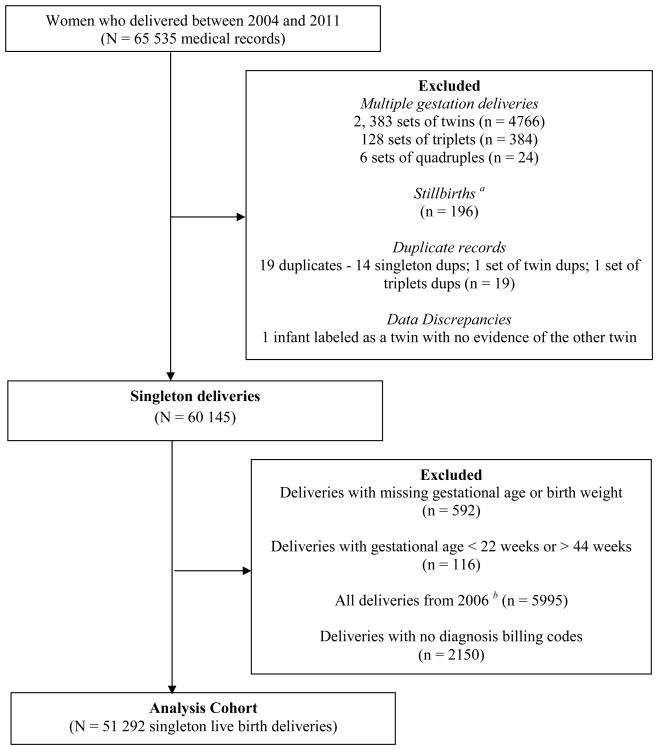
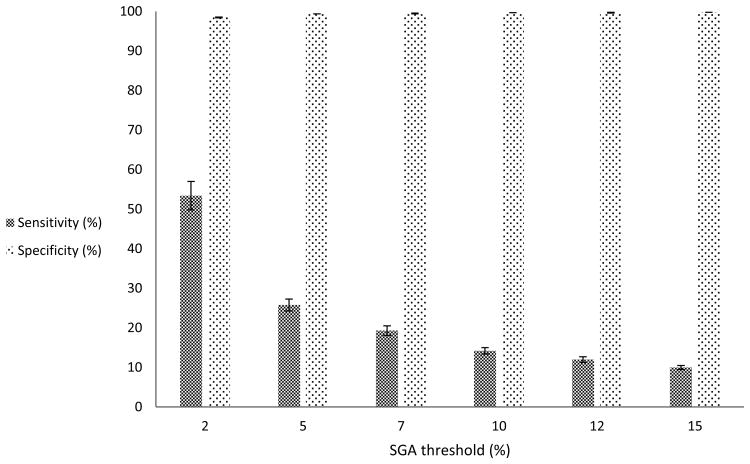
Results: We identified 51 292 singleton live birth deliveries. The prevalence of SGA infants calculated from birthweight and gestational age at birth was higher (13%) than the prevalence based on ICD-9-CM code (2%). Sensitivity of the SGA ICD-9-CM code was 14.2%, specificity was 99.7%, positive predictive value was 86.8%, and negative predictive value was 88.4%. Stratification by demographic and delivery characteristics yielded similar results.
Conclusions: Identification of SGA infants using ICD-9-CM code, 656.5x, from administrative healthcare records has low sensitivity but high specificity; the accuracy did not differ across demographic and delivery characteristics. Thus, although this source of information would underestimate the prevalence of SGA, it could produce valid relative risk estimates.
Keywords: ICD-9-CM codes; gestational age; healthcare records; pharmacoepidemiology; sensitivity; small for gestational age; specificity.
Copyright © 2015 John Wiley & Sons, Ltd.
Figures
References
-
- Carberry AE, Gordon A, Bond DM, Hyett J, Raynes-Greenow CH, Jeffery HE. Customised versus population-based growth charts as a screening tool for detecting small for gestational age infants in low-risk pregnant women. Cochrane Database Syst Rev. 2011;(12):CD008549. doi:CD008549. - PubMed
-
- Saenger P, Czernichow P, Hughes I, Reiter EO. Small for gestational age: short stature and beyond. Endocr Rev. 2007;28:219–251. - PubMed
-
- Luyckx VA, Bertram JF, Brenner BM, et al. Effect of fetal and child health on kidney development and long-term risk of hypertension and kidney disease. Lancet. 2013;382:273–283. - PubMed
-
- Lim G, Tracey J, Boom N, et al. CIHI survey: Hospital costs for preterm and small-for-gestational age babies in Canada. Healthc Q. 2009;12:20–24. - PubMed
Publication types
MeSH terms
Grants and funding
LinkOut - more resources
Full Text Sources
Other Literature Sources
