Comment
doi: 10.1158/2159-8290.CD-15-0013.
Sweets for a bitter end: lung cancer cell-surface protein glycosylation mediates metastatic colonization
Affiliations
- PMID: 25656895
- PMCID: PMC4340588
- DOI: 10.1158/2159-8290.CD-15-0013
Item in Clipboard
Comment
Sweets for a bitter end: lung cancer cell-surface protein glycosylation mediates metastatic colonization
Cancer Discov.
2015 Feb.
Abstract
Glycosylation is one of the most predominant forms of cell-surface protein modifications, yet its deregulation in cancer and contribution to tumor microenvironment interactions remain poorly understood. In this issue of Cancer Discovery, Reticker-Flynn and Bhatia characterize an enzymatic switch in lung cancer cells that triggers aberrant surface protein glycosylation patterns, adhesion to lectins on the surface of inflammatory cells, and subsequent metastatic colonization of the liver.
©2015 American Association for Cancer Research.
Figures
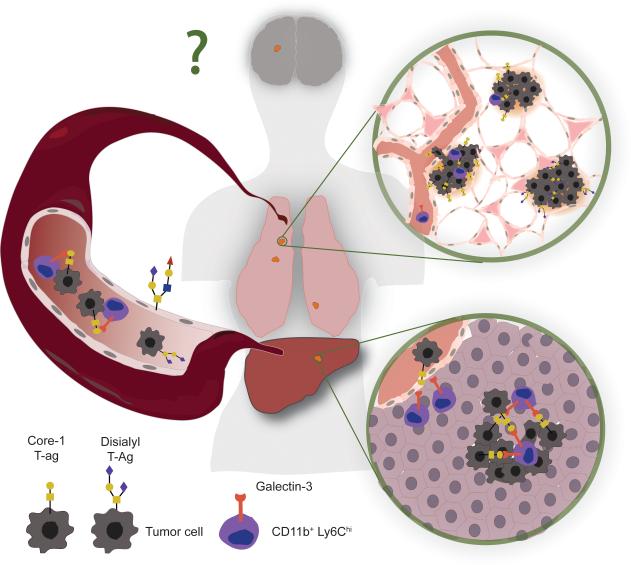
Changes in sialyl glycosylation on the surface of lung adenocarcinoma cells regulates their interaction with inflammatory monocytes. A subpopulation of tumor cells differentially express specific glycosyltransferases to truncate cell surface glycans. Gal-3 expressed at the surface of monocytes preferentially binds to truncated glycans. The Gal-3 mediated interaction between monocytes and tumor cells is observed during liver colonization, but may also occur at different steps of cancer progression to support lung tumor expansion, intravasation, survival in circulation, extravasation, and secondary outgrowth. Analogous glycoprotein modifications may be required for lung cancer metastasis to other relevant organs, such as the brain.
Comment on
-
Aberrant glycosylation promotes lung cancer metastasis through adhesion to galectins in the metastatic niche.Cancer Discov. 2015 Feb;5(2):168-81. doi: 10.1158/2159-8290.CD-13-0760. Epub 2014 Nov 24. Cancer Discov. 2015. PMID: 25421439 Free PMC article.
References
-
- Bull C, Stoel MA, den Brok MH, Adema GJ. Sialic acids sweeten a tumor's life. Cancer Res. 2014;74:3199–204. - PubMed
-
- Liang Y, Ma T, Thakur A, Yu H, Gao L, Shi P, et al. Differentially expressed glycosylated patterns of alpha-1-antitrypsin as serum biomarkers for the diagnosis of lung cancer. Glycobiology. 2014 - PubMed
Publication types
MeSH terms
Substances
Grants and funding
LinkOut - more resources
Full Text Sources
Medical