Database of genomic biomarkers for cancer drugs and clinical targetability in solid tumors
- PMID: 25656898
- PMCID: PMC4825796
- DOI: 10.1158/2159-8290.CD-14-1118
Database of genomic biomarkers for cancer drugs and clinical targetability in solid tumors
Abstract
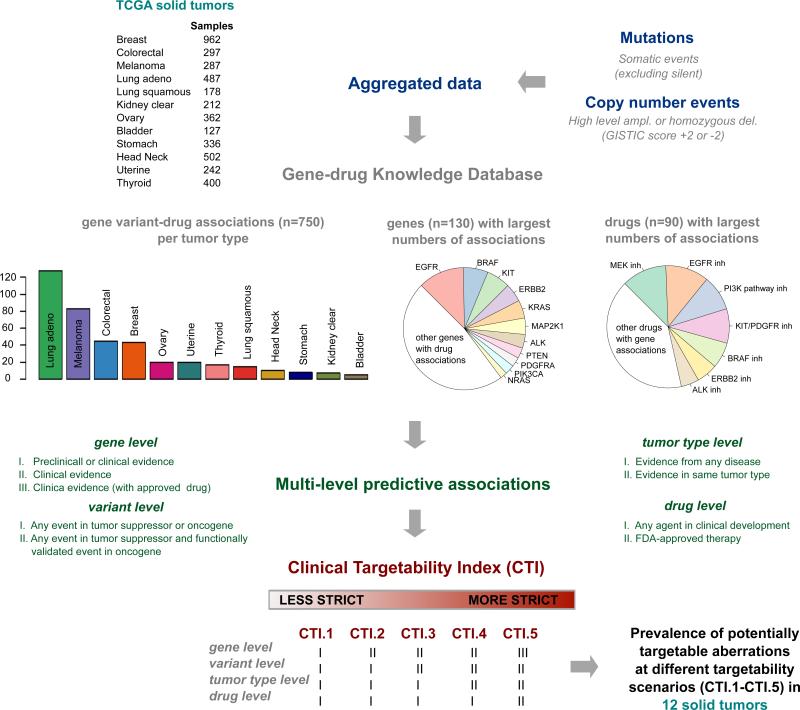
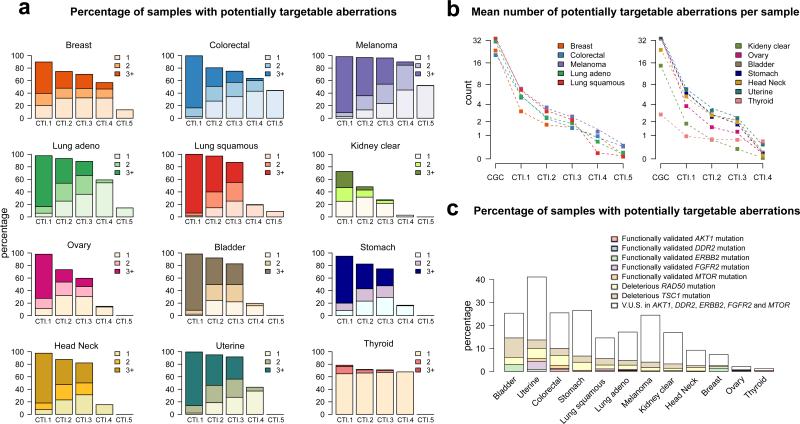
Comprehensive genomic profiling is expected to revolutionize cancer therapy. In this Prospective, we present the prevalence of mutations and copy-number alterations with predictive associations across solid tumors at different levels of stringency for gene-drug targetability. More than 90% of The Cancer Genome Atlas samples have potentially targetable alterations, the majority with multiple events, illustrating the challenges for treatment prioritization given the complexity of the genomic landscape. Nearly 80% of the variants in rarely mutated oncogenes are of uncertain functional significance, reflecting the gap in our understanding of the relevance of many alterations potentially linked to therapeutic actions. Access to targeted agents in early clinical trials could affect treatment decision in 75% of patients with cancer. Prospective implementation of large-scale molecular profiling and standardized reports of predictive biomarkers are fundamental steps for making precision cancer medicine a reality.
©2015 American Association for Cancer Research.
Figures
References
-
- Dienstmann R, Rodon J, Barretina J, Tabernero J. Genomic medicine frontier in human solid tumors: prospects and challenges. J Clin Oncol. 2013;31:1874–84. - PubMed
-
- Falchook GS, Trent JC, Heinrich MC, Beadling C, Patterson J, Bastida CC, et al. BRAF mutant gastrointestinal stromal tumor: first report of regression with BRAF inhibitor dabrafenib (GSK2118436) and whole exomic sequencing for analysis of acquired resistance. Oncotarget. 2013;4:310–5. - PMC - PubMed
MeSH terms
Substances
Grants and funding
LinkOut - more resources
Full Text Sources
Other Literature Sources
Miscellaneous