


Nanoparticle-mediated expression of a Wnt pathway inhibitor ameliorates ocular neovascularization
- PMID: 25657312
- PMCID: PMC4376607
- DOI: 10.1161/ATVBAHA.114.304627
Nanoparticle-mediated expression of a Wnt pathway inhibitor ameliorates ocular neovascularization
Abstract
Objective: The deficiency of very low-density lipoprotein receptor resulted in Wnt signaling activation and neovascularization in the retina. The present study sought to determine whether the very low-density lipoprotein receptor extracellular domain (VLN) is responsible for the inhibition of Wnt signaling in ocular tissues.
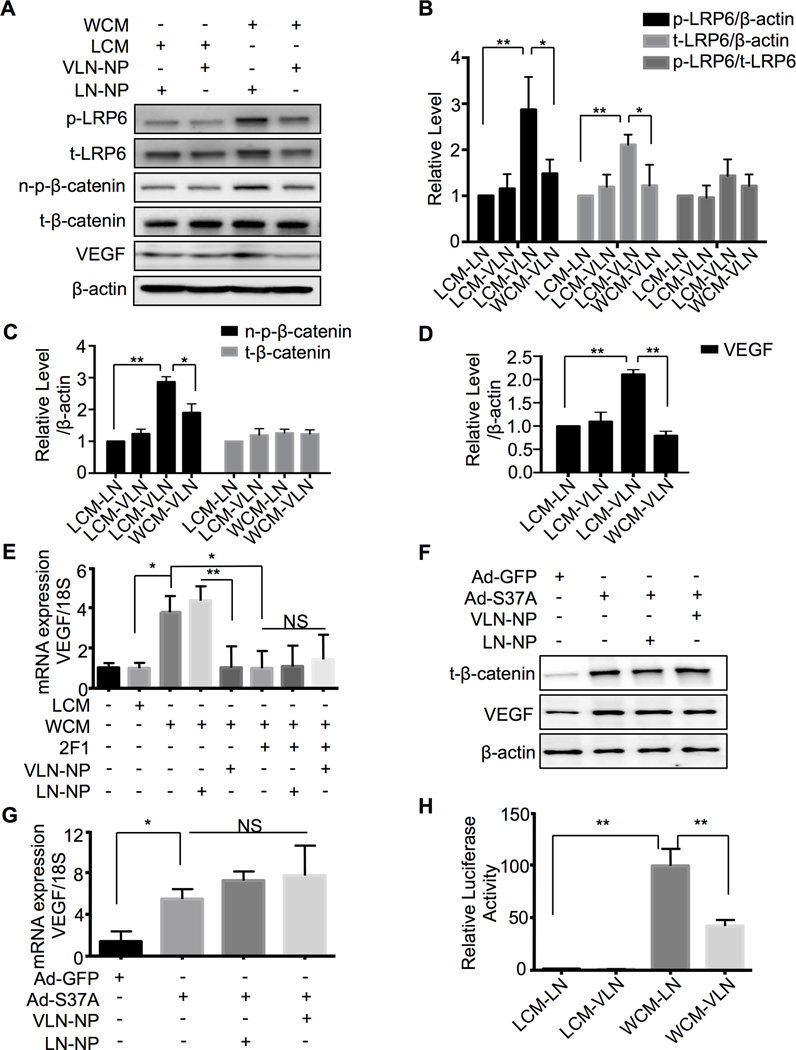
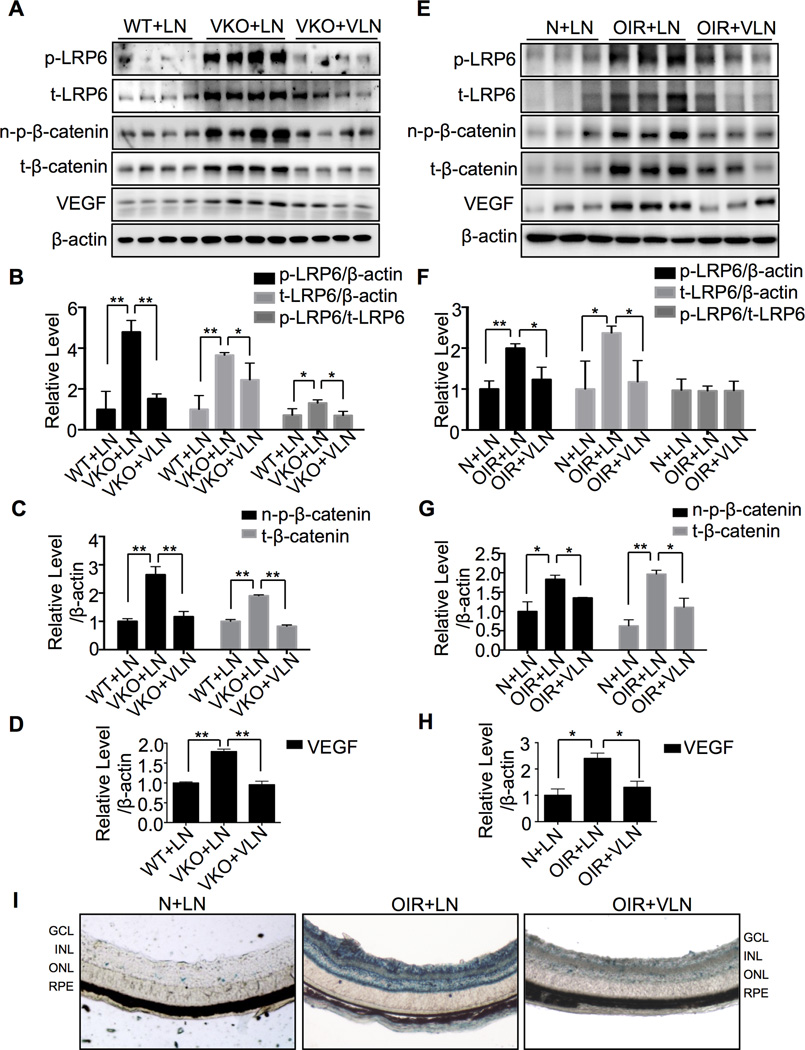
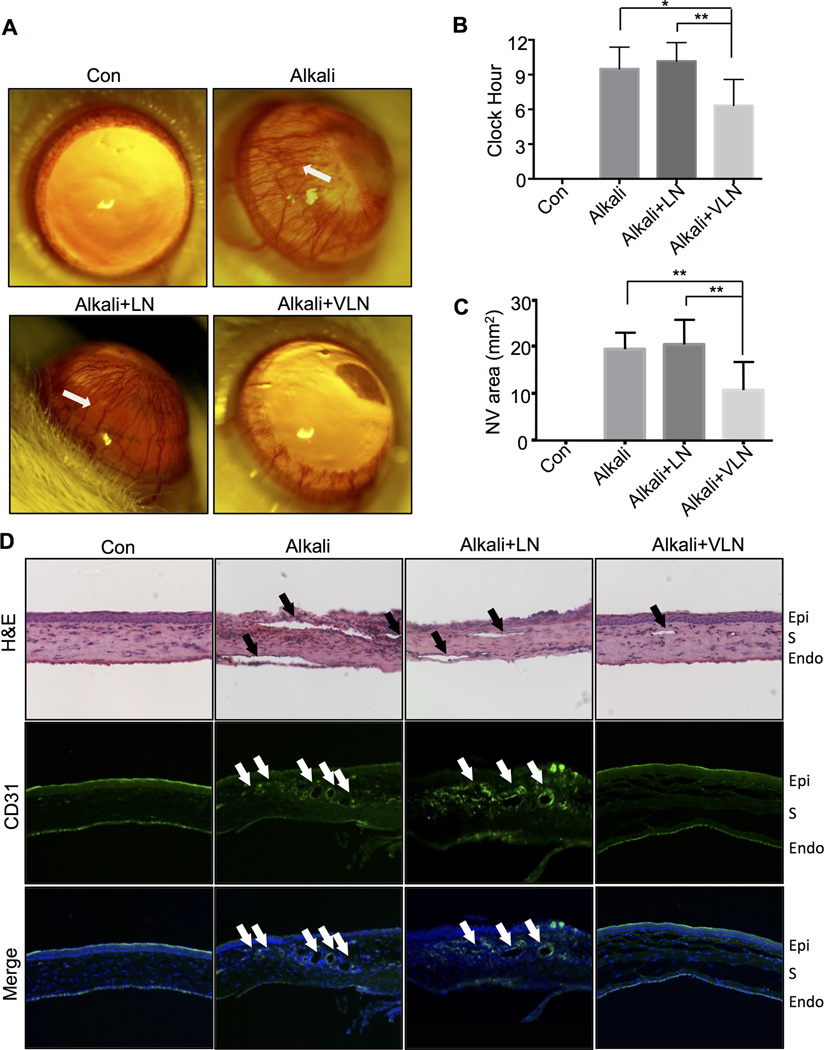
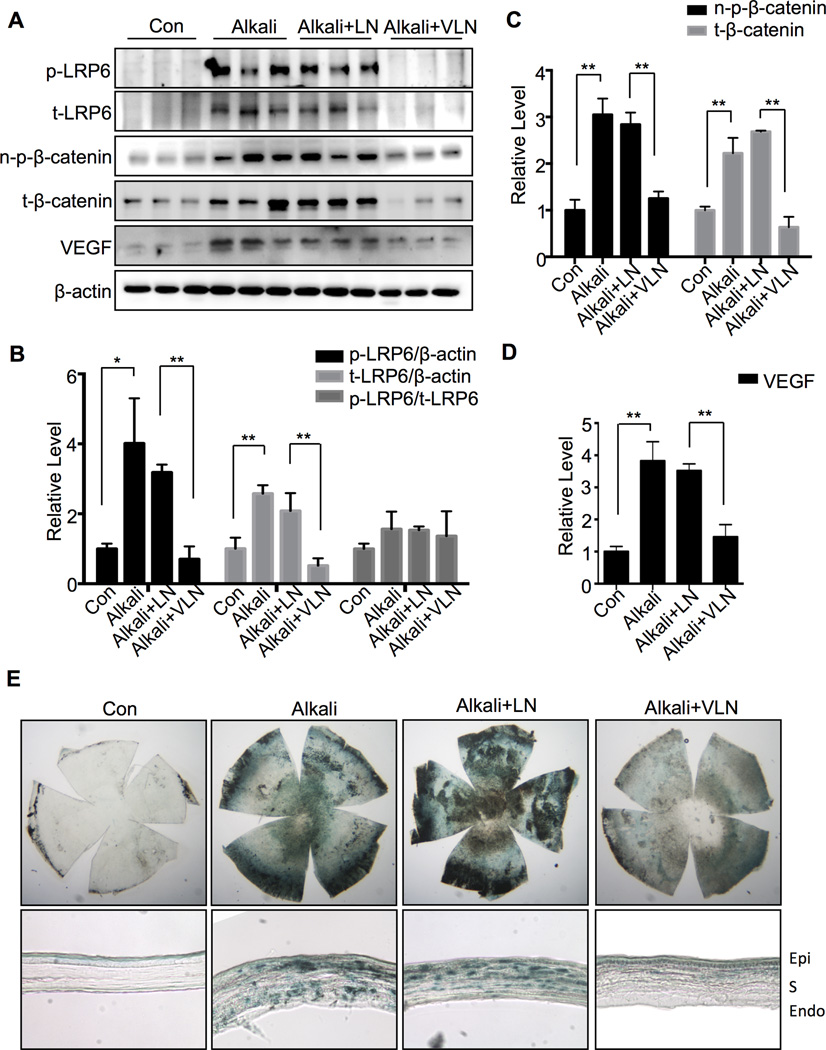
Approach and results: A plasmid expressing the soluble VLN was encapsulated with poly(lactide-co-glycolide acid) to form VLN nanoparticles (VLN-NP). Nanoparticles containing a plasmid expressing the low-density lipoprotein receptor extracellular domain nanoparticle were used as negative control. MTT, modified Boyden chamber, and Matrigel (™) assays were used to evaluate the inhibitory effect of VLN-NP on Wnt3a-stimulated endothelial cell proliferation, migration, and tube formation. Vldlr(-/-) mice, oxygen-induced retinopathy, and alkali burn-induced corneal neovascularization models were used to evaluate the effect of VLN-NP on ocular neovascularization. Wnt reporter mice (BAT-gal), Western blotting, and luciferase assay were used to evaluate Wnt pathway activity. Our results showed that VLN-NP specifically inhibited Wnt3a-induced endothelial cell proliferation, migration, and tube formation. Intravitreal injection of VLN-NP inhibited abnormal neovascularization in Vldlr(-/-), oxygen-induced retinopathy, and alkali burn-induced corneal neovascularization models, compared with low-density lipoprotein receptor extracellular domain nanoparticle. VLN-NP significantly inhibited the phosphorylation of low-density lipoprotein receptor-related protein 6, the accumulation of β-catenin, and the expression of vascular endothelial growth factor in vivo and in vitro.
Conclusions: Taken together, these results suggest that the soluble VLN is a negative regulator of the Wnt pathway and has antiangiogenic activities. Nanoparticle-mediated expression of VLN may thus represent a novel therapeutic approach to treat pathological ocular angiogenesis and potentially other vascular diseases affected by Wnt signaling.
Keywords: VLDLR; Wnt; eye; nanoparticle; neovascularization.
© 2015 American Heart Association, Inc.
Figures


Comment in
-
Wnting out ocular neovascularization: using nanoparticle delivery of very-low density lipoprotein receptor extracellular domain as Wnt pathway inhibitor in the retina.Arterioscler Thromb Vasc Biol. 2015 May;35(5):1046-7. doi: 10.1161/ATVBAHA.115.305395. Arterioscler Thromb Vasc Biol. 2015. PMID: 25903649 Free PMC article. No abstract available.
References
-
- Rathmann W, Giani G. Global prevalence of diabetes: Estimates for the year 2000 and projections for 2030. Diabetes care. 2004;27:2568–2569. author reply 2569. - PubMed
-
- Bunker DJ, George RJ, Kumar RJ, Maitz P. Alkali-related ocular burns: A case series and review. Journal of burn care & research : official publication of the American Burn Association. 2013 - PubMed
Publication types
MeSH terms
Substances
Grants and funding
LinkOut - more resources
Full Text Sources
Miscellaneous
