


L-tyrosine improves neuroendocrine function in a mouse model of chronic stress
- PMID: 25657675
- PMCID: PMC4308793
- DOI: 10.3969/j.issn.1673-5374.2012.18.008
L-tyrosine improves neuroendocrine function in a mouse model of chronic stress
Abstract
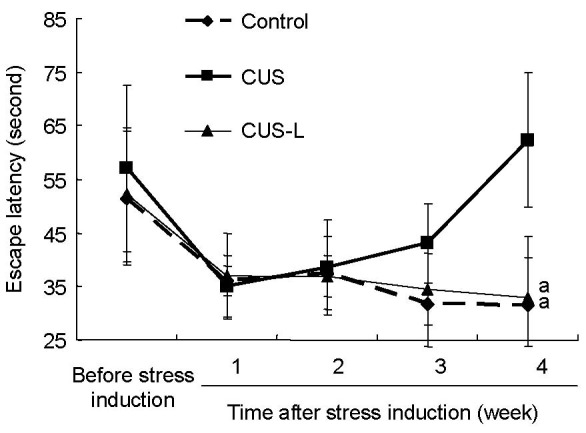
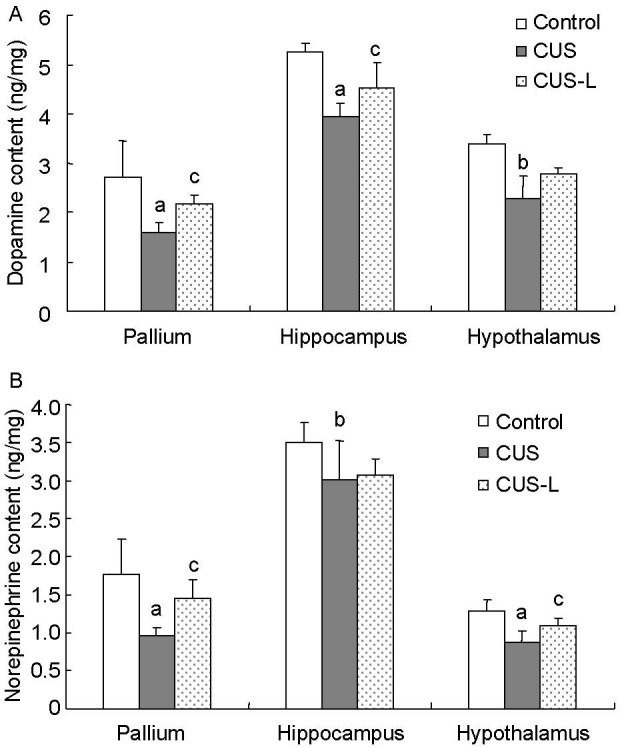
Adult BALB/c mice, individually housed, were stimulated with nine different stressors, arranged randomly, for 4 continuous weeks to generate an animal model of chronic stress. In chronically stressed mice, spontaneous locomotor activity was significantly decreased, escape latency in the Morris water maze test was prolonged, serum levels of total thyrotropin and total triiodothyronine were significantly decreased, and dopamine and norepinephrine content in the pallium, hippocampus and hypothalamus were significantly reduced. All of these changes were suppressed, to varying degrees, by L-tyrosine supplementation. These findings indicate that the neuroendocrine network plays an important role in chronic stress, and that L-tyrosine supplementation has therapeutic effects.
Keywords: L-tyrosine; chronic unpredictable stress; dopamine; neural regeneration; neuroendocrine network; norepinephrine; total thyrotropin; total triiodothyronine.
Conflict of interest statement
Figures
References
-
- Grewen KM, Anderson BJ, Girdler SS, et al. Warm partner contact is related to lower cardiovascular reactivity. Behav Med. 2003;29(3):123–130. - PubMed
-
- Zhu GJ, Duan YP, Xue QF, et al. Changes of urine and plasam catecholmine of expendition members in antartic environment. Jidi Yanjiu. 1998;10(4):305–309.
-
- Xu C, Zhu G, Xue Q, et al. Effect of the Antarctic environment on hormone levels and mood of Chinese expeditioners. Int J Circumpolar Health. 2003;62(3):255–267. - PubMed
-
- Quan M, Zheng C, Zhang N, et al. Impairments of behavior, information flow between thalamus and cortex, and prefrontal cortical synaptic plasticity in an animal model of depression. Brain Res Bull. 2011;85(3-4):109–116. - PubMed
LinkOut - more resources
Full Text Sources