


Heme biosynthesis modulation via δ-aminolevulinic acid administration attenuates chronic hypoxia-induced pulmonary hypertension
- PMID: 25659899
- PMCID: PMC4385991
- DOI: 10.1152/ajplung.00155.2014
Heme biosynthesis modulation via δ-aminolevulinic acid administration attenuates chronic hypoxia-induced pulmonary hypertension
Abstract
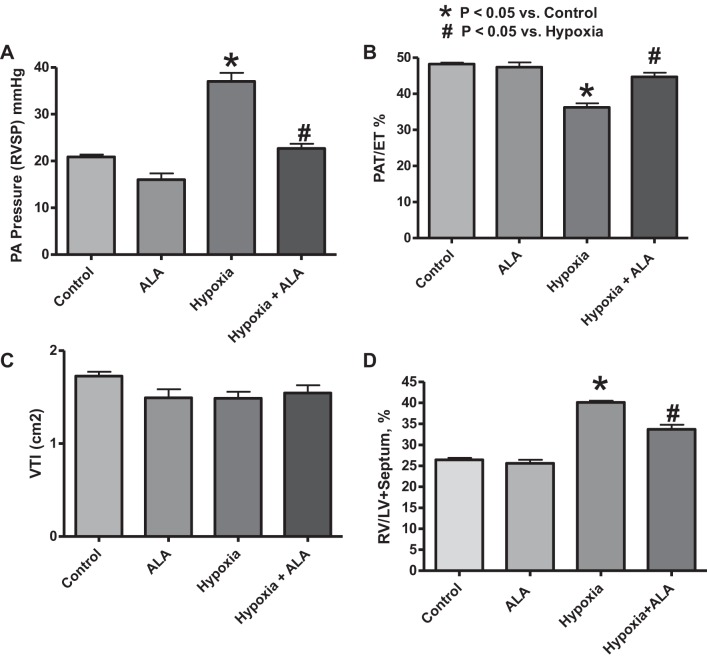
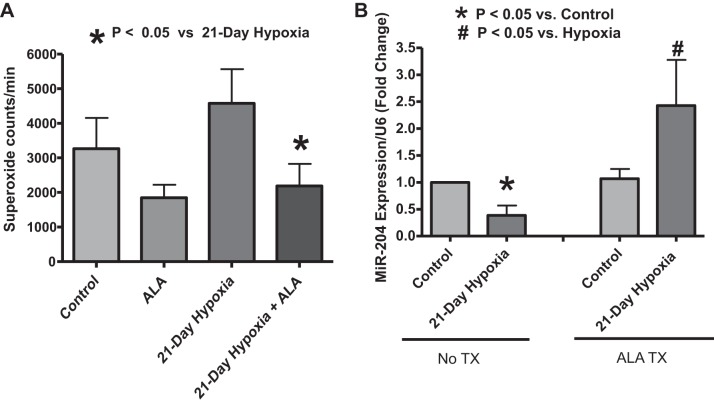
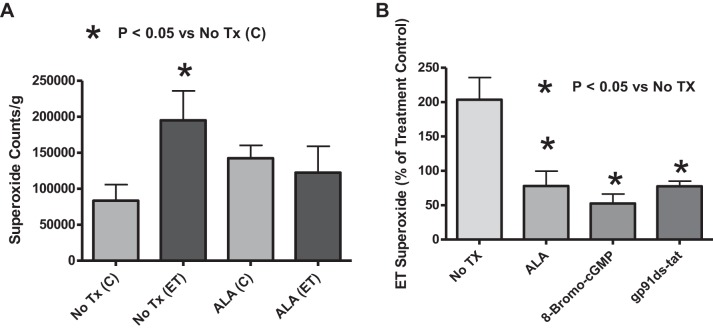
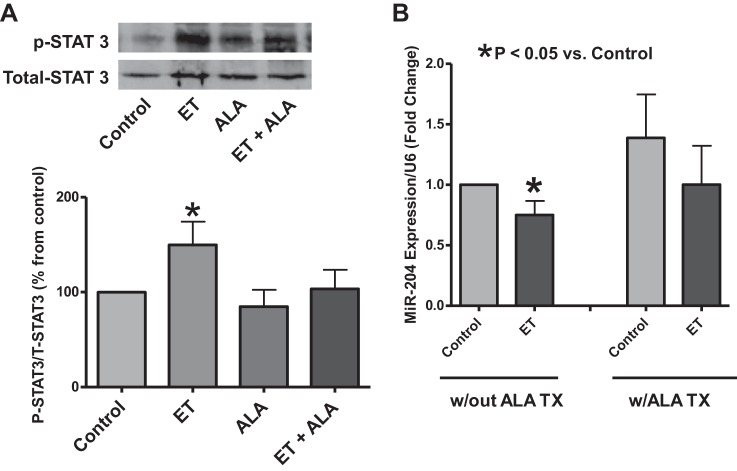
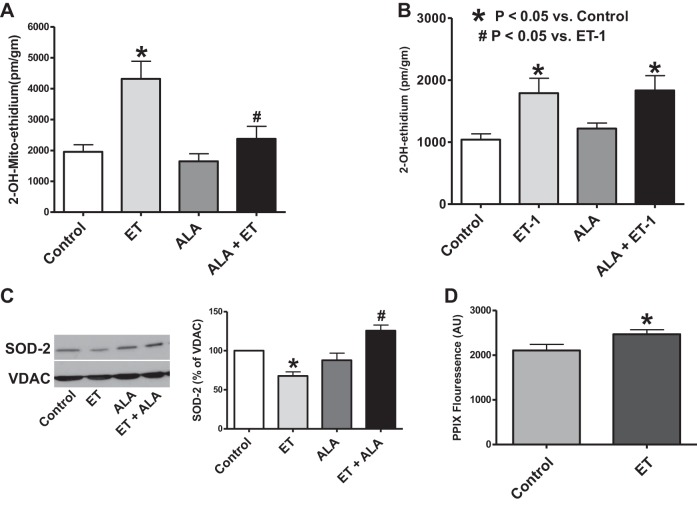
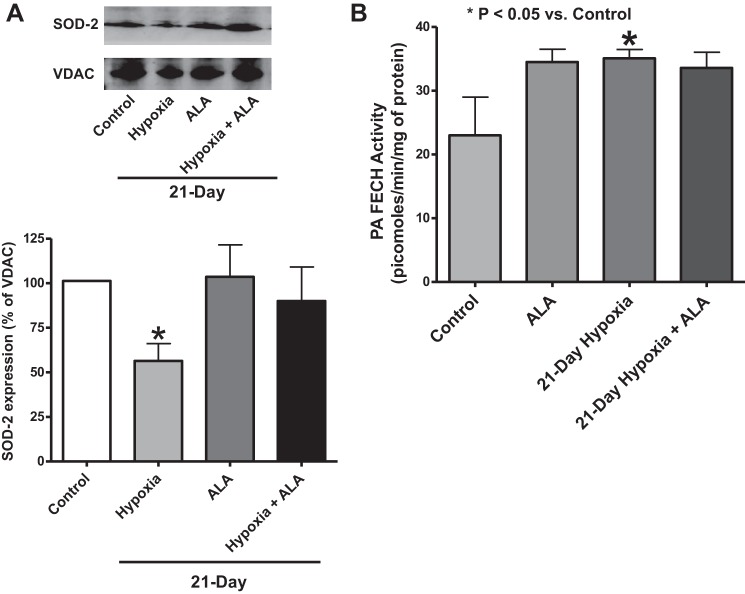
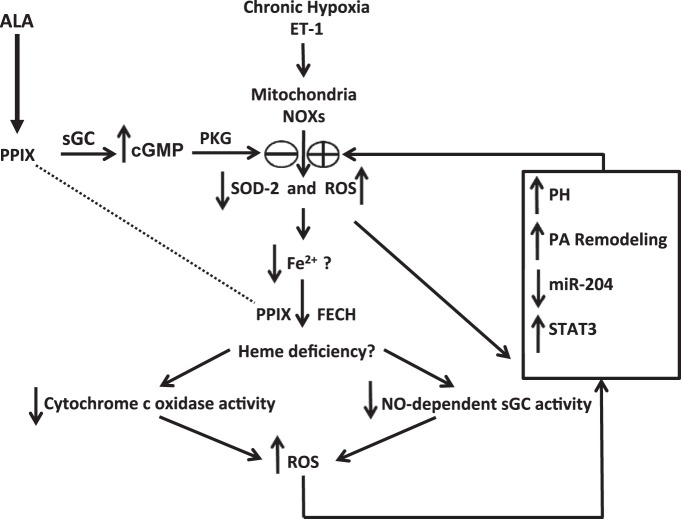
This study examines how heme biosynthesis modulation with δ-aminolevulinic acid (ALA) potentially functions to prevent 21-day hypoxia (10% oxygen)-induced pulmonary hypertension in mice and the effects of 24-h organoid culture with bovine pulmonary arteries (BPA) with the hypoxia and pulmonary hypertension mediator endothelin-1 (ET-1), with a focus on changes in superoxide and regulation of micro-RNA 204 (miR204) expression by src kinase phosphorylation of signal transducer and activator of transcription-3 (STAT3). The treatment of mice with ALA attenuated pulmonary hypertension (assessed through echo Doppler flow of the pulmonary valve, and direct measurements of right ventricular systolic pressure and right ventricular hypertrophy), increases in pulmonary arterial superoxide (detected by lucigenin), and decreases in lung miR204 and mitochondrial superoxide dismutase (SOD2) expression. ALA treatment of BPA attenuated ET-1-induced increases in mitochondrial superoxide (detected by MitoSox), STAT3 phosphorylation, and decreases in miR204 and SOD2 expression. Because ALA increases BPA protoporphyrin IX (a stimulator of guanylate cyclase) and cGMP-mediated protein kinase G (PKG) activity, the effects of the PKG activator 8-bromo-cGMP were examined and found to also attenuate the ET-1-induced increase in superoxide. ET-1 increased superoxide production and the detection of protoporphyrin IX fluorescence, suggesting oxidant conditions might impair heme biosynthesis by ferrochelatase. However, chronic hypoxia actually increased ferrochelatase activity in mouse pulmonary arteries. Thus, a reversal of factors increasing mitochondrial superoxide and oxidant effects that potentially influence remodeling signaling related to miR204 expression and perhaps iron availability needed for the biosynthesis of heme by the ferrochelatase reaction could be factors in the beneficial actions of ALA in pulmonary hypertension.
Keywords: endothelin; ferrochelatase; guanylate cyclase; micro-RNA 204; superoxide.
Copyright © 2015 the American Physiological Society.
Figures
References
-
- Alhawaj R, Wolin MS. Aminolevulinic acid attenuates increases in pulmonary arterial superoxide elicited by organoid culture with endothelin-1 and exposure of mice to chronic hypoxia through mechanisms potentially involving protoporphyrin IX-elicited stimulation of soluble guanylate cyclase and cGMP protein kinase signaling (Abstract). FASEB J 27: lb701, 2013.
-
- Archer SL, Marsboom G, Kim GH, Zhang HJ, Toth PT, Svensson EC, Dyck JR, Gomberg-Maitland M, Thebaud B, Husain AN, Cipriani N, Rehman J. Epigenetic attenuation of mitochondrial superoxide dismutase 2 in pulmonary arterial hypertension: a basis for excessive cell proliferation and a new therapeutic target. Circulation 121: 2661–2671, 2010. - PMC - PubMed
-
- Atamna H, Liu J, Ames BN. Heme deficiency selectively interrupts assembly of mitochondrial complex IV in human fibroblasts. Relevance to aging. J Biol Chem 276: 48410–48416, 2001. - PubMed
Publication types
MeSH terms
Substances
Grants and funding
LinkOut - more resources
Full Text Sources
Other Literature Sources
Medical
Miscellaneous
