


Percutaneous atlantoaxial anterior transarticular screw fixation combined with mini-open posterior C1/2 wire fusion for patients with a high-riding vertebral artery
- PMID: 25659962
- PMCID: PMC5072504
- DOI: 10.1179/2045772314Y.0000000298
Percutaneous atlantoaxial anterior transarticular screw fixation combined with mini-open posterior C1/2 wire fusion for patients with a high-riding vertebral artery
Abstract
Context/objective: To describe the technique and clinical results of percutaneous atlantoaxial anterior transarticular fixation combined with limited exposure posterior C1/2 arthrodesis in patients with a high-riding vertebral artery.
Design setting: Zhejiang Spine Center, China.
Participants: Five patients with a high-riding vertebral artery and an upper cervical fracture.
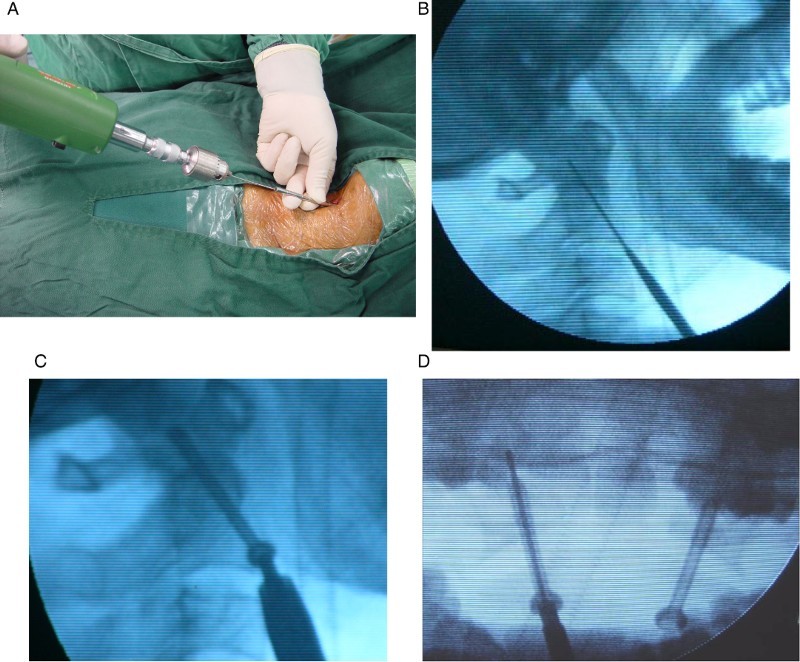
Interventions: Percutaneous atlantoaxial anterior transarticular screw fixation combined with limited exposure posterior C1/2 wire fusion.
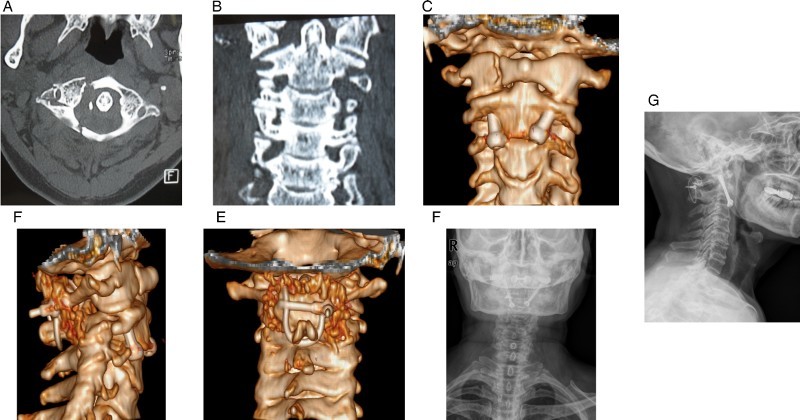
Outcome measures: Computed tomography scans were used to assess the high-riding vertebral artery and feasibility of anterior transarticular screw fixation preoperatively. A Philadelphia collar was used to immobilize the neck postoperatively. Anteroposterior (open-mouth) and lateral views were obtained at pre/postoperation and at the follow-up.
Results: The operation was performed successfully on all of the patients, and no intraoperative operation-related complications such as nerve injury, vertebral artery, and soft tissue complications occurred. The mean follow-up period was 33.8 months (range: 24 to 58 months). No screw breakage, loosening, pullout, or cutout was observed. Bone union was achieved in all patients at the last follow-up.
Conclusions: Our small case series results suggested that percutaneous anterior transarticular screw fixation combined with mini-open posterior C1/2 wire fusion is a technically minimally invasive, safe, feasible, and useful method to treat patients with a high-riding vertebral artery.
Keywords: Anterior transarticular screw fixation; Gallie fusion; High-riding vertebral artery; Minimally invasive; Percutaneous.
Figures
References
-
- Lau SW, Sun LK, Lai R, Luk MS, Ng YS, Wong NM, et al. Study of the anatomical variations of vertebral artery in C2 vertebra with magnetic resonance imaging and its application in the C1-C2 transarticular screw fixation. Spine (Phila Pa 1976) 2010;35(11):1136–43. - PubMed
Publication types
MeSH terms
LinkOut - more resources
Full Text Sources
Other Literature Sources
Medical
