


Angiogenesis in diabetes and obesity
- PMID: 25663658
- PMCID: PMC4351724
- DOI: 10.1007/s11154-015-9310-7
Angiogenesis in diabetes and obesity
Abstract
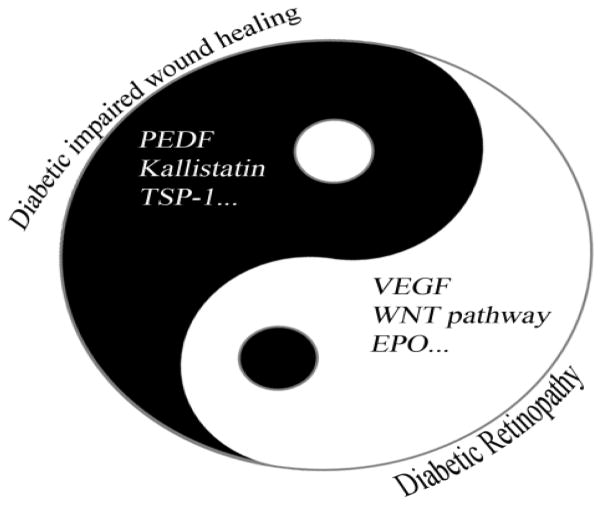
The prevalence of diabetes mellitus and obesity continues to increase globally. Diabetic vascular complications are the main chronic diabetic complications and associated with mortality and disability. Angiogenesis is a key pathological characteristic of diabetic microvascular complications. However, there are two tissue-specific paradoxical changes in the angiogenesis in diabetic microvascular complications: an excessive uncontrolled formation of premature blood vessels in some tissues, such as the retina, and a deficiency in the formation of small blood vessels in peripheral tissues, such as the skin. This review will discuss the paradoxical phenomena of angiogenesis and its underlying mechanism in obesity, diabetes and diabetic complications.
Conflict of interest statement
The authors have no conflict of interest to disclose.
Figures
References
-
- Assoc AD. Diagnosis and Classification of Diabetes Mellitus. Diabetes Care. 2014;37:S81–S90. - PubMed
-
- Danaei G, Finucane MM, Lu Y, et al. National, regional, and global trends in fasting plasma glucose and diabetes prevalence since 1980: systematic analysis of health examination surveys and epidemiological studies with 370 country-years and 2.7 million participants. Lancet. 2011;378:31–40. - PubMed
-
- Wild S, Roglic G, Green A, et al. Global prevalence of diabetes: estimates for the year 2000 and projections for 2030. Diabetes Care. 2004;27:1047–53. - PubMed
-
- Shaw JE, Sicree RA, Zimmet PZ. Global estimates of the prevalence of diabetes for 2010 and 2030. Diabetes Res Clin Pract. 2010;87:4–14. - PubMed
-
- Clinical Guidelines on the Identification, Evaluation, and Treatment of Overweight and Obesity in Adults--The Evidence Report. National Institutes of Health. Obes Res. 1998;6(Suppl 2):51S–209S. - PubMed
Publication types
MeSH terms
Grants and funding
LinkOut - more resources
Full Text Sources
Other Literature Sources
Medical
