


Prognostic significance of mammographic density change after initiation of tamoxifen for ER-positive breast cancer
- PMID: 25663687
- PMCID: PMC4334825
- DOI: 10.1093/jnci/dju425
Prognostic significance of mammographic density change after initiation of tamoxifen for ER-positive breast cancer
Abstract
Background: A prior analysis of postmenopausal breast cancer patients linked a decline in mammographic density (MD) following the initiation of tamoxifen treatment with improved survival, but excluded premenopausal women, for whom tamoxifen is the primary anti-endocrine therapy. Therefore, we evaluated change in MD after tamoxifen and breast cancer death among patients age 32 to 87 years.
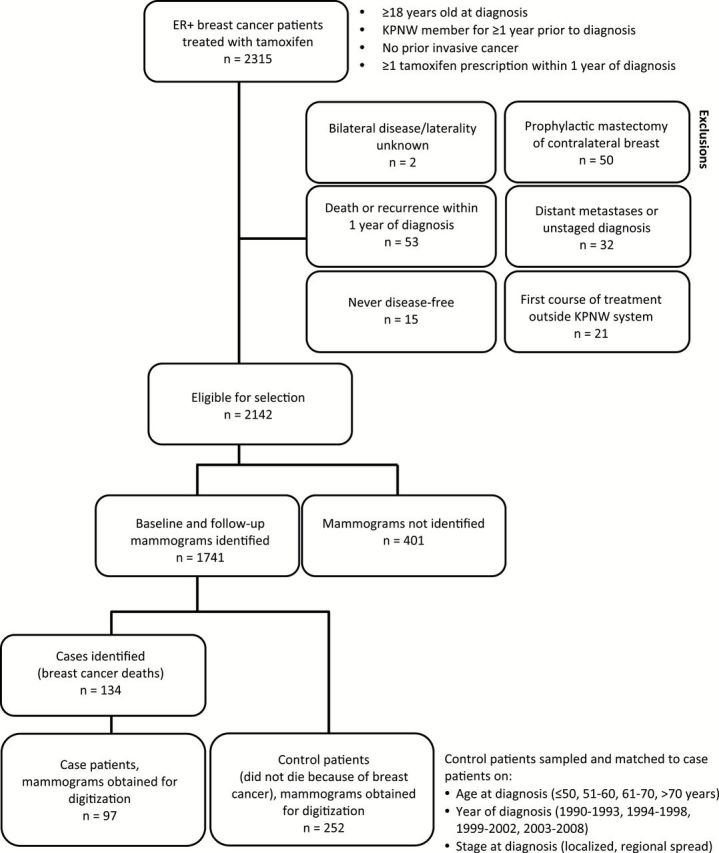
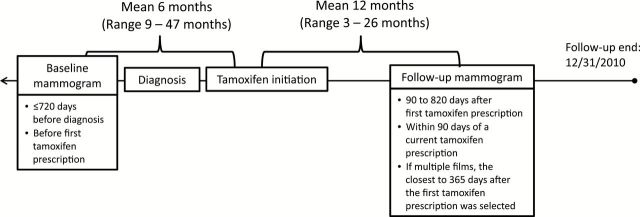
Methods: This case-control study included 349 estrogen receptor (ER)-positive breast cancer patients who were treated with tamoxifen at Kaiser Permanente Northwest (1990-2008): 97 who died from breast cancer (case patients) and 252 who did not (control patients), matched on age and year at diagnosis and disease stage. Percent MD in the unaffected breast was measured at baseline (mean six months before tamoxifen initiation) and follow-up (mean 12 months after initiation). Associations between change in MD and breast cancer death were estimated using conditional logistic regression.
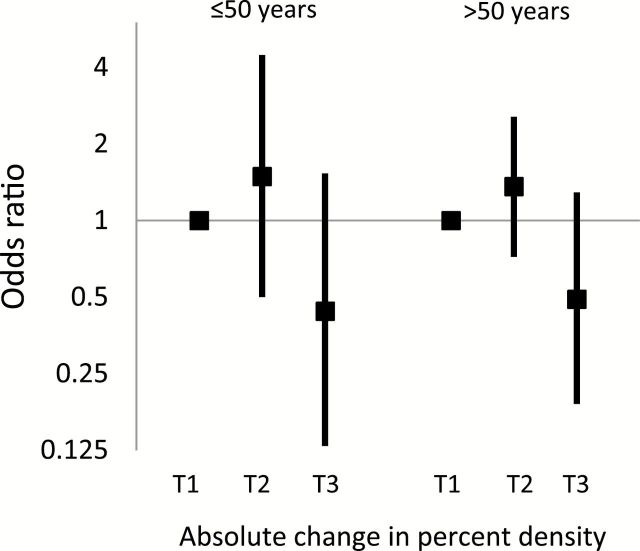
Results: Patients in the highest tertile of MD decline had a lower risk of breast cancer death when compared with women in the lowest tertile (odds ratio [OR] = 0.44, 95% confidence interval [CI] = 0.22 to 0.88); results were similar after adjustment for baseline MD (OR = 0.49, 95% CI = 0.23 to 1.02). Reductions in death were observed only among patients in the middle and upper tertiles of baseline MD. Associations did not differ by age, tamoxifen use duration, estrogen and/or progestin use, body mass index, or receipt of chemotherapy or radiotherapy.
Conclusion: These data suggest that younger and older ER-positive breast cancer patients who experience large reductions in MD following tamoxifen initiation have an improved prognosis.
Published by Oxford University Press 2015.
Figures
References
-
- Cuzick J, Warwick J, Pinney E, Warren RML, Duffy SW. Tamoxifen and Breast density in women at increased risk of breast cancer. J Natl Cancer Inst. 2004;96(8):621–628. - PubMed
-
- Ko KL, Shin IS, You JY, Jung SY, Ro J, Lee ES. Adjuvant tamoxifen-induced mammographic breast density reduction as a predictor for recurrence in estrogen receptor-positive premenopausal breast cancer patients. Breast Cancer Res Treat. 2013;142(3):559–567. - PubMed
-
- Son HJ, Oh KK. Significance of follow-up mammography in estimating the effect of tamoxifen in breast cancer patients who have undergone surgery. AJR Am J Roentgenol. 1999;173(4):905–909. - PubMed
-
- Ursin G, Pike MC, Spicer DV, Porrath SA, Reitherman RW. Can mammographic densities predict effects of tamoxifen on the breast? J Natl Cancer Inst. 1996;88(2):128–129. - PubMed
Publication types
MeSH terms
Substances
Grants and funding
LinkOut - more resources
Full Text Sources
Other Literature Sources
Medical
