Insomnia in shift work disorder relates to occupational and neurophysiological impairment
- PMID: 25665690
- PMCID: PMC4365460
- DOI: 10.5664/jcsm.4606
Insomnia in shift work disorder relates to occupational and neurophysiological impairment
Abstract
Study objectives: To determine whether occupational and neurophysiological decrements within shift work disorder (SWD) are differentially related to its two diagnostic symptoms, insomnia and excessive sleepiness.
Methods: Thirty-four permanent night workers participated in an overnight lab protocol including a multiple sleep latency test (MSLT) and an event-related brain potential (ERP) task testing auditory target detection (P3a and P3b). At 16:00, each subject completed an Endicott Work Productivity Scale (EWPS), two Insomnia Severity Indices (ISI-Day, ISI-Night), and an Epworth Sleepiness Scale (ESS). Subjects were grouped by ISI and ESS scores into clinical phenotypes. This study compared EWPS and ERP results between alert insomniacs ("AI," reporting insomnia without sleepiness), sleepy insomniacs ("SI," reporting both insomnia and sleepiness), and controls.
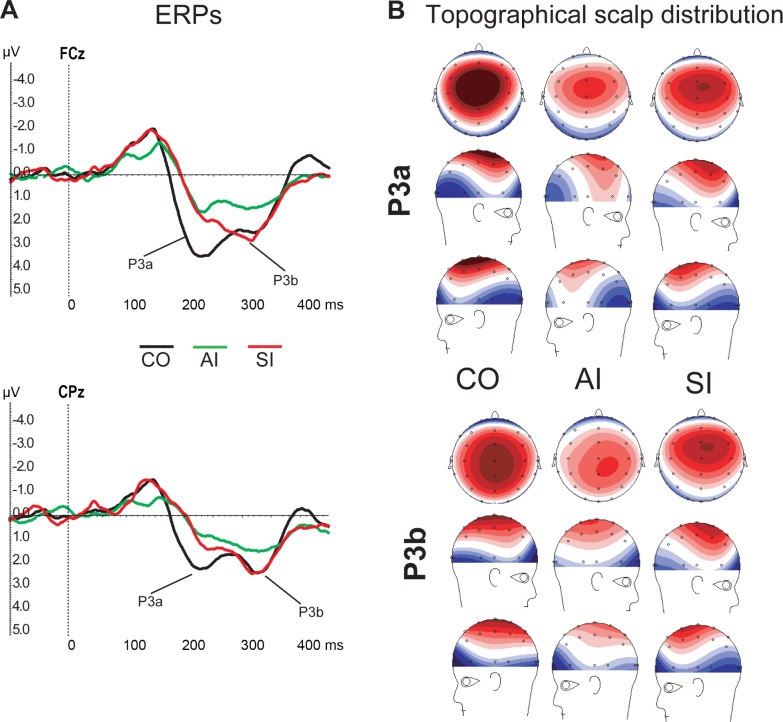
Results: The AI group was most impaired on the EWPS, significantly more impaired than controls (25.8 ± 14.8 vs. 12.3 ± 9.4, p < 0.05). SI were not statistically different from controls (19.5 ± 8.7 vs. 12.3 ± 9.4, p > 0.05). Compared to controls, AI showed significantly attenuated P3a response (Fcz, Czp, Cpz, mean difference [MD] 1.62-1.77, p < 0.05) and target-detection P3b response (Fcz, Czp, Cpz, MD 1.28-1.64, p < 0.05). P3b in SI was not different from controls (p > 0.10), and P3a was only different at one electrode site (Cpz, MD 1.43, p < 0.01). Neither the MSLT nor the ESS correlated with EWPS scores or ERP (P3a/P3b) amplitudes (p > 0.10). However, the mean of the ISI measurements correlated with the EWPS (r = 0.409, p < 0.01) and the attention-to-novelty P3a (r = -0.410, p < 0.01).
Conclusions: Among shift work disorder patients, insomnia is linked to functional and cognitive impairments. Insomniacs with normal sleepiness showed more severe impairments than insomniacs who also reported excessive sleepiness.
Keywords: Epworth Sleepiness Scale; Insomnia Severity Index; circadian phase; event-related brain potentials; excessive sleepiness; insomnia; multiple sleep latency test; shift work; work productivity.
© 2015 American Academy of Sleep Medicine.
Figures
References
-
- Gumenyuk V, Roth T, Drake CL. Circadian phase, sleepiness, and light exposure assessment in night workers with and without shift work disorder. Chronobiol Int. 2012;29:928–36. - PubMed
-
- Wright KP, Jr., Bogan RK, Wyatt JK. Shift work and the assessment and management of shift work disorder (SWD) Sleep Med Rev. 2013;17:41–54. - PubMed
-
- American Academy of Sleep Medicine. International Classification of Sleep Disorders. 3rd ed. Darien, IL: American Academy of Sleep Medicine; 2014.
-
- Sack RL, Blood ML, Lewy AJ. Melatonin rhythms in night shift workers. Sleep. 1992;15:434–41. - PubMed
Publication types
MeSH terms
Substances
Grants and funding
LinkOut - more resources
Full Text Sources
Other Literature Sources
Medical
Miscellaneous