Review
. 2015 Apr:24:124-31.
doi: 10.1016/j.mib.2015.01.004. Epub 2015 Feb 6.

Diagnosing oxidative stress in bacteria: not as easy as you might think

Affiliations
Review

Diagnosing oxidative stress in bacteria: not as easy as you might think

James A Imlay. Curr Opin Microbiol. 2015 Apr.

Abstract

Microorganisms are vulnerable to elevated levels of intracellular reactive oxygen species (ROS). This situation has led to proposals that many natural stresses might be toxic specifically because they accelerate endogenous ROS formation. Such a mechanism has been convincingly demonstrated for redox-cycling compounds. However, the evidence is much weaker for most other stressors. The hypothesis that clinical antibiotics generate lethal ROS stress has attracted much attention, and the author discusses some aspects of evidence that support or oppose this idea. Importantly, even if all cellular electron flow were somehow diverted to ROS formation, the resultant doses of H2O2 and O2(-) would more likely be bacteriostatic than bacteriocidal unless key defense mechanisms were simultaneously blocked.


Figures

Figure 1
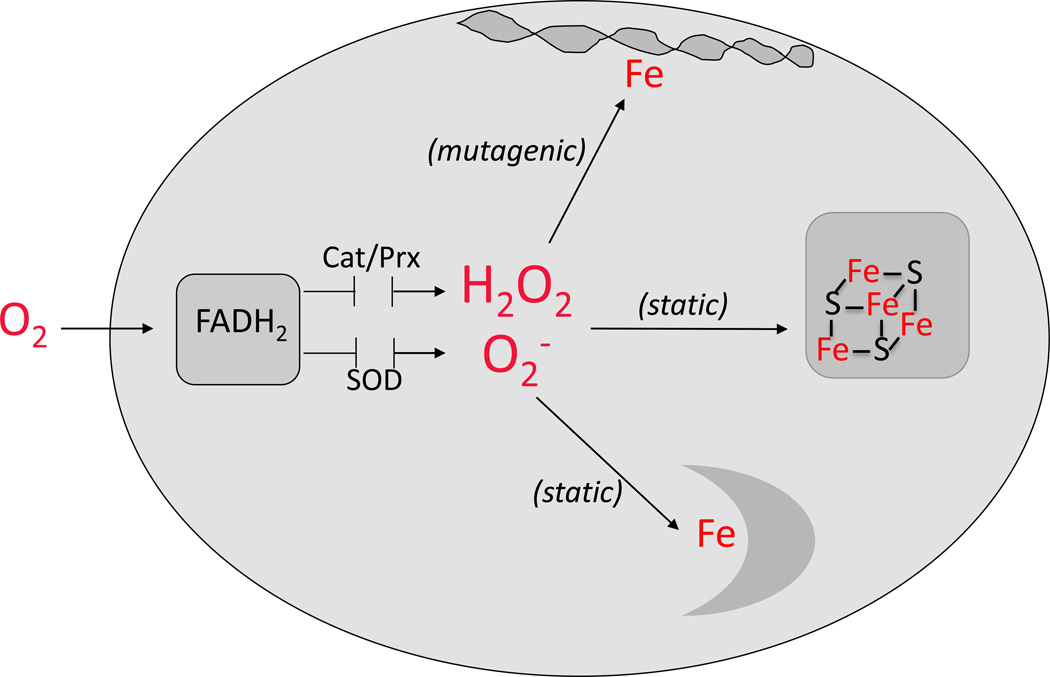
Figure 1. Targets of ROS in E. coli
Autoxidation of redox enzymes generates O2 and H2O2 that are kept at low concentrations by scavenging enzymes such as catalases (Cat), peroxidases (Prx), and superoxide dismutases (SOD). Any boost in H2O2 concentration accelerates reactions with the pool of free iron; DNA damage and mutagenesis ensue. Excess O2 and H2O2 inactivate Fe/S-dependent dehydratases and mononuclear Fe enzymes, thereby disabling pathways and blocking growth.
Figure 2
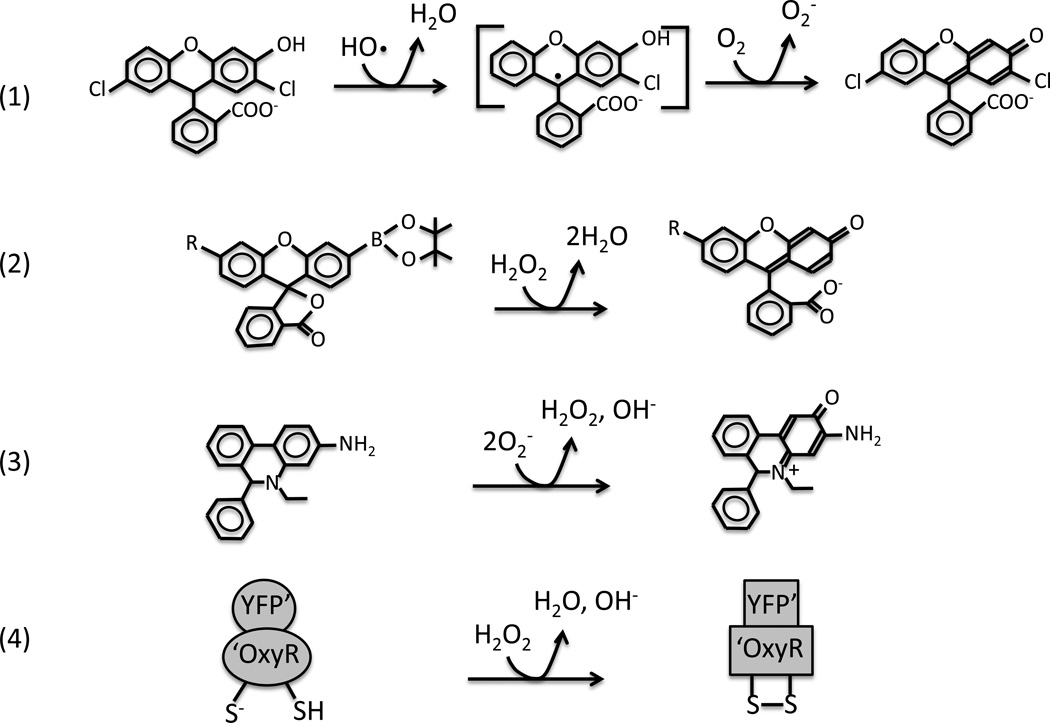
Figure 2. Intracellular fluorescent probes of ROS
(A) Reduced fluorescein derivatives (here, dihydrodichlorofluorescein) can be oxidized in a two-step process initiated by HO·. Carbonate radicals, high-valence metals, and other strong univalent oxidants can also initiate the reaction [33]. (B) Boronate-caged probes developed by the Chang group [39] react directly with H2O2. These probes have detected an influx of 100 µM intracellular H2O2 into eukaryotic cells. Ratiometric methods can correct for loading discrepancies. (C) Hydroethidine can be oxidized by O2 to 2-hydroxyethidium. Oxidized metal centers can oxidize the probe to a distinct ethidium derivative that can be distinguished by its fluorescence spectrum [77]. The detection limit in vivo has not been determined. (D) HyPer [38] is an artificial protein in which the H2O2-sensing domain of OxyR is fused to the fluorescent domain of YFP. Oxidation shifts the fluorescence spectrum. This probe is reversible in vivo, like OxyR itself, and has detected an infusion of 5–25 µM H2O2 into E. coli.
Figure 3
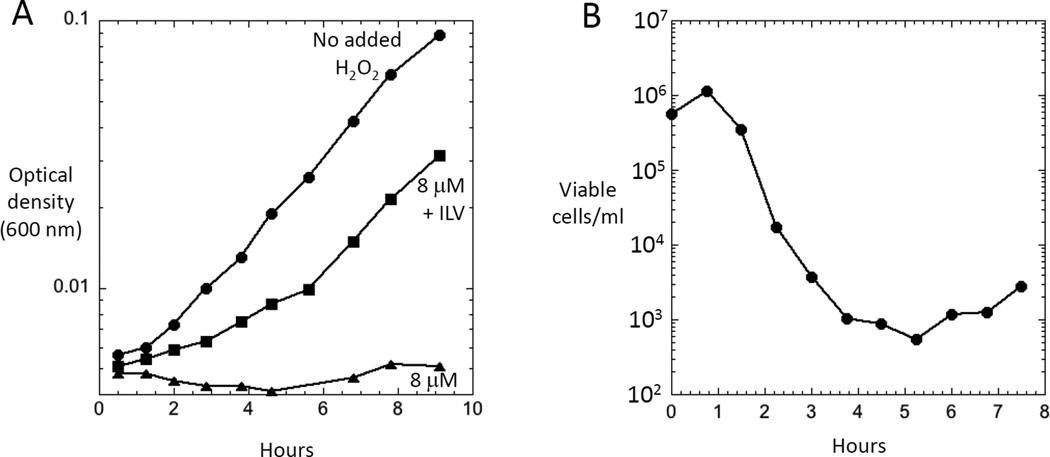
Figure 3. Impact of elevated H2O2 upon cell fitness
(A) Catalase/peroxidase mutants that are suffused with 8 µM H2O2 exhibit an auxotrophy for branched-chain amino acids due to dehydratase inactivation. The figure indicates growth curves in defined glucose medium to which exogenous H2O2 was added. If branched-chain amino acids (ILV) are supplied, cells can grow. (All media also contained aromatic amino acids to counteract inhibition of that biosynthetic pathway. Data are from Jang and Imlay [17].) (B) Substantial cell death from H2O2 stress occurs only if catalase/peroxidase mutants additionally carry a Δdps mutation that blocks the sequestration of intracellular iron by this mini-ferritin. Anoxic cells growing in liquid medium were aerated at time zero, and at intervals the number of surviving cells was determined by plating on anoxic plates. This phenotype was evident in LB medium containing ~ 10 µM Fe and ~ 5 µM H2O2. Data are from Park et al. [47].

References

    1. Imlay JA. The molecular mechanisms and physiological consequences of oxidative stress: lessons from a model bacterium. Nat Rev Microbiol. 2013;11:443–454. - PMC - PubMed
    1. Dwyer DJ, Kohanski MA, Hayete B, Collins JJ. Gyrase inhibitors induce an oxidative damage cellular death pathway in Escherichia coli. Mol Syst Biol. 2007;3:91. - PMC - PubMed
    1. Kohanski MA, Dwyer DJ, Hayete B, Lawrence CA, Collins JJ. A common mechanism of cellular death induced by bactericidal antibiotics. Cell. 2007;130:797–810. - PubMed
    1. Kohanski MA, Dwyer DJ, Wierzbowski J, Cotarel G, Collins JJ. Mistranslation of membrane proteins and two-component system activation trigger antibiotic-mediated cell death. Cell. 2008;135:679–690. - PMC - PubMed
    1. Foti JJ, Devadoss B, Winkler JA, Collins JJ, Walker GC. Oxidation of the guanine nucleotide pool underlies cell death by bactericidal antibiotics. Science. 2012;336:315–319. - PMC - PubMed

Publication types