. 2015 Feb 10;6(1):e02445-14.
doi: 10.1128/mBio.02445-14.

Systems-based analysis of the Sarcocystis neurona genome identifies pathways that contribute to a heteroxenous life cycle

Affiliations

Systems-based analysis of the Sarcocystis neurona genome identifies pathways that contribute to a heteroxenous life cycle

Tomasz Blazejewski et al. mBio. .

Abstract

Sarcocystis neurona is a member of the coccidia, a clade of single-celled parasites of medical and veterinary importance including Eimeria, Sarcocystis, Neospora, and Toxoplasma. Unlike Eimeria, a single-host enteric pathogen, Sarcocystis, Neospora, and Toxoplasma are two-host parasites that infect and produce infectious tissue cysts in a wide range of intermediate hosts. As a genus, Sarcocystis is one of the most successful protozoan parasites; all vertebrates, including birds, reptiles, fish, and mammals are hosts to at least one Sarcocystis species. Here we sequenced Sarcocystis neurona, the causal agent of fatal equine protozoal myeloencephalitis. The S. neurona genome is 127 Mbp, more than twice the size of other sequenced coccidian genomes. Comparative analyses identified conservation of the invasion machinery among the coccidia. However, many dense-granule and rhoptry kinase genes, responsible for altering host effector pathways in Toxoplasma and Neospora, are absent from S. neurona. Further, S. neurona has a divergent repertoire of SRS proteins, previously implicated in tissue cyst formation in Toxoplasma. Systems-based analyses identified a series of metabolic innovations, including the ability to exploit alternative sources of energy. Finally, we present an S. neurona model detailing conserved molecular innovations that promote the transition from a purely enteric lifestyle (Eimeria) to a heteroxenous parasite capable of infecting a wide range of intermediate hosts.

Importance: Sarcocystis neurona is a member of the coccidia, a clade of single-celled apicomplexan parasites responsible for major economic and health care burdens worldwide. A cousin of Plasmodium, Cryptosporidium, Theileria, and Eimeria, Sarcocystis is one of the most successful parasite genera; it is capable of infecting all vertebrates (fish, reptiles, birds, and mammals-including humans). The past decade has witnessed an increasing number of human outbreaks of clinical significance associated with acute sarcocystosis. Among Sarcocystis species, S. neurona has a wide host range and causes fatal encephalitis in horses, marine mammals, and several other mammals. To provide insights into the transition from a purely enteric parasite (e.g., Eimeria) to one that forms tissue cysts (Toxoplasma), we present the first genome sequence of S. neurona. Comparisons with other coccidian genomes highlight the molecular innovations that drive its distinct life cycle strategies.


Figures

FIG 1
FIG 1
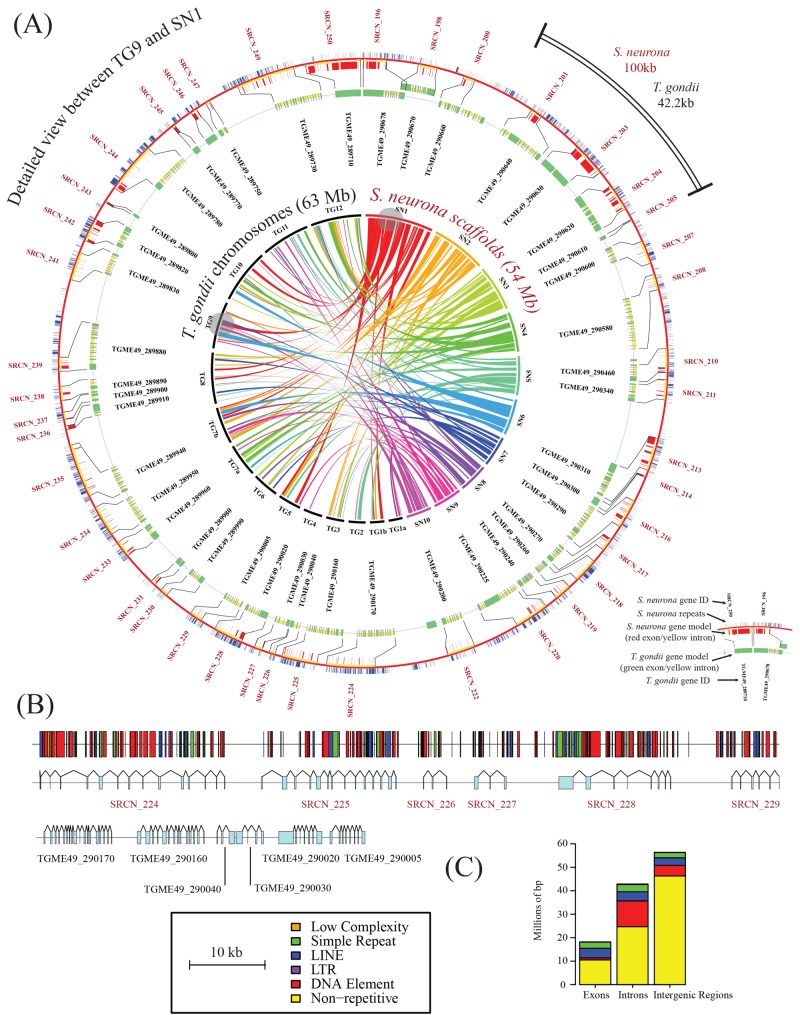
Architecture and syntenic relationships of the S. neurona genome. (A) Circos representations (50) of syntenic relationships between the genomes of S. neurona and T. gondii ME49. The inner circle shows syntenic relationships among the 10 largest S. neurona genomic scaffolds (maximum size, 9.2 Mb; minimum size, 3.5 Mb) and the 14 chromosomes of T. gondii. Bandwidths indicate alignment length, and colors represent the S. neurona scaffold of origin for the gene clusters. Grey circles indicate the largest regions of genomic synteny between S. neurona scaffold SO SN1 and T. gondii chromosome 9. The outer circles show a detailed view of synteny indicated by the grey circles. Red and green bars indicate exons of S. neurona and T. gondii, respectively, and yellow and blue bars indicate intronic and repeat regions, respectively. (B) Detailed view of the synteny map shown in panel A revealing larger introns in S. neurona relative to those in T. gondii and the relative positioning of repetitive elements. (C) Incidence of repeats in different genomic regions as defined by RepeatModeler (20).
FIG 2
FIG 2
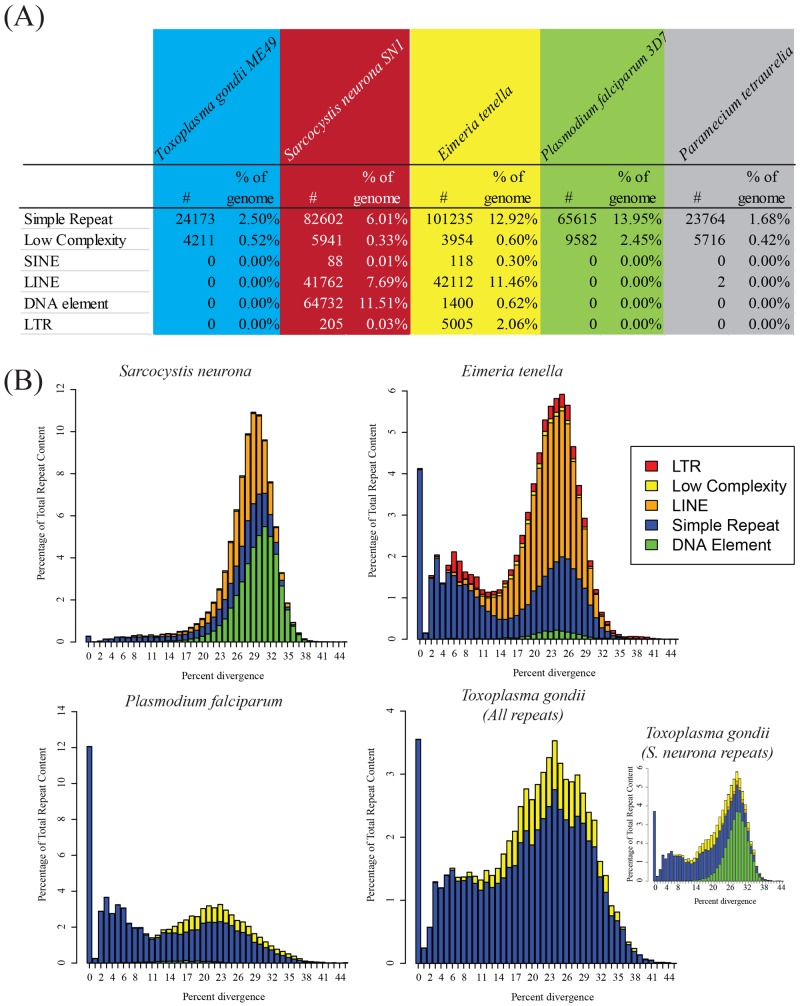
Repeat incidence and diversity in selected alveolate genomes. (A) Incidence of repeats, as defined by RepeatModeler (20), in a selected group of alveolate genomes. While E. tenella is rich in LTR elements, S. neurona is rich in DNA elements. Neither type of element is abundant in other alveolates. (B) Diversity of different repeat families within coccidian genomes. Bar graphs indicate the relative abundance of each repeat class as a function of Kimura divergence from the consensus repeat sequence. Note that DNA elements were not initially detected in the T. gondii genome; however, subsequent searches revealed the presence of DNA elements predicted from the S. neurona genome (indicated in the inset bar chart of S. neurona repeats).
FIG 3
FIG 3
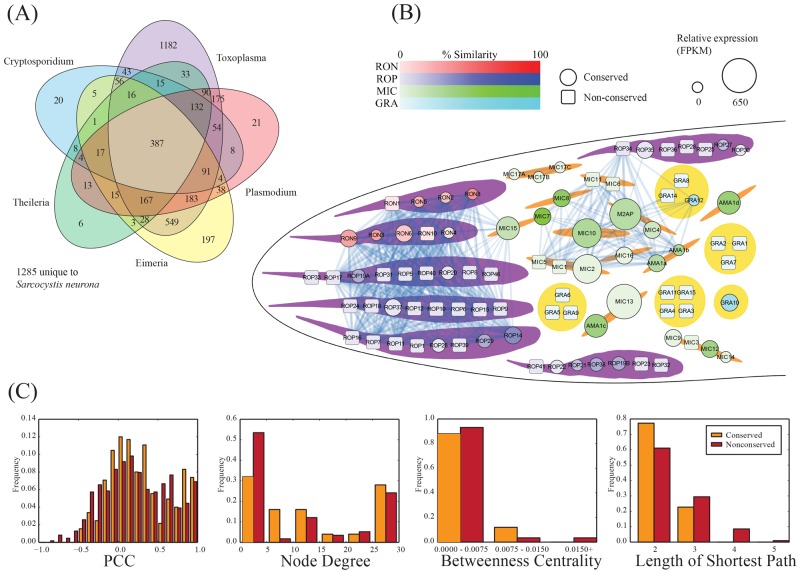
Coexpression network for T. gondii invasion-associated genes. (A) Ortholog distribution of S. neurona genes. Orthologs were predicted by using the InParanoid pipeline (51). (B) Network of T. gondii proteins involved in the invasion process. Nodes indicate genes, colored by family or location, with size indicating the relative expression of the S. neurona ortholog as determined through RNA-Seq expression. Square nodes indicate the absence of an ortholog in S. neurona. Links between nodes indicate significant coexpression (Pearson correlation coefficient [PCC], >0.8). Two main clusters of proteins are observed, one involving batteries of rhoptry proteins (ROPs and RONs) and one involving microneme proteins (MICs). (C) Network statistics associated with the invasion network.
FIG 4
FIG 4
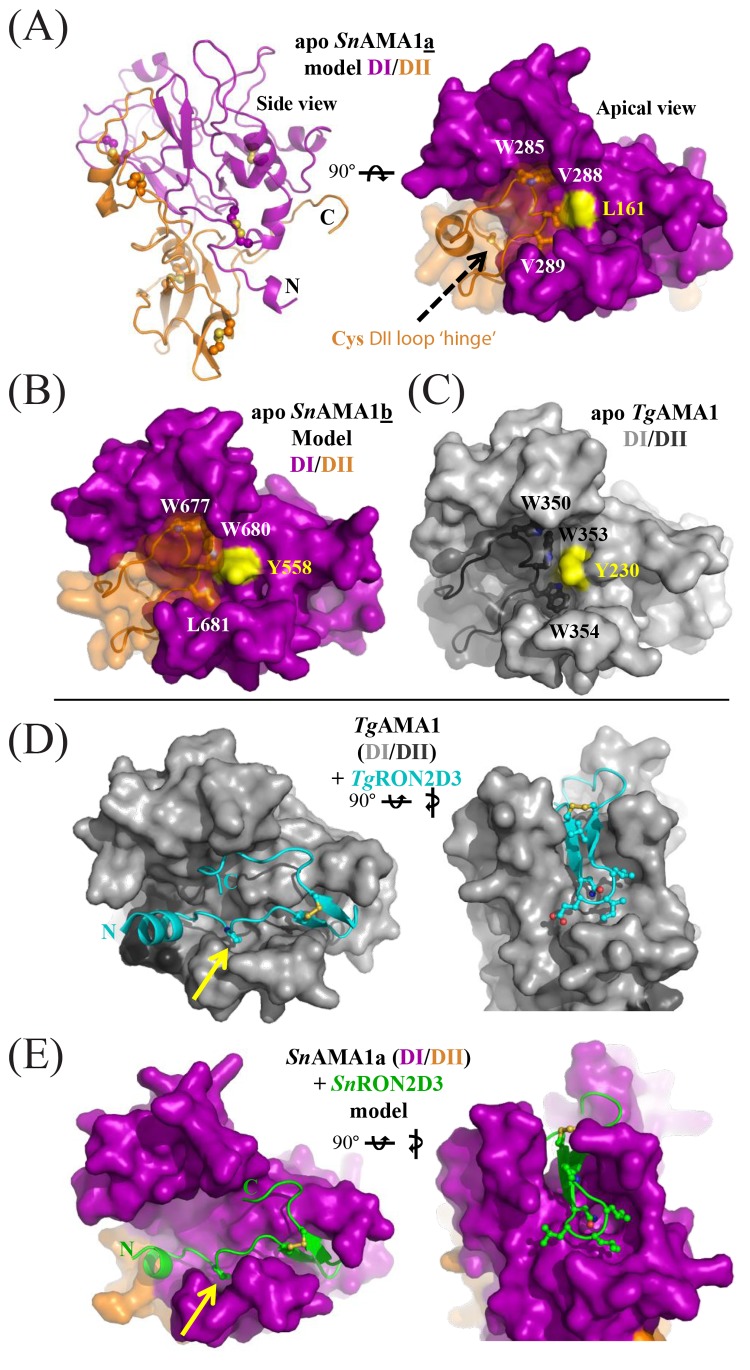
SnAMA1a and SnAMA1b accessorize the canonical AMA1 DI and DII domains with unique features but maintain an apical surface capable of coordinating SnRON2D3. (A) Secondary-structure (left) and surface representations of SnAMA1a DI (purple) and DII (orange); five conserved disulfides and two extra cysteines in the DII loop are highlighted as ball-and-stick structures. Two cysteines predicted to form a disulfide at the DII loop hinge are shown as a ball-and-stick structure (black arrow). Residues anchoring the DII loop are labeled and surround a central Leu residue colored yellow. (B) Surface representations of SnAMA1b colored and labeled as for SnAMA1a. (C) Surface representation of TgAMA1 (Protein Data Bank [PDB] accession no. 2x2z); DI, light grey; DII, dark grey. (D) Complementary views of the TgAMA1-TgRON2sp costructure (PDB accession no. 2y8t) with TgAMA1 colored light grey (DI) or dark grey (DII) and TgRON2sp colored cyan. (E) Complementary views of the SnAMA1a-SnRON2D3 costructure model, with SnAMA1 colored as in panel A and SnRON2D3 in green. Residues making up the RON2 cystine loop tip are shown as ball-and-stick structures to highlight shape complementarity.
FIG 5
FIG 5
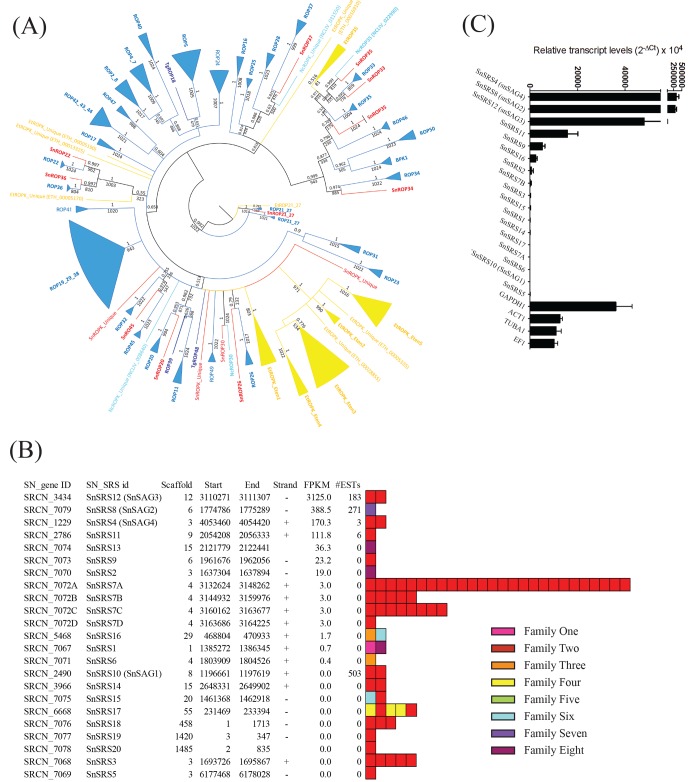
Coccidian-specific protein families implicated in virulence and host range determination. (A) Maximum-likelihood-based phylogenetic tree of the ROPK family. Values indicate the bootstrap support (of 1,000 replicates). S. neurona members are red. T. gondii members are dark blue. N. caninum members are cyan. T. gondii and N. caninum clades are blue. E. tenella members and clades are yellow. (B) Summary of the 23 SRS family members identified in the S. neurona genome. Relative expression in the S. neurona merozoite stage are provided as FPKM values, and domain architectures are indicated. #ESTs, number of expressed sequence tags. (C) The expression of the SnSRS-encoding genes was assessed by TaqMan qPCR. Genes were sorted in descending order by their expression levels.
FIG 6
FIG 6
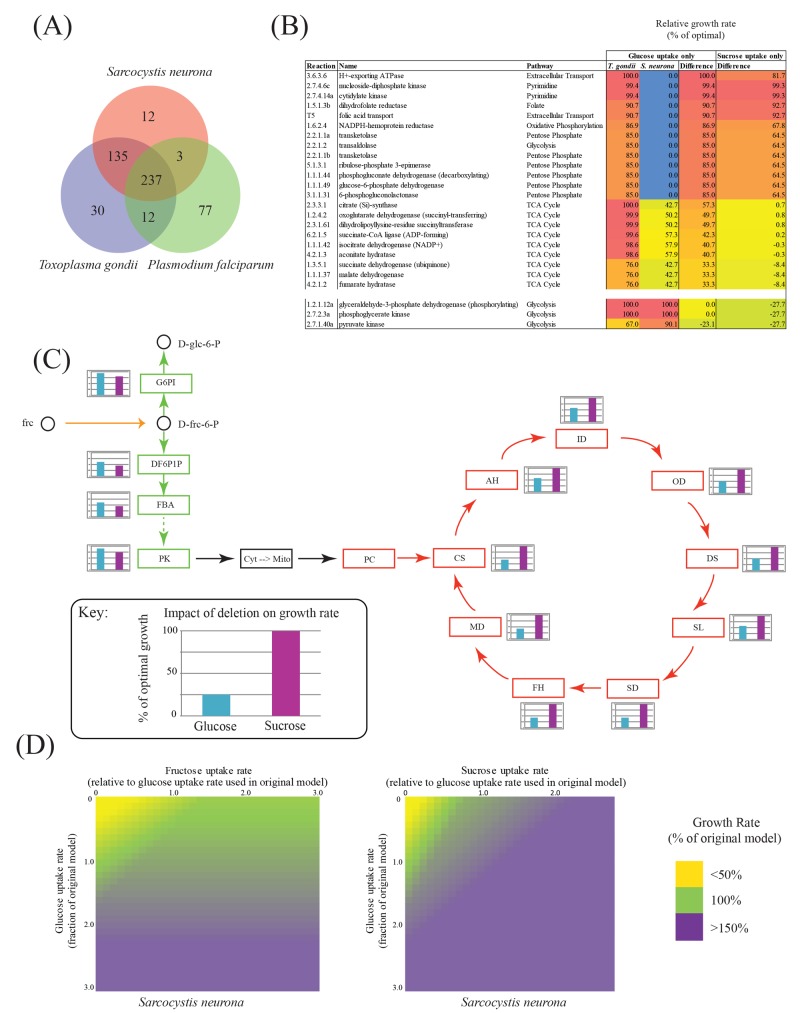
Metabolic reconstruction and analysis of S. neurona based on iCS382. (A) Overlap in enzyme predictions for genes from S. neurona, T. gondii, and P. falciparum. (B) Species-specific differences in growth rates of single-reaction knockouts. Only reactions that show a growth rate difference of 20% between T. gondii and S. neurona are shown. (C) Impact of deletion of reactions involved in glycolysis and the TCA cycle on S. neurona growth under conditions of exclusive glucose or sucrose uptake. d-glc-6-P, d-glucose-6-phosphate; G6PI, glucose-6-phosphate isomerase; d-frc-6-P, d-fructose-6-phosphate; DF6P1P, diphosphate-fructose-6-phosphate 1-phosphotransferase; FBA, fructose-bisphosphate aldolase; PK, pyruvate kinase; Cyt, cytosol; Mito, mitochondrion; PC, pyruvate carboxylase; CS, citrate synthase; AH, aconitate hydratase; ID, isocitrate dehydrogenase (NADP+); OD, oxoglutarate dehydrogenase (succinyl-transferring); DS, dihydrolipoyllysine-residue succinyltransferase; SL, succinate-CoA ligase (ADP-forming); SD, succinate dehydrogenase (ubiquinone); FH, fumarate hydratase; MD, malate dehydrogenase; frc, fructose. (D) Relationship between fructose, glucose, and sucrose import and growth.

References

    1. Cowper B, Matthews S, Tomley F. 2012. The molecular basis for the distinct host and tissue tropisms of coccidian parasites. Mol Biochem Parasitol 186:1–10. doi:10.1016/j.molbiopara.2012.08.007. - DOI - PubMed
    1. Dubey JP, Lindsay DS, Saville WJ, Reed SM, Granstrom DE, Speer CA. 2001. A review of Sarcocystis neurona and equine protozoal myeloencephalitis (EPM). Vet Parasitol 95:89–131. doi:10.1016/S0304-4017(00)00384-8. - DOI - PubMed
    1. Dubey JP, Speer CA, Fayer R. 1988. Sarcocystosis of animals and man. CRC Press, Boca Raton, FL.
    1. Wasmuth JD, Pszenny V, Haile S, Jansen EM, Gast AT, Sher A, Boyle JP, Boulanger MJ, Parkinson J, Grigg ME. 2012. Integrated bioinformatic and targeted deletion analyses of the SRS gene superfamily identify SRS29C as a negative regulator of Toxoplasma virulence. mBio 3(6):e00321-12. doi:10.1128/mBio.00321-12. - DOI - PMC - PubMed
    1. Sibley LD. 2011. Invasion and intracellular survival by protozoan parasites. Immunol Rev 240:72–91. doi:10.1111/j.1600-065X.2010.00990.x. - DOI - PMC - PubMed

Publication types

Substances