


A repeated measures, randomised cross-over trial, comparing the acute exercise response between passive and active sitting in critically ill patients
- PMID: 25670916
- PMCID: PMC4322801
- DOI: 10.1186/1471-2253-15-1
A repeated measures, randomised cross-over trial, comparing the acute exercise response between passive and active sitting in critically ill patients
Abstract
Background: Early mobilisation of critically ill patients is safe and beneficial, but the metabolic cost of exercise remains unquantified. This study compared the acute exercise response in critically ill participants during passive and active sitting.
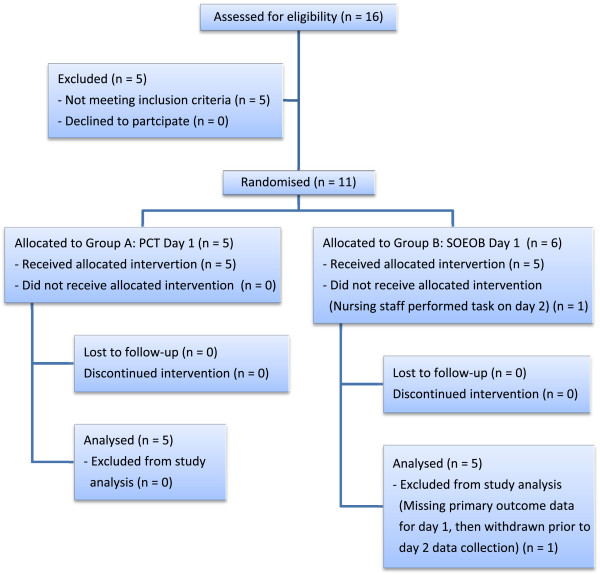
Method: We conducted a prospective, randomised, cross-over study, in ventilated patients receiving rehabilitative physiotherapy. Ten participants completed a passive chair transfer, or a sit on the edge of the bed, followed by the alternate exercise activity on the consecutive day. The primary outcome measure was oxygen consumption.
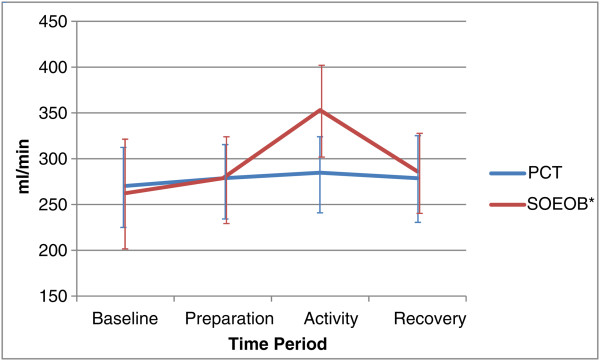
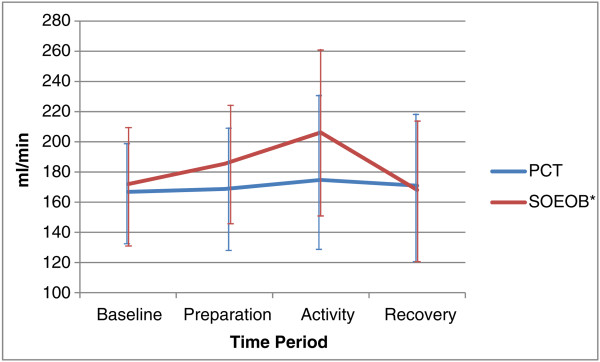
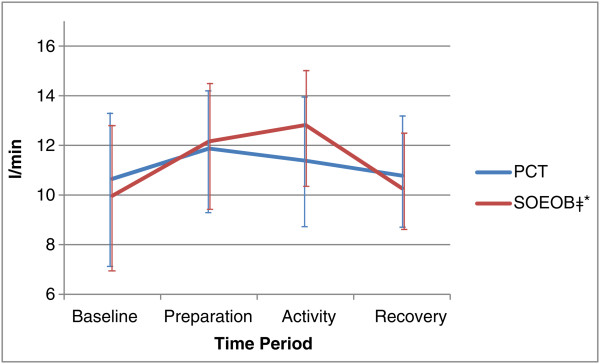
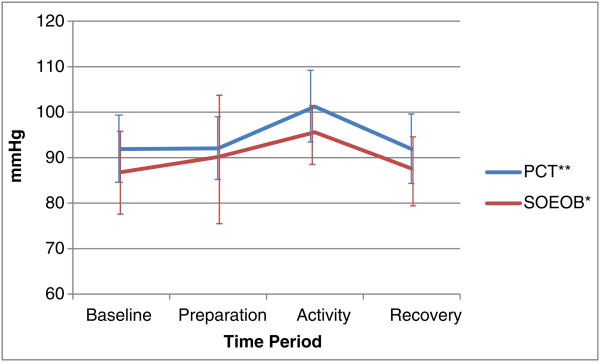
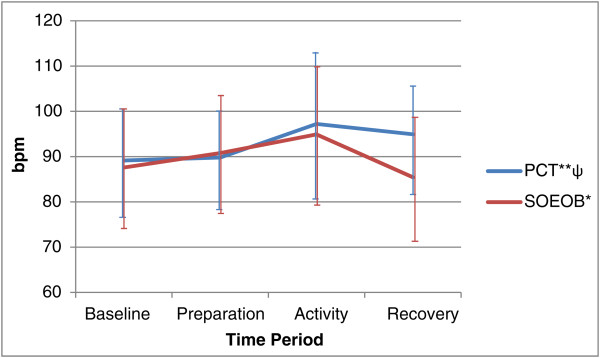
Results: In comparison to resting supine, a passive chair transfer elicited no change in oxygen consumption, carbon dioxide production or minute ventilation; but mean arterial pressure (91.86 mmHg (95% CI 84.61 to 99.10) to 101.23 mmHg (95% CI 93.35 to 109.11) (p = 0.002)) and heart rate (89.13 bpm (95% CI 77.14 to 101.13) to 97.21 bpm (95% CI 81.22 to 113.20) (p = 0.008)) increased. Sitting on the edge of the bed resulted in significant increases in oxygen consumption (262.33 ml/min (95% CI 201.97 to 322.70) to 353.02 ml/min (95% CI 303.50 to 402.55), p = 0.002), carbon dioxide production (171.93 ml/min (95% CI 131.87 to 211.98) to 206.23 ml/min (95% CI 151.03 to 261.43), p = 0.026), minute ventilation (9.97 l/min (95% CI 7.30 to 12.65) to 12.82 l/min (95% CI 10.29 to 15.36), p < 0.001), mean arterial pressure (86.81 mmHg (95% CI 77.48 to 96.14) to 95.59 mmHg (95% CI 88.62 to 102.56), p = 0.034) and heart rate (87.60 bpm (95% CI 73.64 to 101.56) to 94.91 bpm (95% CI 79.57 to 110.25), p = 0.007). When comparing the 2 activities, sitting on the edge of the bed elicited a significantly larger increase in oxygen consumption (90.69 ml/min (95% CI 44.04 to 137.34) vs 14.43 ml/min (95% CI -27.28 to 56.14), p = 0.007) and minute ventilation (2.85 l/min (95% CI 1.70 to 3.99) vs 0.74 l/min (95% CI -0.92 to 1.56), p = 0.012).
Conclusion: Sitting on the edge of the bed is a more metabolically demanding activity than a passive chair transfer in critically ill patients.
Keywords: Critical illness; Early ambulation; Exercise; Oxygen consumption; Physiotherapy; Rehabilitation.
Figures
References
Pre-publication history
-
- The pre-publication history for this paper can be accessed here:http://www.biomedcentral.com/1471-2253/15/1/prepub
Publication types
MeSH terms
Substances
LinkOut - more resources
Full Text Sources
Other Literature Sources
Medical
