


The Influence of Clinical and Biological Factors on Transfusion-Associated Non-ABO Antigen Alloimmunization: Responders, Hyper-Responders, and Non-Responders
- PMID: 25670929
- PMCID: PMC4280450
- DOI: 10.1159/000369109
The Influence of Clinical and Biological Factors on Transfusion-Associated Non-ABO Antigen Alloimmunization: Responders, Hyper-Responders, and Non-Responders
Abstract
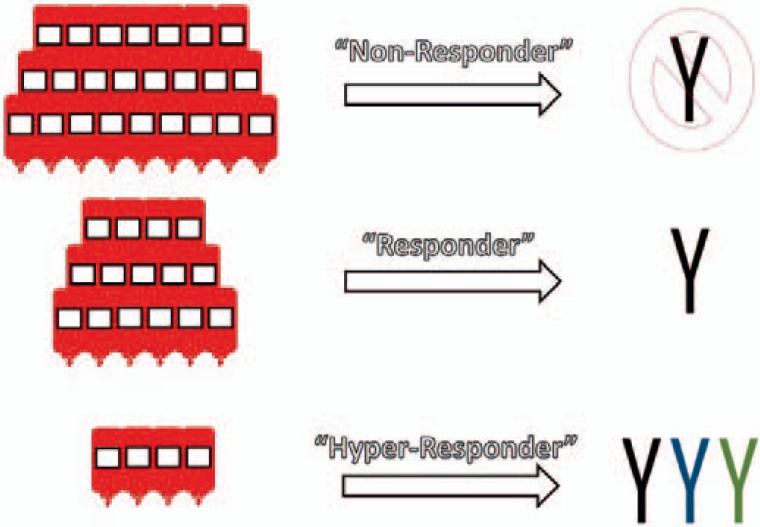
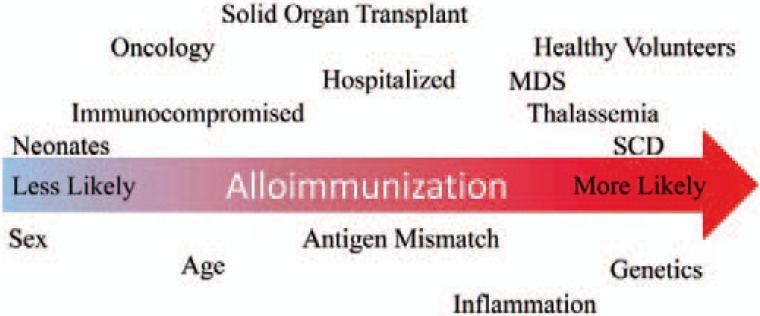
In the context of transfusion medicine, alloimmunization most often refers to the development of antibodies to non-ABO red blood cell (RBC) antigens following pregnancy, transfusion, or transplantation. The development of RBC alloantibodies can have important clinical consequences, particularly in patients who require chronic transfusions. It has been suggested that alloimmunization is more common in some clinical circumstances and patient populations than in others. As such, individuals that develop alloantibodies are frequently referred to as 'responders' in the medical literature. In contrast, individuals that do not develop alloantibodies despite repeated exposures to non-self blood group antigens have been referred to as 'non-responders'. The purpose of this article is to review the phenomenon of RBC alloimmunization in the context of responders and non-responders to: i) establish a basic framework for alloimmunization as reported across several diverse patient populations; ii) more fully explore literature reports which support the concept of responders/non-responders regarding blood group antigen alloimmunization; iii) summarize the mechanisms that have been shown to predispose an individual to alloimmunization to determine how these factors may differentiate 'responders' from 'non-responders'; and iv) briefly discuss some practical approaches to prevent alloimmunization in patients who may be prone to alloantibody development.
Keywords: Alloimmunization; Blood group antigens; Immunohematology; Responders.
Figures
References
-
- Fong SW, Qaqundah BY, Taylor WF. Developmental patterns of ABO isoagglutinins in normal children correlated with the effects of age, sex, and maternal isoagglutinins. Transfusion. 1974;14:551–559. - PubMed
-
- Davenport RD. Pathophysiology of hemolytic transfusion reactions. Semin Hematol. 2005;42:165–168. - PubMed
-
- United States Food and Drug Administration. CBER. 2012. www.fda.gov/biologicsbloodvaccines/bloodbloodproducts/ (last accessed October 16, 2014)
-
- Serious Hazards of Transfusion. Annual report. 2012. www.shotuk.org (last accessed October 16, 2014)
-
- Booth GS, Gehrie EA, Savani BN. Minor RBC Ab and allo-SCT. Bone Marrow Transplant. 2014;49:456–457. - PubMed
Publication types
LinkOut - more resources
Full Text Sources
Other Literature Sources
Research Materials
