


Study protocol: effects of school gardens on children's physical activity
- PMID: 25671113
- PMCID: PMC4322466
- DOI: 10.1186/2049-3258-72-43
Study protocol: effects of school gardens on children's physical activity
Abstract
Background: Childhood obesity is an epidemic. Strategies are needed to promote children's healthy habits related to diet and physical activity. School gardens have the potential to bolster children's physical activity and reduce time spent in sedentary activity; however little research has examined the effect of gardens on children's physical activity. This randomized controlled trial (RCT) examines the effect of school gardens on children's overall physical activity and sedentary behavior; and on children's physical activity during the school day. In addition, physical activity levels and postures are compared using direct observation, outdoors, in the garden and indoors, in the classroom.
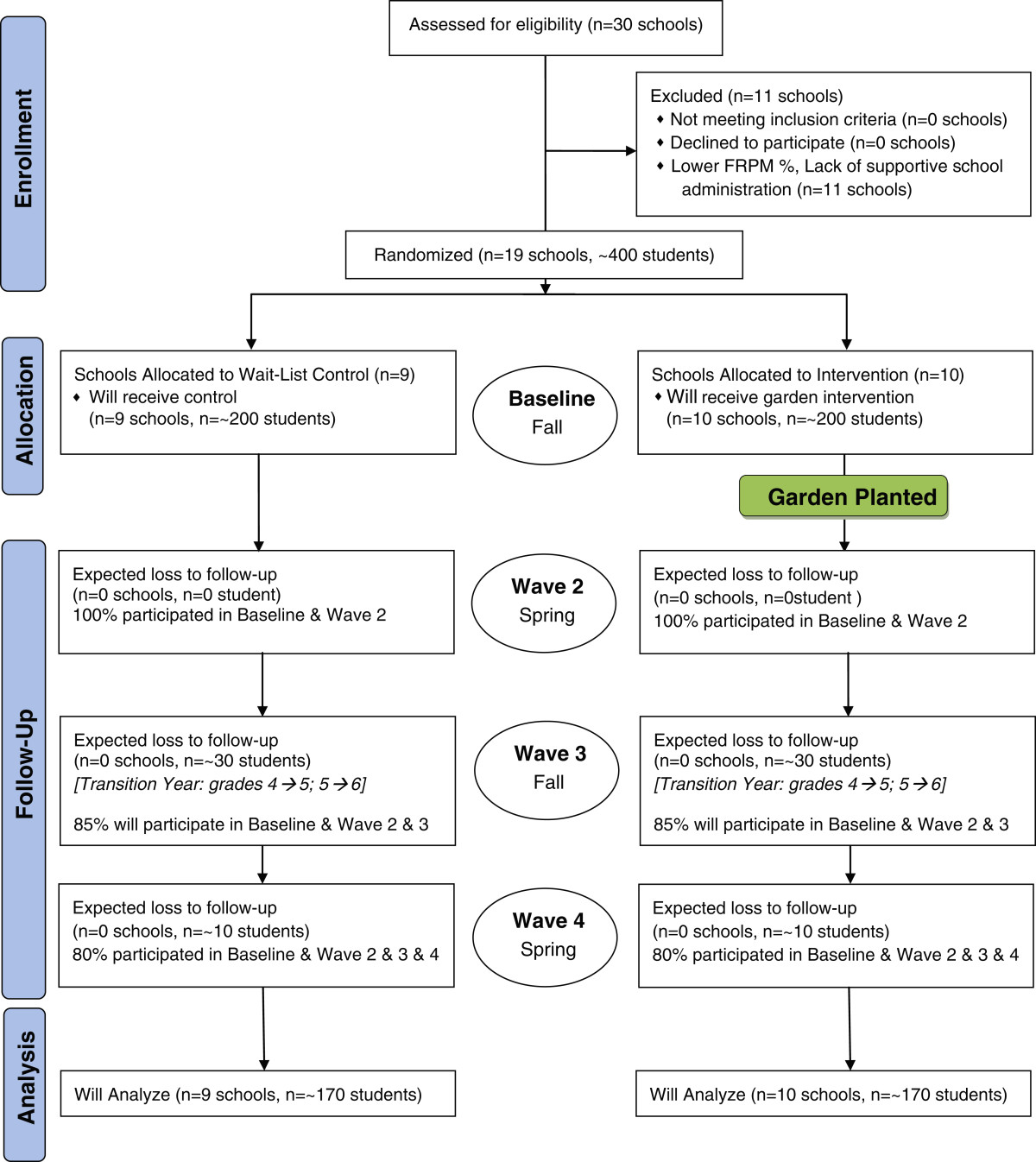
Methods/design: Twelve New York State schools are randomly assigned to receive the school garden intervention or to serve in the wait-list control group that receives gardens and lessons at the end of the study. The intervention consists of a raised bed garden; access to a curriculum focused on nutrition, horticulture, and plant science and including activities and snack suggestions; resources for the school including information about food safety in the garden and related topics; a garden implementation guide provided guidance regarding planning, planting and maintaining the garden throughout the year; gardening during the summer; engaging volunteers; building community capacity, and sustaining the program. Data are collected at baseline and 3 post-intervention follow-up waves at 6, 12, and 18 months. Physical activity (PA) "usually" and "yesterday" is measured using surveys at each wave. In addition, at-school PA is measured using accelerometry for 3 days at each wave. Direct observation (PARAGON) is used to compare PA during an indoor classroom lesson versus outdoor, garden-based lesson.
Discussion: Results of this study will provide insight regarding the potential for school gardens to increase children's physical activity and decrease sedentary behaviors.
Trial registration: Clinicaltrial.gov # NCT02148315.
Keywords: Children; Gardens; Health behaviors; Physical activity; Randomized controlled trial; Schools; Sedentary behavior.
Figures
References
-
- NASPE . Physical Activity for Children: a Statement of Guildelines for Children Ages 5–12. 2. Reston, VA: National Association for Sport and Physical Education; 2004.
Associated data
LinkOut - more resources
Full Text Sources
Other Literature Sources
Medical
