


Effect of whey supplementation on circulating C-reactive protein: a meta-analysis of randomized controlled trials
- PMID: 25671415
- PMCID: PMC4344580
- DOI: 10.3390/nu7021131
Effect of whey supplementation on circulating C-reactive protein: a meta-analysis of randomized controlled trials
Abstract
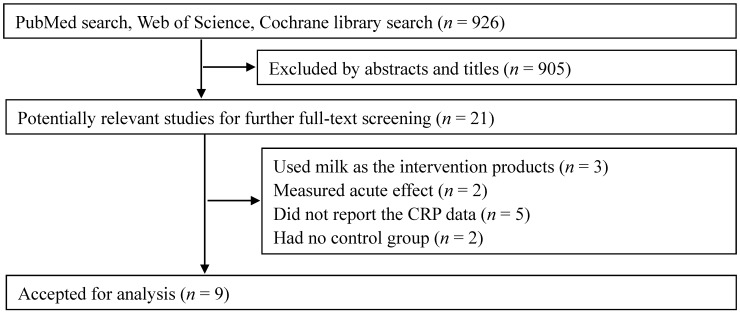
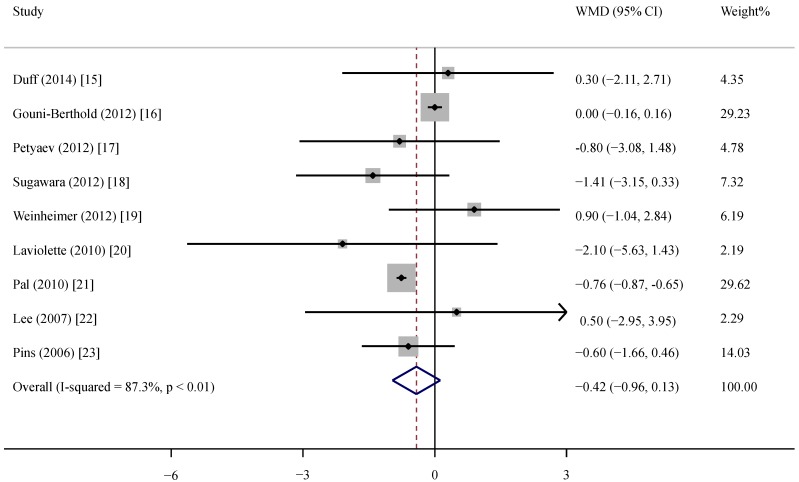
Whey supplementation is beneficial for human health, possibly by reducing the circulating C-reactive protein (CRP) level, a sensitive marker of inflammation. Thus, a meta-analysis of randomized controlled trials was conducted to evaluate their relationship. A systematic literature search was conducted in July, 2014, to identify eligible studies. Either a fixed-effects model or a random-effects model was used to calculate pooled effects. The meta-analysis results of nine trials showed a slight, but no significant, reduction of 0.42 mg/L (95% CI -0.96, 0.13) in CRP level with the supplementation of whey protein and its derivates. Relatively high heterogeneity across studies was observed. Subgroup analyses showed that whey significantly lowered CRP by 0.72 mg/L (95% CI -0.97, -0.47) among trials with a daily whey dose≥20 g/day and by 0.67 mg/L (95% CI -1.21, -0.14) among trials with baseline CRP≥3 mg/L. Meta-regression analysis revealed that the baseline CRP level was a potential effect modifier of whey supplementation in reducing CRP. In conclusion, our meta-analysis did not find sufficient evidence that whey and its derivates elicited a beneficial effect in reducing circulating CRP. However, they may significantly reduce CRP among participants with highly supplemental doses or increased baseline CRP levels.
Figures
References
Publication types
MeSH terms
Substances
LinkOut - more resources
Full Text Sources
Other Literature Sources
Medical
Research Materials
Miscellaneous
